
Heaven’s Sweetness
European Union Baroque Orchestra (EUBO) & Singers of Barock Vokal
Alfredo Bernardini, director & oboe
St John’s, Smith Sq. 27 January 2017
Bach
Orchestral Suite No. 4 in D BWV 1069a (original version);
Cantata: Liebster Immanuel, Herzog der Frommen BWV 123;
Cantata: Süßer Trost, mein Jesus kömmt BWV 151;
Cantata: Sei Lob und Ehr dem höchsten Gut BWV 117.
 Part of the 2015 expansion of the European Union Baroque Orchestra’s activities has been the EUBO Mobile Baroque Academy (EMBA), a cooperative project aimed at finding new and creative ways of addressing the unequal provision of baroque music education and performance across the European Union. The touring orchestra (EUBO) still forms the core activity of the EMBA, reforming each year with a new intake of talented young period instrumentalists chosen from educational auditions held each spring. For more than 30 years EUBO has provided specialist training and experience, and has encouraged and supported many of the top period instrument specialists around today. One such is the distinguished oboist and director Alfredo Bernardini, a member of the very first EUBO in 1985 and the director of this EUBO tour.
The current EUBO incarnation represents 14 different EU countries. They have been performing together since last July, and last performed in London in November 2016 (reviewed here) with a programme based on Handel and his London contemporaries. For this concert they focussed on Bach, performing three of the cantatas that he wrote for Leipzig festivals along with one of his most complex Orchestral Suites, here performed in the rarely heard original version, lacking the trumpets and timpani of the later version. Continue reading
 Johannes Pramsohler and his three fellow musicians of Ensemble Diderot relished the contrast between and within the various pieces, playing with an exquisite combination of consort and individuality. Their intonation was perfect throughout, and they managed to bring exaggeration to the already exciting music without ever pushing things too far. I particularly liked the fact that, despite having a clear group leader, his playing never dominated. These were true Trio Sonatas, where the balance between the three voices is vital – and Roldán Bernabé and Gulrim Choi had important contributions on second violin and cello. Philippe Grisvard’s harpsichord continue was delicate and sensitive, correctly avoiding the temptation to do too much.
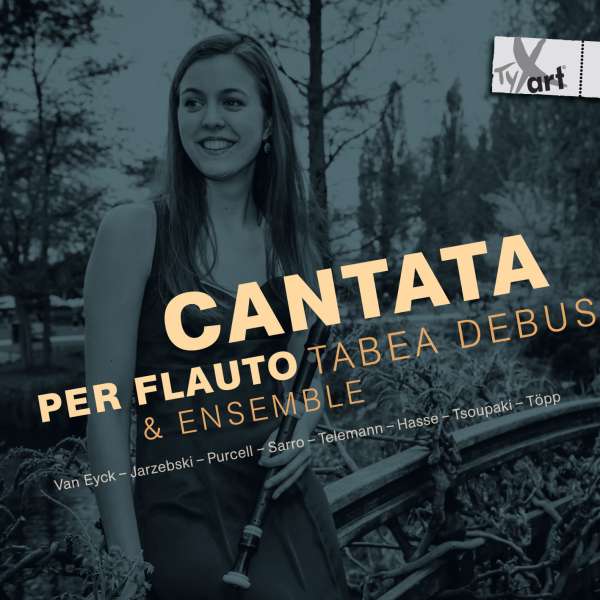 Following her first CD, Upon a Ground (reviewed
  The 30th St John’s, Smith Square Christmas Festival ended on 23 December with the traditional Messiah, with Stephen Layton directing Polyphony and the Orchestra of the Age of Enlightenment. The evening before saw what has become another tradition, the appearance of the Choir of Trinity College Cambridge (where Stephen Layton is Director of Music), also with the OAE. I missed their concert last year, but I think it was the same work with the same group of soloists (Katherine Watson soprano, Iestyn Davies countertenor, Gwilym Bowen tenor, Neal Davies, bass). Although it lacks the seasonal element of Messiah, it is an extraordinary and uplifting work, whatever your belief in the words and sentiments might be. It also has an fascinating history, reflecting insights into Bach’s character and emotional response to his own compositions. Part of that complex history is that Bach never called it the B minor Mass, only part of it is actually in B minor, and he never heard it performed.
  Returning for their fifth visit to the St John’s, Smith Square Christmas Festival, the Solomon’s Knot Baroque Collective presented a concert based on Advent and Christmas music from Leipzig, with pieces by the three successive Thomaskantor’s. The seating in St John’s was reconfigured from the usual facing-the-stage layout to one where the orchestra and choir were to one side, projecting about two-thirds of the way into the floor space, with the audience arranged on three sides. This was undoubtedly excellent for about one-third of the audience who found themselves sitting directly in front of them, but most of the audience had only a side (or a rear-end view) of the performers.
  After a short tour in The Netherlands, the Tallis Scholars brought their programme of music by Thomas Tallis, Arvo Pärt and John Sheppard to St John’s, Smith Square as part of the SJSS 30th annual Christmas festival. Tallis’s Missa Puer natus est nobis (based on the introit for the Mass of Christmas Day) were threaded through the programme, but it opened with Arvo Pärt’s 1988 Sieben Magnificat Antiphonen and 1989 Magnificat in recognition of Pärt’s 80th anniversary.
  Andrew Benson-Wilson : Early Music Reviews +