Organ recital: Byrd to Blow

The Friends of St Lawrence
Byrd to Blow”
17th-century English organ music,
for the 30th anniversary of the Goetze & Gwynne ‘Handel’ organ


Andrew Benson-Wilson

St Lawrence, Whitchurch
Whitchurch Lane, Edgware HA8 6QS
Sunday 19 October, 2025. 3pm


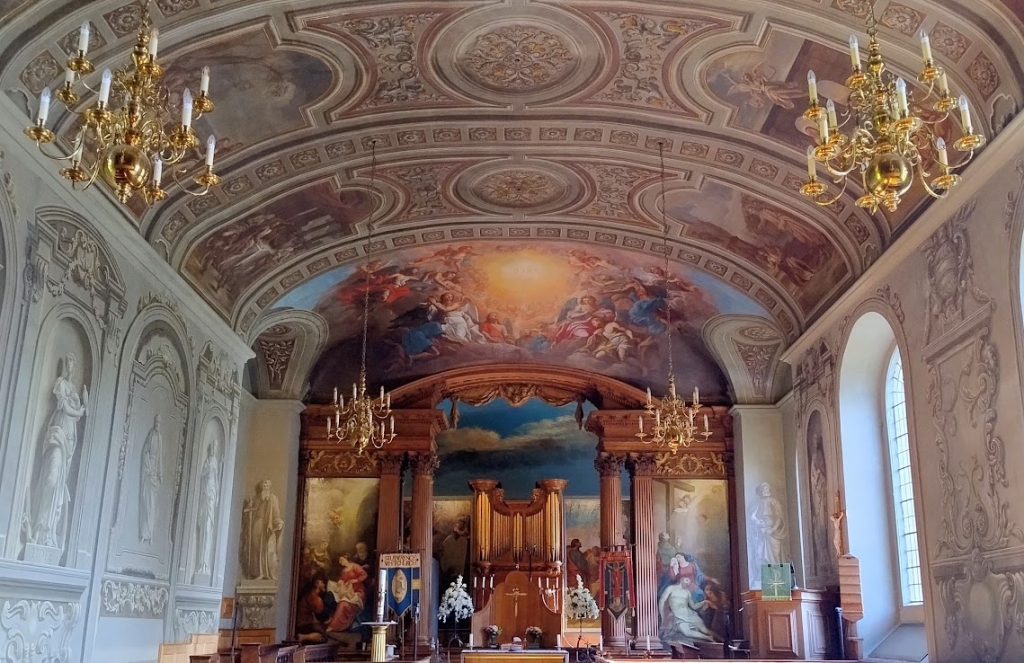
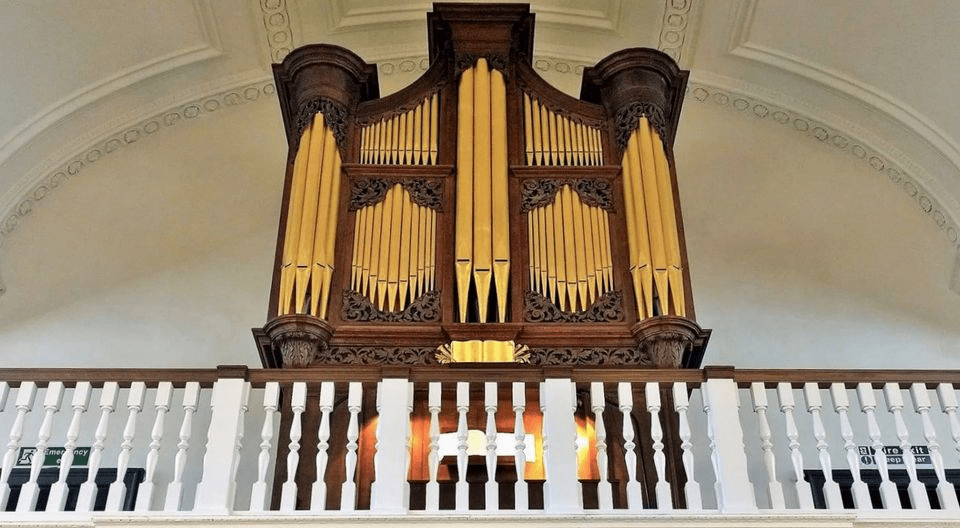
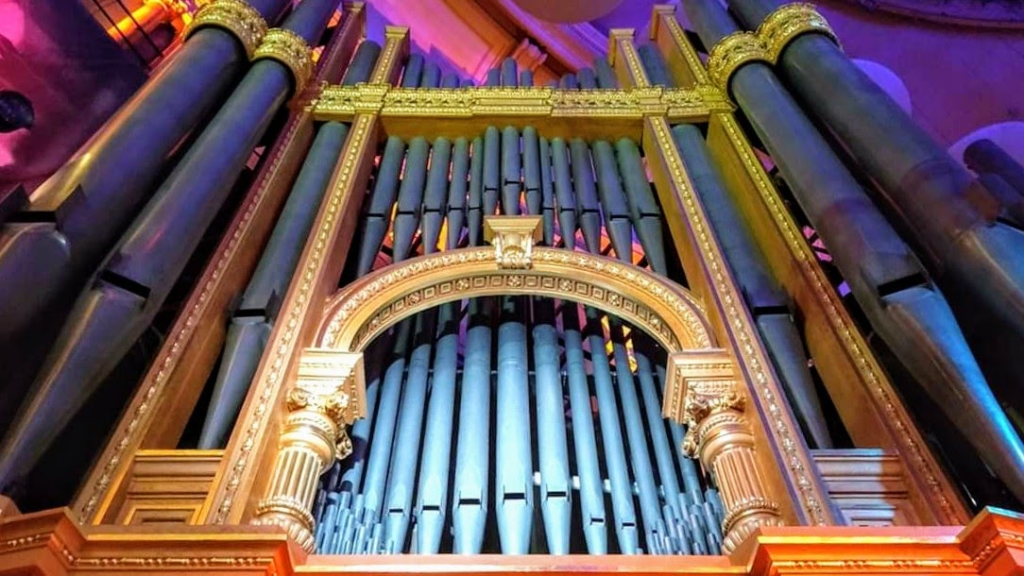
30 years ago, Andrew Benson-Wilson gave the all-Handel opening recital on the new Goetze & Gwynne ‘Handel’ organ, a reconstruction of the 1716 Gerard Smith instrument using the original Grinling Gibbons case and surviving elements of the original organ. Handel used the original 1716 organ when he worked for the Duke of Chandos at Cannons in 1717/18.

Having given two subsequent recitals of music by Handel, Andrew now returns to explore English organ music from the century leading up to Handel’s time, ranging from Byrd to Blow, with music by William Byrd, John Bull, Orlando Gibbons (d1625), Thomas Tomkins, John Lugge, Matthew Locke and John Blow. It will feature pieces for “double organ”, a genre that developed during the 17th-century. The recital will also honour the lives of the organ builders, Martin Goetze and Dominic Gwynne. Click here to find out more about the organ.

Continue reading

Organ Recital. Mr. Stanley, I Presume!

Mr. Stanley, I Presume!
“The best organist in Europe, maybe in the world”

Andrew Benson-Wilson

Christ Church Spitalfields
Commercial St, London E1 6LY
Monday, 8 September, 2025. 7.30

Experience country house saloon soirees; the hunting horns, shepherd songs
and birdsong of the English countryside; the trumpets of military marches;
and London’s opera houses and pleasure gardens,

through the organ music of John Stanley (1712-1786).

Continue reading

Organ Recital. Schlick: Tabulaturen etlicher lobgesang (1512)

Andrew Benson-Wilson
The Grosvenor Chapel
South Audley Street, Mayfair, London W1K 2PA
Tuesday 5 August 2025, 1:10


Arnolt Schlick
Tabulaturen etlicher lobgesang (1512)

Salve Regina (5 verses)
Pete quid vis, Hoe losteleckBenedictusPrimi toniMaria zartChriste
Da pacem (3 settings)

Described as “one of the greatest masters who have left their imprint on the history of organ music”, Arnolt Schlick (c1455-c1525) was one of the most important members of the influential group of late Renaissance German organ composers known as the Colourists, together with Conrad Paumann and Paul Hofhaimer. He lived and worked in the important university city of Heidelberg. In his late 20s, he was appointed court organist to the Palatinate Elector. In 1486 played the organ for the coronation of the future Holy Roman Emperor, Maximilian I, as King of the Romans.

Title page of Spiegel der Orgelmacher und Organisten, 1511

Continue reading

Audition for the first organist, on the 300th anniversary of St George’s, Hanover Square

Early Music Day 2025

Mayfair Organ Concerts
St George’s, Hanover Square
Tuesday 11 March 2025, 1.10pm

Andrew Benson-Wilson

Audition for the first organist
on the 300th anniversary of St George’s, Hanover Square


The church of St George’s Hanover Square was consecrated by the Bishop of London
on March 23rd, 1725. The three-manual organ was built by Gerard Smith, nephew and successor of the famous Father Smith. The case of his organ remains as the central part of the current organ case. This recital will reflect the audition for the first organist, with music by the four assessors (Pepusch, Croft, Handel and Geminiani) and the successful candidate, Thomas Roseingrave, chosen for his ability to improvise fugues.

Johann Christoph Pepusch (1667-1752) Lesson in D (Two Aires)
William Croft (1678-1727) Voluntary IX in d; Voluntary X in D;
Handel (1685-1759) Fugue in B flat; Fugue in a (HWV607/609)
Francesco Geminiani (1687-1762) Duo in F
Thomas Roseingrave (1690-1766) Voluntary & Fugue in f; Fugue in d

Details of the 2012 Richards, Fowkes & Co organ in St George’s Hanover Square organ can be found here and here.

Admission is free, with a retiring collection.
The programme notes can be read here.

Two German Anniversaries: 1624 & 1674

Mayfair Organ Concerts
St George’s, Hanover Square
Tuesday 2 July 2024, 1.10pm

Two German Anniversaries: 1624 & 1674
Samuel Scheidt and Matthais Weckmann
Andrew Benson-Wilson


This concert celebrates the 400th and 350th anniversaries of two of the most important German composers of the early 17th century: the publication in 1624 of Samuel Scheidt’s seminal three-volume Tabulatura nova and the death in 1674 of Matthias Weckmann.

Samuel Scheidt (1587-1654)
Tabulatura nova, 1624
Echo ad manuale duplex forte et lene
Fantasia super Io son ferito lasso
Modus pleno Organo pedaliter: Benedicamus à 6 Voc

Matthias Weckmann (c1616-1674)
Canzon in G
Nun freut euch, lieben Christen gmein
Praeludium A.5 Vocem

Continue reading

Andrew Benson-Wilson @ Christ Church Spitalfields

1360 to 1699
Organ music from the Gothic period to the late 17th century
Andrew Benson-Wilson
Christ Church Spitalfields

Commercial St, London E1 6LY
Monday 24 October 2022, 7.30


The magnificent 1735 Richard Bridge organ in the sumptuously restored Nichola Hawksmoor Christ Church Spitalfields is the most important historical restoration of any 18th-century English organ. For around a century, it was the largest organ in the UK. After many decades of silence, William Drake completed his restoration in 2015, taking the specification and technical details back to that of 1735, with the addition of three pedal stops.

Although obviously ideally suited to English music of the period, this recital will explore the wider potential of the English 18th-century organ to interpret music from other eras and countries. It starts with one of the earliest known pieces of organ music (dedicated, appropriately, to “those playing music”), dating from the mid-14th century, and the first known ‘prelude’ from 1448. The famous pioneers of early organ music follow (Francesco Landini, Conrad Paumann and Paul Hofhaimer), before a fascinating anonymous piece from a manuscript in the circle of Henry VIII, dating from around 1530.

Having explored the early development of organ music, the remaining pieces show the different regional styles that developed across Europe from the late Renaissance and early Baroque, ranging from Germany, England, Italy, Portugal, Spain and France. Composers represented are Hieronymus Praetorius, John Lugge, Girolamo Frescobaldi, Pedro de Araújo, Correa de Arauxo, Matthias Weckmann and Nicolas de Grigny. As well as representing different musical and organ-building styles (including one of the dramatic battle scenes from the Iberian peninsular), there are remarkable links between many of the composers and compositions.

Continue reading

BBC Proms: Nathan Laube, organ

BBC Proms
Nathan Laube, organ
Royal Albert Hall, 28 August 2022

Wagner: Grand March
Franck: Grande pièce symphonique
Alkan: Scherzando from 11 Grands préludes
Liszt: Piano Sonata in B minor

Yet again, the BBC Proms powers-that-be have chosen the most inappropriate time for an organ recital – a Sunday morning – when most organists are attempting to earn their keep. Although working organists can listen on catch-up, the sparse audience (sparse for the Royal Albert Hall that is, but sadly not for the average organ recital) reflected this strange programme planning. But there was also something about the programming of the concert itself which raised questions about the BBC’s approach to The Proms, which this year seems to be seen as a populist extension of Radio 2, rather than Radio 3.

Continue reading

Organ Recital: “Upon thes nots”

For those who came to this recital, despite the travel problems, the encore that I played was Thomas Tomkins: “Sad Paven for these distracted times”
It seemed appropriate

“Upon thes nots
Two 450th anniversariesThomas Tomkins & Michael Praetorius
Andrew Benson-Wilson, organ
St George’s, Hanover Square, London W1S 1FX
1 March 2022, 1:10

This recital contrasts the contrasting music of two composers born 600 miles apart, 450 years ago. It also reflects the way in which the two composers treat melodic lines, whether in the form of a powerful Lutheran hymn or the seven-note plainchant-based phrase upon which Tomkins based his monumental Offertory, noting in the opening bar that the piece was based “upon thes nots“.

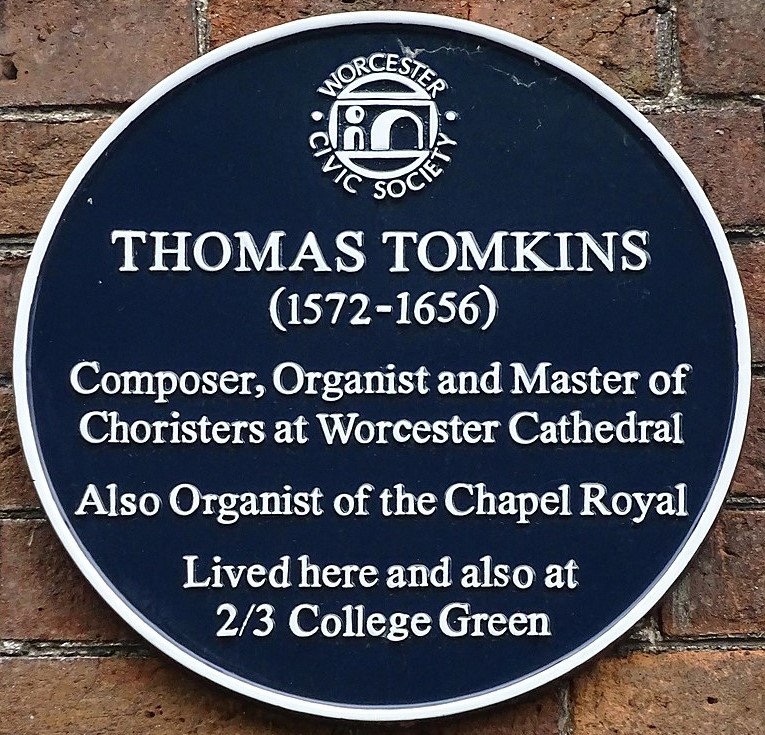
Thomas Tomkins 1572–1656
“For Mr Arc[hdeacon] ThornBurgh”
“Mr Thomas Tomkins offertorye” [upon thes nots] (1637)
Michael Praetorius 1571-1621
O lux beata Trinitas (Hymnodia Sionia, 1611)
Chorale Fantasia: Ein’ feste Burg ist unser Gott (Musæ Sioniæ VII, 1609)

Thomas Tomkins was organist of Worcester Cathedral until its closure during the Civil War as well as the Chapel Royal in London. Michael Praetorius was organist and Kapellmeister in the courts of the Duke of Wolfenbüttel and the Elector of Saxony in Dresden.  

The concert is given on the Richards, Fowkes & Co organ in Handel’s church of St George’s Hanover Square as part of the Mayfair Organ Concerts series. Admission is free, with a retiring collection.

The programme notes can be found here.

BBC Proms: Organ Recital 1

BBC Proms: Organ Recital 1
Bach and Improvisations
Martin Baker
Royal Albert Hall, 1 August 2021

Yet again, the BBC Proms has programmed an organ recital at a time (11:45 on a Sunday morning) when most organists are at work. A modest audience was the obvious result. It was originally intended to have been given by Oliver Latry, organist at Notre Dame but Covid-related travel problems resulted in Martin Baker stepping in at short notice to replicate the planned programme of Bach and improvisations. The Royal Albert Hall opened in 1871, along with the mighty Father Willis organ, then powered by two steam engines and now magnificently restored by Manders. Subsequent alterations and rebuilds have now resulted in 9,999 pipes that would stretch for nine miles if laid end to end. Bizarrely, it has its own Twitter account!

Continue reading

New William Drake organ at Chelsea Old Church

Celebrity Opening Concert – William Drake organ
Nathan Laube

Chelsea Old Church, 19 January 2020

Opening recitals on new organs raise several issues. The performance must, of course, be excellent in itself, regardless of the occasion. But the organ also needs to be demonstrated in a manner that future organ recitals do not need to. I have given several recitals (including, for example, at St John’s, Smith Square) where I have used little more than half of the available stops, to produce a sound that the composer might just recognise. But for an opening recital, a thorough exploration of the sounds of the new instrument is expected. If the organ is built in a specific historic style, the expectation may be that the music of that period dominates. But many organs are built in an eclectic style, capable, in theory, of coping with music from several different historical periods. Continue reading

Andrew Benson-Wilson: Three Westminster Abbey organists

Music-at-Hill – Midtown concerts

Friday 13 September 2019, 1:10pm

St Giles-in-the-Fields
60 St Giles High Street. London, WC2H 8LG

Andrew Benson-Wilson
plays organ music by
Three Westminster Abbey Organists
1668 John Blow; 1679 Henry Purcell;
1695 Blow re-appointed; 1708-1727 William Croft

DSCF6488.jpg

During the period from 1668 and 1708, Westminster Abbey appointed three distinguished organists, the first of which, John Blow, was the teacher of his two successors, Henry Purcell and William Croft. In 1679 John Blow stepped down from his Abbey post in favour of his talented student, Purcell, only returning on Purcell’s death in 1695. William Croft replaced John Blow after his death in 1708, having previously been organist at St Anne’s Soho and Master of the Children of the Chapel Royal. He is most famed today for his Funeral Sentences, performed at Handel’s funeral in 1759 and at every British state funeral since then.

William Drake’s reconstruction of the Dallam/Smith/England/Lincoln/Gray & Davison organ in St Giles-in-the-Fields is one of London’s most important historic musical instruments. It contains some of the oldest pipework in London, going back to the time of Blow and Purcell in the mid to late 17th century.

Organ information can be found here.
Free admission, retiring collection.
The church is just behind Centre Point/Tottenham Court Road tube station.

Andrew Benson-Wilson plays Reincken

Mayfair Organ Concerts
Andrew Benson-Wilson plays 
Johann Adam Reincken (1643-1722)
St George’s, Hanover Square, London W1S 1FX
30 April 2019 @ 1:10pm 

Toccata in G (Andreas Bach Book)
Toccata in A (Anon?)
Chorale Fantasia: An Wasserflüssen Babylon

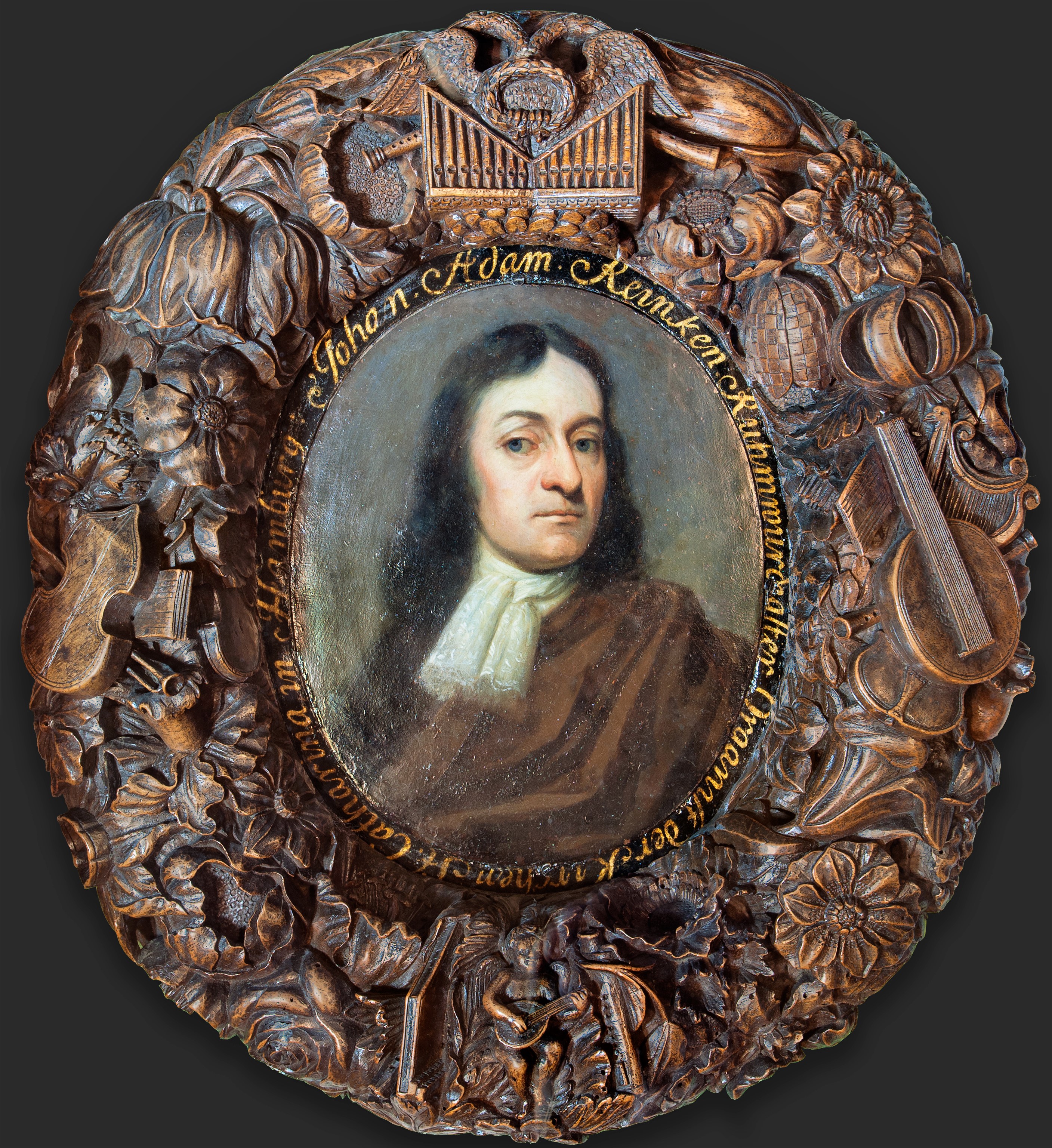
Johann Adam Reincken was one of the most important and influential 17th-century North German organist-composers. He forms a unique link between the Sweelinck influenced organists of the earlier part of the century and JS Bach. Little is known about his life, and very few of his organ compositions survive. He was born to North German parents in Deventer in The Netherlands around 1643. An earlier supposed birthdate of 1623 is now accepted as incorrect. He moved to Hamburg in 1654, aged just 11, to study with the famed organist of the Katharinenkirche, Heinrich Scheidemann, a pupil of Sweelinck. After a brief return to Deventer, he came back to Hamburg in 1659 as Scheidemann’s assistant, replacing him as organist in 1663 on Scheidemann’s death. As was the custom of the time, he married one of Scheidemann’s daughters in 1665. He remained there for 60 years until his death in 1722. As well as his church duties, he co-founded the Hamburg Opera and was involved in the city’s musical life. He is known from two pictures dating from around 1674; the portrait painting and the now well-known ‘Musical Company’ painting by Johannes Voorhout.

Reincken. Kniller, c1674.jpg

Continue reading

Organ music by Tunder (d1667)

Organ music by Franz Tunder (1614-1667)
St George Hanover Square (Mayfair Organ Concerts)
Tuesday 9 May 2017, 1:10
Andrew Benson-Wilson

SGHS main organ

Franz Tunder was one of the most influential organists and composers of the early to mid 17th century in North Germany. Along with a group of Hamburg organist composers, including Jacob Praetorius, Scheidemann, and Weckmann, he created the musical development that culminated in Dietrich Buxtehude, Tunder’s son-in-law, and successor at the Lübeck Marienkirche. He was key to the development of the extended Chorale Fantasia and the dramatic Stylus Phantasticus.

In 1646 Tunder founded the famous Abendmusiken series of concerts in the Marienkirche. These were funded by, and performed to, Lübeck businessmen, and were continued by Buxtehude and then well into the 18th century. In Tunder’s day, the Abendmusik concerts were usually organ recitals. In this programme, you will experience some of the organ music that could have been heard during these concerts, which were very much in the tradition of today’s London lunchtime concerts.

The 2012 Richards, Fowkes & Co organ in St George’s, Hanover Square (Handel’s church) is eminently suitable for music of this period.

Praeludium in g
In dich hab ich gehoffet, Herr
Jesus Christus wahr’ Gottes Sohn
Auf meinem Lieben Gott (manualiter)
Praeludium in g
Komm, Heiliger Geist, Herre Gott

Admission is free, with a retiring collection.

Froberger & Blow: St Giles-in-the-Fields

Friday 24 March 2017, 1pm
St Giles-in-the-Fields
60 St Giles High Street. London, WC2H 8LG

Andrew Benson-Wilson plays organ music by Froberger & Blow

This recital traces the influence of Johann Jakob Froberger (1616-67) on the English organist and composer, John Blow (1649-1708).

DSCF6488.jpg

Froberger was an enormous influence on keyboard composers from the 17th to early 19th century, not least for his role in spreading the Italian style of his teacher Frescobaldi around Europe, and assimilating various European musical styles into his own compositions. Although only two of his works were published in his lifetime, Froberger’s compositions were widely circulated in manuscript copies.  They were known to have been studied by the likes of Pachelbel, Buxtehude, Muffat, Kerll, Weckmann, Louis Couperin, Kirnberger, Böhm, Handel, Bach, and even Mozart and Beethoven. He was a close friend of Matthias Weckmann, who helped to spread the Italian style to the important North German organ composers in Hamburg.

John Blow (1649-1708) was the teacher of Purcell, and his predecessor (and successor) as organist of Westminster Abbey. He was just 18 when Froberger died and was about 4 when Froberger made his disastrous visit to London. The influence of Froberger came through manuscripts that Blow copied, adding his own distinctive English Baroque ornaments in the process.

Continue reading

HANDEL ORGAN RECITAL. St George’s, Hanover Sq. 7 April 1:10.

The London Handel Festival and Mayfair Organ Concerts present a lunchtime organ recital by

Andrew Benson-Wilson

Handel Overtures and Organ Concertos, arranged for solo organ by Handel, Babell and Walsh c 1755. Played on the ‘Handel House’ chamber organ and the 2012 Richards Fowkes & Co organ in Handel’s own church of St George, Hanover Square in London’s Mayfair. SGHS Handel organ_crop 2