AAM: Messiah

Handel: Messiah
Academy of Ancient Music, Laurence Cummings
The Barbican, 17 December 2024
Handel’s Messiah is a curious piece. Usually ritualistically churned out at Christmas and Easter, it was first performed at Easter in Dublin in 1742 after a mere 24 days of composition (a speed not unusual in Handel’s opera compositions), the autograph score bearing witness to the compositional haste. It went through several revisions in the following years, generally to suit the available forces for each performance. The score wasn’t published until eight years after Handel’s death. The version used for this Barbican performance from the Academy of Ancient Music stems from the early 1750s. The rather obtuse libretto was put together by the wealthy landowner, Charles Jennens, from the King James Bible and Psalms from the Book of Common Prayer, seemingly in support of his staunch Anglican leanings. The text is not easy to follow, let alone understand, but Handel composed with apparent relish, making no change to the texts to suit his musical ideas.

Continue reading

Academy of Ancient Music: Il Trionfo del Tempo

’Tis Nature’s Voice
Handel: Il Trionfo del Tempo e del Disinganno (HWV46a)
Academy of Ancient Music, Laurence Cummings 
Milton Court, 11 May 2023


Il Trionfo del Tempo e del Disinganno was Handel’s first oratorio. It was composed a year after his 1707 arrival in Italy after three years in Hamburg where he exchanged his early career as a cathedral organist (in Halle) to that of a fledgling opera composer. He quickly fell in with an influential group of patrons in Rome, including Cardinal Pamphili who provided the libretto for Il Trionfo del Tempo e del Disinganno. Usually translated as The Triumph of Time and Disillusion, the alternative option of Time and Enlightenment was used for this excellent performance from the Academy of Ancient Music.

Continue reading

Academy Choir: St John Passion

Bach: St John Passion
Academy Choir & Baroque Players, Matthew Best
St John’s, Wimbledon, 12 March 2022

Choral societies have a long and noble tradition in the UK. They provide much-needed employment opportunities for the young professional musicians brought in as soloists as well as giving the opportunity to perform for the vast body of amateur singers whose membership fees keep the shows on the road. The Academy Choir is one such. It was founded in Wimbledon in 1980 and since 2000 has been based at the church of St John the Baptist, Spencer Hill, Wimbledon. It is an auditioned choir, rather than taking all-comers, and the musical standards are obviously high. Since 2017 their musical director has been Matthew Best. My invitation to review their performance of the St John Passion promised that “our concerts tend to be ‘a cut above’ what might typically be expected to be found in a suburban church, given by a local choir”, a claim that proved itself correct.

Continue reading

Bach: Matthew Passion – Amici Voices

Bach: Matthew Passion
Amici Voices
Filmed in St John’s, Smith Square
First broadcast 3 April 2021

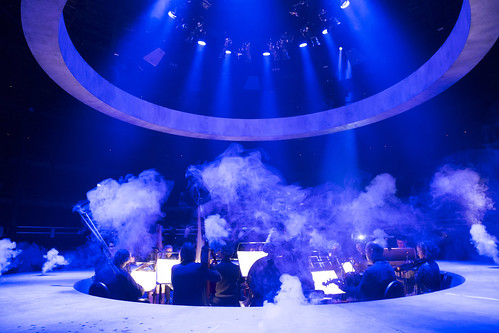
Before the 2020 Covid-19 sequence of lockdowns, the run-up to Easter in London was musically dominated by the St John’s, Smith Square series of concerts. These traditionally culminated in a Messiah and one of the Bach Passions for the final two sell-out concerts. The concert recorded there by Amici Voices and first broadcast on Easter Saturday was as far removed from previous years as you can get. Their Matthew Passion was performed in the round in the middle of the space with no audience. It was a very refreshing alternative to the usual Easter fare.

Continue reading

Il Santissimo Natale

Il Santissimo Natale
The English Concert & Choir, Laurence Cummings
St John’s, Smith Square, 12 December 2018

The 33rd St John’s, Smith Square Christmas Festival continued with a very welcome first-half performance (by The English Concert and Choir, directed by Laurence Cummings) of Alessandro Scarlatti’s Missa per il Santíssimo Natale. Scarlatti is usually overlooked in comparison with other composers, both in his many operas and his few compositions for the church. His il Santíssimo Natal Mass was composed in 1707, during Scarlatti’s brief time as maestro di cappella at the Basilica of S Maria Maggiore in Rome. The two jubilant Kyries contrasted with a reflective central Christe. The gentle mood continued into the opening of the Gloria, before the bouncy rhythms returned. As in the later parts of the Mass, frequent changes of mood were a compositional feature, dissolving from one to the other with delightful ease, helped by some well-judged directed from conductor Laurence Cummings. The final Agnus sequence is a gently expansive movement, providing a suitably reflective conclusion to an impressive composition, Scarlatti’s operatic experience never far from the surface, without imposing. Continue reading

Steinitz Bach Players 50th

London Bach Society’s Bachfest 2018
Steinitz Bach Players, Rodolfo Richter
St John’s, Smith Square, 6 November 2918

For the fourth and final day of their 2018 Bachfest, the London Bach Society (LBS) celebrated the 50th anniversary of their own orchestra, the Steinitz Bach Players, with this St John’s, Smith Square concert. The orchestra was founded, along with the London Bach Society, by Paul Steinitz (1909-88), one of the pioneers of the British Bach revival. Made up of leading freelance period instrumentalists, the orchestra performs under different directors during the annual Bachfest. On this occasion, they performed without a conductor, but with direction from the violin by Rodolfo Richter, a practice that I am sure Bach himself would have approved of.   Continue reading

Return of Ulysses

he KingMonteverdi ‘The Return of Ulysses’
Royal Opera House, Early Opera Company, Christian Curnyn
The Roundhouse. 10 January 2018

After the success of their 2015 production of Monteverdi’s Orfeo at the Roundhouse (reviewed here), the Royal Opera House returned with an English language version of Il ritorno d’Ulisse in patria, under the title of ‘The Return of Ulysses’. As its name suggests, the Roundhouse is a large circular building in Camden, North London, built in 1854 by a railway company as the Great Circular Engine House and used, albeit only for a few years, as a maintenance depot. It had a central turntable to switch engines into the surrounding maintenance bays. John Fulljames’s production for the Royal Opera House maintains the link with this central turntable with a doughnut-shaped staging with an outer raised ring for the singers with the orchestra in the central circle. Both rotated, the instrumentalists going very slowly clockwise (a bit slower than the hour hand of a watch) and the singers intermittently rotating anti-clockwise. on their circular stage.

Continue reading