Charles-Hubert Gervais: Hypermnestre
Purcell Choir, Orfeo Orchestra, Gyorgy Vashegyi
Glossa GCD924007. 2CDs 74’32+71’27
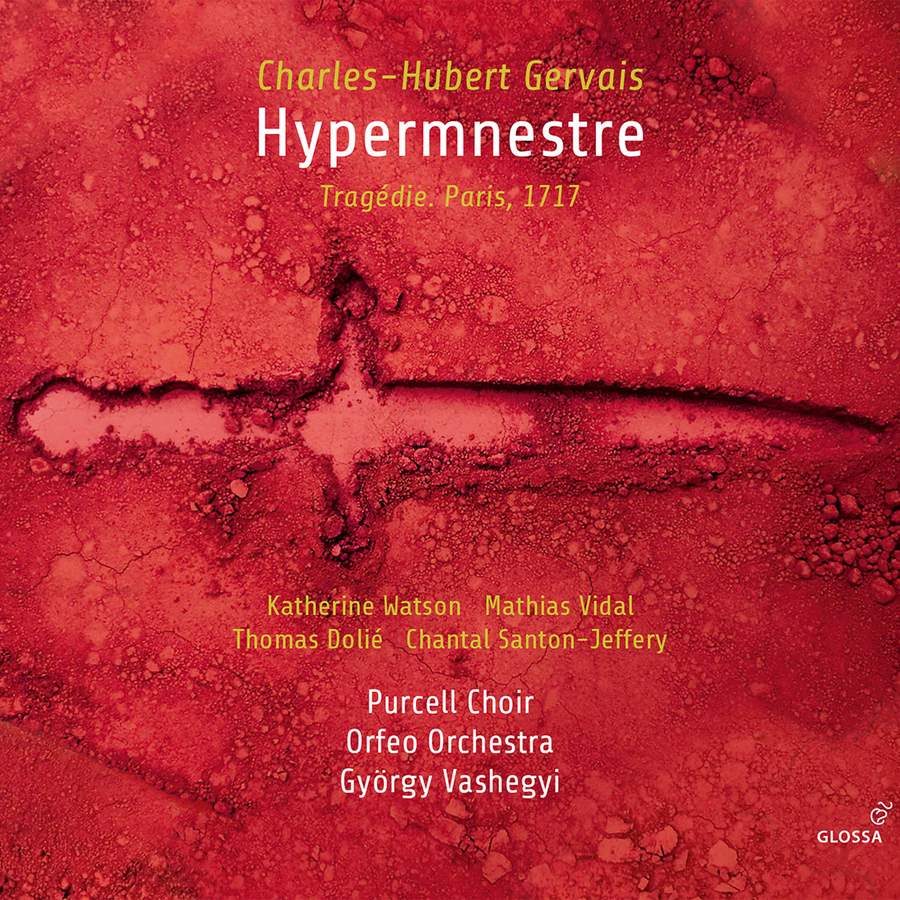
Hypermnestre is a tragédie en musique by the almost totally forgotten French composer Charles-Hubert Gervais (1671-1744). It was first performed in 1716 at the Paris Opera (the Académie Royale de Musique) and was followed by several revivals. It sets a libretto by Joseph de Lafont based on the myth of Hypermnestra, one of the 50 daughters of Danaüs (Danaus), King of Argos. Danao had been told by an oracle that he will be murdered by one of his nephews. But he had 50 of them, courtesy of his brother, King of Egypt, so decided to marry all 50 of his daughters off to their cousins, with instructions to kill their new husbands on their wedding night. That they do, with the exception of Hypermnestre who refuses to kill Lyncée because he had respected her request to remain a virgin. The plot is similar to Francesco Cavalli’s much earlier Hipermestra, was performed at Glyndebourne in 2017 (review here). Continue reading
 For many years the only way to hear French Baroque music performed with any degree of authenticity was by listening to French performers. Although that is still the case to an extent, the level of understanding of French performing techniques has become far better known throughout the world. One example is the series of recordings from Budapest from the Orfeo Orchestra and Purcell Choir under their founder and director György Vashegyi. I reviewed their CD of Mondonville’s Grands Motets
  Over the years, William Christie has done much to introduce French baroque music to British ears, and has opened our ears to Purcell. But I had not heard his take on Messiah live before. It was bound to be rather different from the usual variety of British interpretations, and it was. We are increasingly used to lightly scored performances with moderately sized choirs, in contrast to the cast of thousands of yesteryear, but this very Gallic interpretation added a layer of delicacy and dance-like joie de vivre to Handel’s music, all done in the best possible Bon Goût. Les Arts Florissants fielded a choir of 24 (quite large, by some standards today, and in Handel’s time) and an orchestra with 6, 6, 4, 4, 2 strings, together with five soloists. Both instrumentalists and the chorus were encouraged to keep the volume down, usually by a finger on the Christie lips. This seems to be in line with Handel’s intentions, as indicated by his scoring and, for example, his very limited use of the trumpets. When things did let rip, there was still a sense of restraint amongst the power.
  the new Globe management, those events seems to have ground to a halt, with only one listed in the current season – and that a hang-over booking from the previous management. So it was fortuitous that the BBC Proms chose the theatre for one of its ‘BBC at …’ events (alongside such venues as a multi-story car park in Peckham), not least because it enabled people to see the inside of this fabulous, but very uncomfortable, theatre for just £14, rather than the up to £62 the Globe are asking for their own next concert there.
  Andrew Benson-Wilson : Early Music Reviews +