
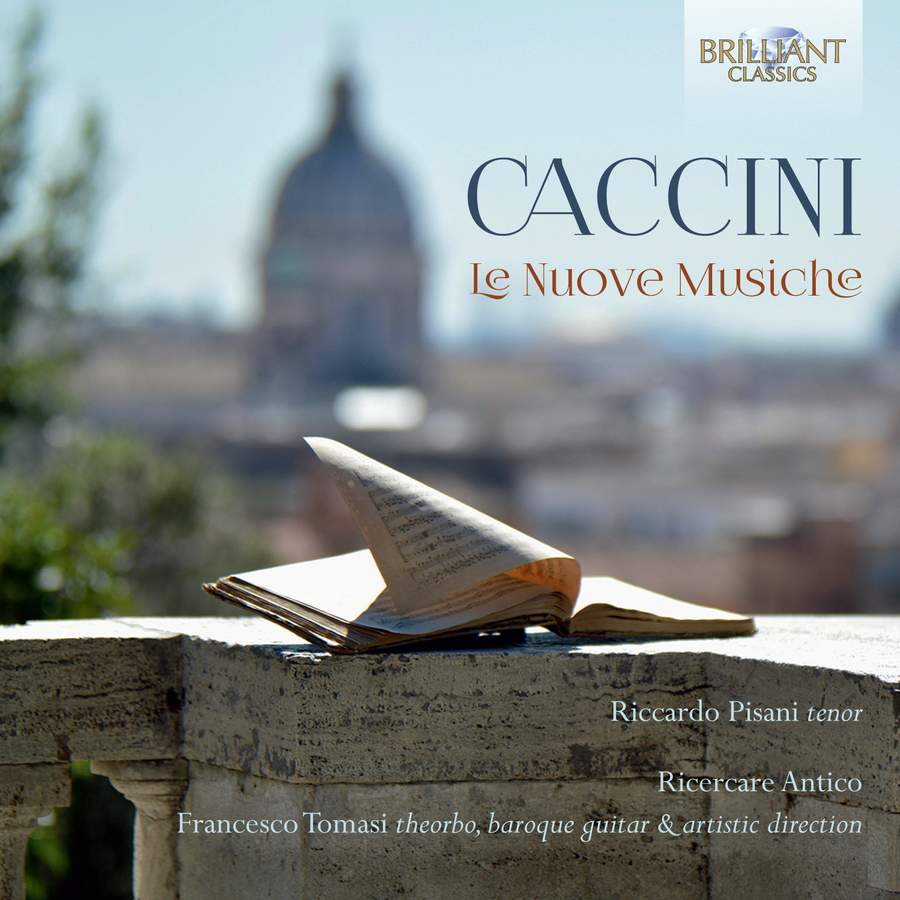
Caccini: Le Nuove Musicale
Ricercare Antico, Riccardo Pisani
Brilliant Classics, 95794. 66’41
Giulio Caccini (1551-1618) was a Florentine singer, instrumentalist and writer. He was one of the first to establish the stile recitativo that formed the basis of Baroque-era opera. His Le Nuove Musicale (or Musiche) of 1602 explored the use of solo voice and continuo bass in what was to be referred to the following year (in Artusi’s 1603 Seconda Parte dell’Artusi), as the Seconda pratica. Caccini’s introduction to Le Nuove Musicale outlines the move from the Renaissance ideas of polyphony and counterpoint to the monodic style of the Baroque, with examples of the manner of adding ornaments to reflect the emotional expression of the text, in the affetto cantando style. Continue reading
 Giulio Caccini and Jacopo Peri were musical assistants to Emilio de’ Cavalieri for the famed celebrations for the Florentine marriage of Ferdinand de’ Medici and Christine de Lorraine. In the resulting La Pellegrino, they helped to develop a new style of singing, based on earlier concepts of singing in what was thought to be the style of Orpheus. This emphasised the declamatory solo voice in what became known as the stile rappresentativo, accompanied by a simple basso continuo, based on Orfeo’s lyre, here realised by Angélique Mauillon on a triple harp by Somerset luthier Simon Capp, after early 17th century Italian models. This recording explores the later work of the two composers, with an emphasis on the music of Caccini, with 12 examples compared to the five from Peri, together with three instrumental harp interludes by Luzzaschi and Piccinini.
  Andrew Benson-Wilson : Early Music Reviews +