Academy of Ancient Music: Songs of Love & War

Songs of Love & War
Academy of Ancient Music

Laurence Cummings, Ed Lyon, Anna Dennis
Milton Court, 12 February 2026


In a programme that has its roots in the first interaction between a post-grad singing student (tenor, Ed Lyon) and his tutor at the Royal Academy of Music (Laurence Cummings), the Academy of Ancient Music (AAM) presented a programme of Monteverdi’s 1738 Eighth book of madrigals, Madrigali guerrieri et amorosi (Madrigals of Love and War). Lyon had asked to do Monteverdi’s Eighth Book, a request that Cummings wasn’t able to fulfil – until now. Further musical links between Cummings and Lyon also involved soprano Anna Dennis, making for a wonderful vocal pairing for this inspiring concert.

Continue reading

AAM: Beethoven’s 5th

Beethoven’s 5th
Academy of Ancient Music
Laurence Cummings, David Blackadder, trumpet
Academy of Ancient Music

Barbican Hall. 27 June 2025


Maria Theresia Ahlefeldt: Telemachus on Calypso’s Isle
Haydn: Trumpet Concerto
Beethoven: Symphony No. 5

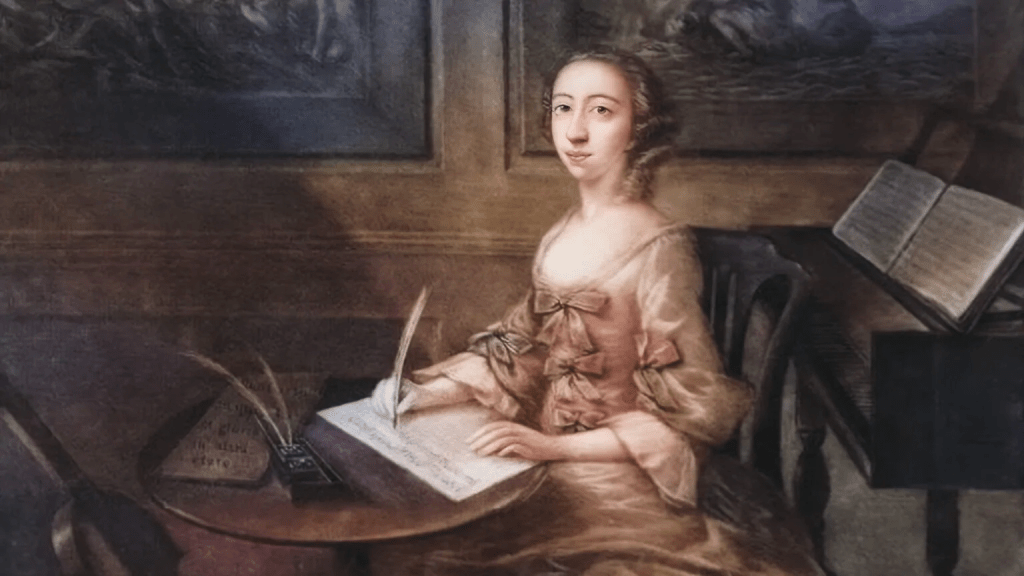
In what was billed as “struggles, seduction and sparkling wit”, Laurence Cummings and the Academy of Ancient Music (AAM) gave another of their enterprising concerts, this time in the Barbican Hall. They opened with music from Maria Theresia Ahlefeldt, a composer little known today whose nationality seems to confuse many people. She was born in 1755 in Regensburg (then the permanent seat of the Imperial Diet of the Holy Roman Empire) as Princess Maria Theresia of Thurn and Taxis, the princely house that, since 1812, has had its seat in Regensburg’s Schloss Thurn und Taxis. After an ‘interesting’ early life of royal culture, privilege and intrigue, she eventually married a Danish Count against the wishes of her family (a criminal offence at the time for a royal), leading to her flight to Ansbach, part of the Brandenburg domains. In 1792, her husband later became director of the Royal Danish Theatre, where the ballet-opera Telemachus on Calypso’s Isle was first performed later the same year.

Continue reading

AAM. Bach: Art of Fugue

Bach: Art of Fugue
Academy of Ancient Music, Concert Theatre Works
Laurence Cummings, Bill Barclay
Peter Bray, Steffan Cennydd, Imogen Frances, Simon Slater
Milton Court, 15 May 2025

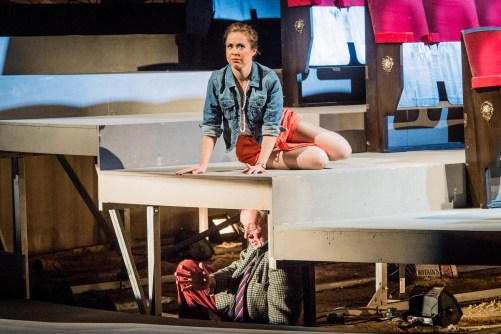
Photo: Mark Allan

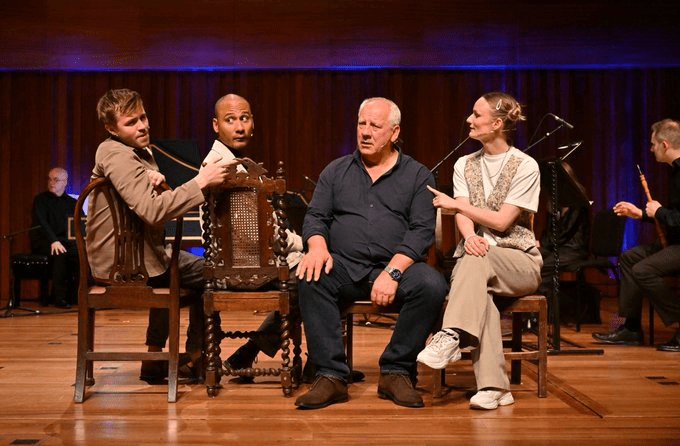
Johann Sebastian Bach’s Art of Fugue (Die Kunst der Fuge) is one of the greatest monuments of Western music. You mess with it at your peril. And mess with it at their peril is just what writer and director Bill Barclay with Concert Theatre Works did with the connivance of Lawrence Cummings and the Academy of Ancient Music (AAM), who commissioned this particular messing.

The Art of Fugue was composed during the last decade of Bach’s life, although the spurious accounts of Bach dying while composing the final fugue, on which much of the plot of this concert-theatre production relies, have long since been discredited. It was not published until shortly after Bach’s death, although autograph manuscripts of most of it survive. It consists of fourteen fugues (each called Contrapunctus) and four canons, all in D minor, and all using the same main theme, albeit in many varied forms. With the exception of the final fugue, which is written in conventional two-stave keyboard format, each piece has a separate line for each of the four voices (open-score) in a similar fashion to several learned musical works of the previous century or more. There is no indication of which instrument Bach intended or, indeed, if he intended it for performance at all, using it as an example of his skill in contrapuntal composition. There are no orchestral instruments of the time that could play all the lines on the same instrument, leading to the assumption that it was intended for the harpsichord. Performance on the organ is common, although there are many questions to be considered, not least the choice of registrations.

Continue reading

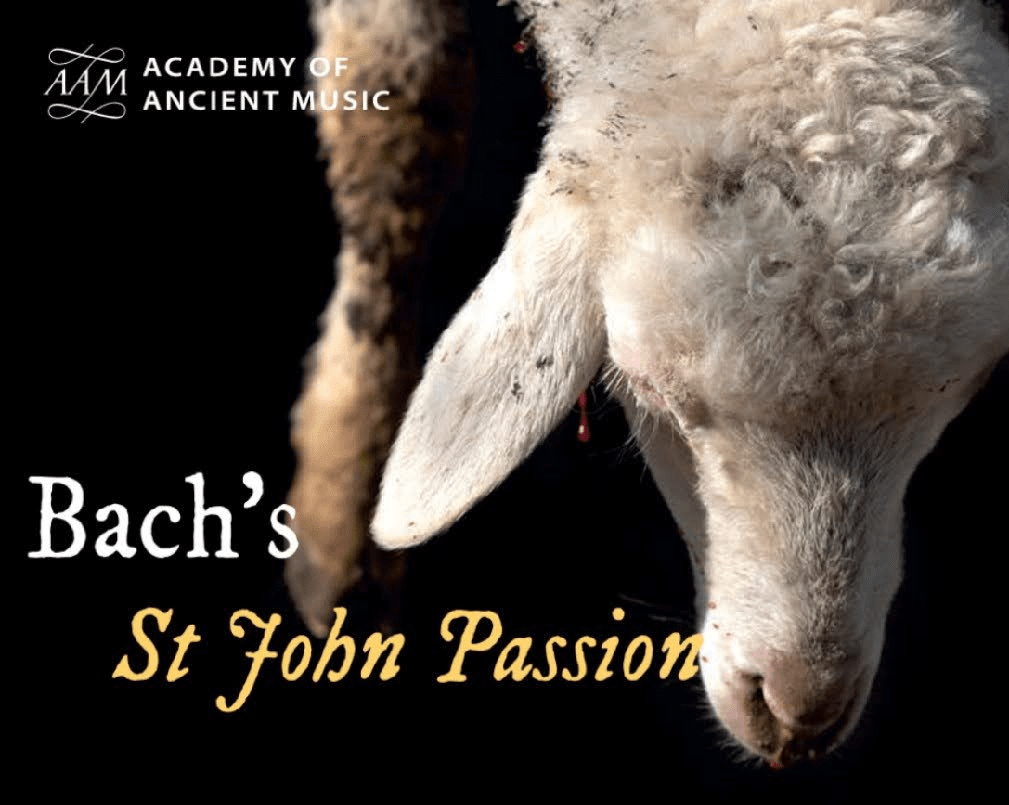
Bach: St John Passion

Bach: St John Passion
Academy of Ancient Music, Lawrence Cummings
Barbican Hall, 18 April 2025


Nicholas Mulroy, Evangelist, Dingle Yandell, Christus,
Carolyn Sampson, soprano, Helen Charlston, alto, Ed Lyon, tenor, Jonathan Brown, bass

Music has played a key role in religious occasions since the earliest times, and has played a notable role in most aspects of Western Christianity. When listening to pieces like the John or Matthew Passions or Messiah, I often wonder whether it is the words and the story, or the music that has the most highly charged emotional effect on those listening. For Christians, 3pm on Good Friday is one of the most sacred times of the year: according to one of the gospels, the moment when Jesus died after a three-hour-long crucifixion. In many Christian traditions, the whole day is devoted to fasting. But, for around 2000 people, 3pm was the start of the Academy of Ancient Music’s performance of Bach’s St John Passion in a packed Barbican Hall.

Continue reading

AAM. Transatlantic: Classical Masters

Transatlantic: Classical Masters
José Maurício Nunes Garcia, Haydn, Mozart
Academy of Ancient Music, Laurence Cummings, Katherine Spencer, clarinet
Milton Court, 13 March 2025

Nunes Garcia: Overture in D major; Dilexisti justitiam
Mozart: Clarinet Concerto in A major
Nunes Garcia: Tantum ergo
Mozart: Ave verum corpus
Haydn: Notturno in G major
Nunes Garcia: Litany for the Sorrows of Our Lady

The Acadamy of Ancient Music (AAM) continues its Transformation season with the programme Transatlantic: Classical Masters, focusing on the Brazilian composer José Maurício Nunes Garcia (1767-1830) and his heroes Haydn and Mozart. Nunes Garcia was born in poverty in Portuguese Rio de Janeiro to Afro-Brazilian parents, both seemingly the children of slaves, courtesy of their respective slave owners. An early musical talent was recognised, and Nunes Garcia was soon singing in Rio’s cathedral and, by the age of 12, was teaching music and learning keyboard instruments at the homes of his wealthy pupils. He was composing by the age of 16, and just a year later was sufficiently recognised as a music teacher to be a founding signature to the Brotherhood of Saint Cecilia. His wish to take Holy Orders was finally achieved at age 25 after being excused from the requirement to be “free from any colour defect” and becoming the required “estate owner”, courtesy of the father of one of his students. Shortly afterwards, he was appointed as “public music instructor” and set up a free music school for local children in his newly acquired house.

Continue reading

Italian Legacies: Geminiani and his English Contemporaries

Italian Legacies: Geminiani and his English Contemporaries
Academy of Ancient Music, Bojan Čičić, Anna Devin

Milton Court, 7 February 2025

Arne Overture in G major No. 3
Mudge Concerto No. 1 in D major
Geminiani Concerto Grosso in C major Op. 7 No. 3
Linley Music for The Tempest
Boyce Overture from Peleus and Thetis
Linley Violin Concerto in F major
JC Bach La Tempesta

Billed as “Swinging London meets Italian flair, 18th-century style”, this imaginative concert from the Academy of Ancient Music, directed from the violin by Bojan Čičić, took us on a tour of the music scene in 18th-century Britain: a place where “everything was up for grabs”. The blurb continued – “A nation was remaking its identity – embracing global fashions and diverse cultures, and locked in passionate debate about its relationship with Europe. English composers wrote Italian operas, the spirit of Shakespeare met the inspiration of Corelli and Vivaldi, and Bach’s youngest son carved out a musical niche that was entirely his own”.

Continue reading

AAM: Messiah

Handel: Messiah
Academy of Ancient Music, Laurence Cummings
The Barbican, 17 December 2024

Handel’s Messiah is a curious piece. Usually ritualistically churned out at Christmas and Easter, it was first performed at Easter in Dublin in 1742 after a mere 24 days of composition (a speed not unusual in Handel’s opera compositions), the autograph score bearing witness to the compositional haste. It went through several revisions in the following years, generally to suit the available forces for each performance. The score wasn’t published until eight years after Handel’s death. The version used for this Barbican performance from the Academy of Ancient Music stems from the early 1750s. The rather obtuse libretto was put together by the wealthy landowner, Charles Jennens, from the King James Bible and Psalms from the Book of Common Prayer, seemingly in support of his staunch Anglican leanings. The text is not easy to follow, let alone understand, but Handel composed with apparent relish, making no change to the texts to suit his musical ideas.

Continue reading

AAM: Viennese Virtuosity

Viennese Virtuosity: Symphonies by Mozart, Haydn and friends
Academy of Ancient Music,
Laurence Cummings
Milton Court, 14 November 2024

Wanhal: Symphony in D major, Bryan D17
Mozart: Symphony No 36, Linz
Dittersdorf: Symphony No 4 from Symphonies after Ovid’s Metamorphosis
Haydn: Symphony No 80

The Academy of Ancient Music (AAM) and Laurence Cummings continue their Transformation series of 2024/5 concerts with a concert of symphonies by Johann Baptist Wanhal, Wolfgang Amadeus Mozart, Carl Ditters von Dittersdorf and Joseph Hadyn. It was based on an occasion around 1784 when they played as a string quartet during a social gathering in Vienna. The story comes from an 1826 publication by a singer friend of Mozart, who noted that “… the players were tolerable, not one of them excelled on the instrument he played; but there was a little science among them, which I dare say will be acknowledged when I name them: The First Violin: HAYDN, Second Violin: BARON DITTERSDORF, Violoncello: VANHALL, Viola: MOZART“.

Continue reading

AAM: Charpentier’s Actéon & Rameau’s Pygmalion

Charpentier’s Actéon & Rameau’s Pygmalion
Academy of Ancient Music, Laurence Cummings

Anna Dennis, Rachel Redmond, Katie Bray, Thomas Walker
Milton Court, 9 October 2024

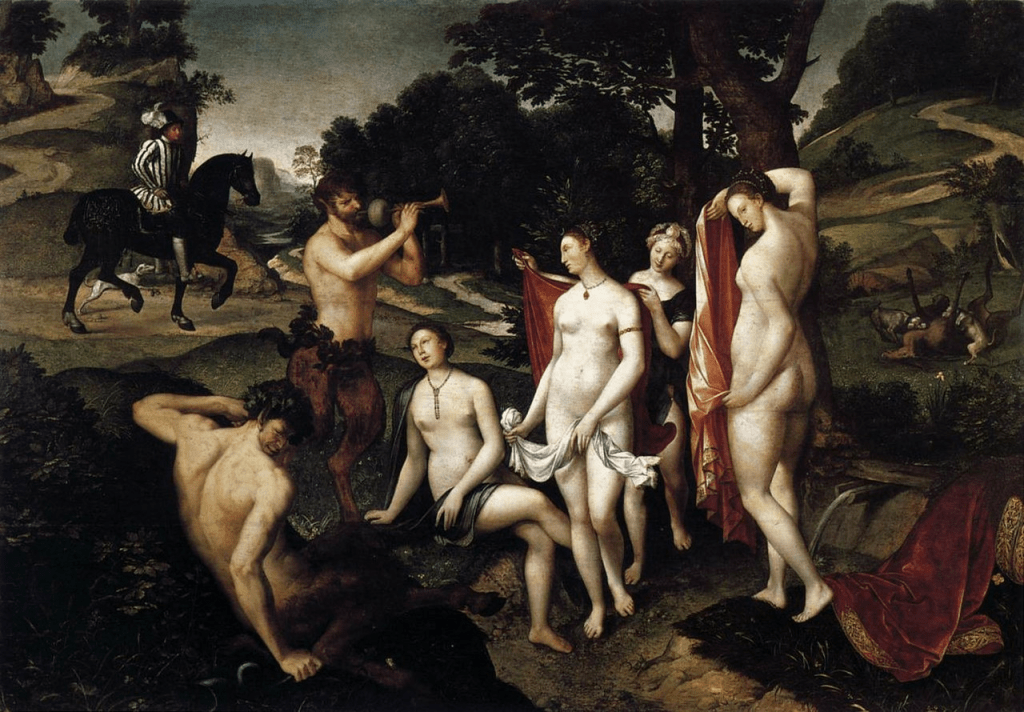
François Clouet: Bath of Diana (1558)

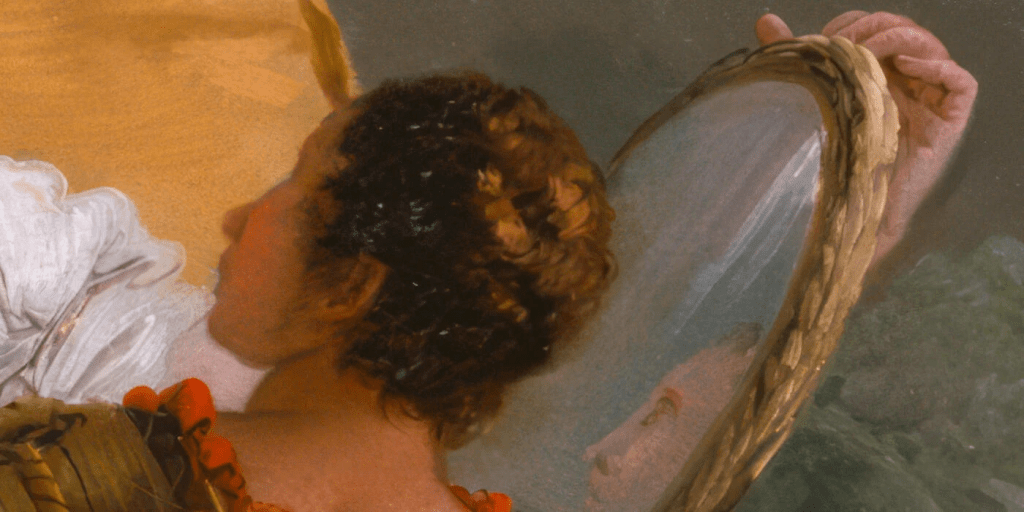
The Academy of Ancient Music opened its 2024/25 season, under the banner of Transformation, with a concert performance double-bill of French Baroque ‘operas’ or, more exactly, a Pastorale en musique and an Acte de ballet – Marc-Antoine Charpentier’s Actéon and Jean-Philippe Rameau’s Pygmalion. I am following those irritating promotional videos that encourage you to stay tuned until the end by urging you to read this review through to the end – this concert ended with one of the most extraordinary examples of musical professionalism and skill from the AAM’s musical director, Laurence Cummings, recently and deservedly appointed as an OBE.

Continue reading

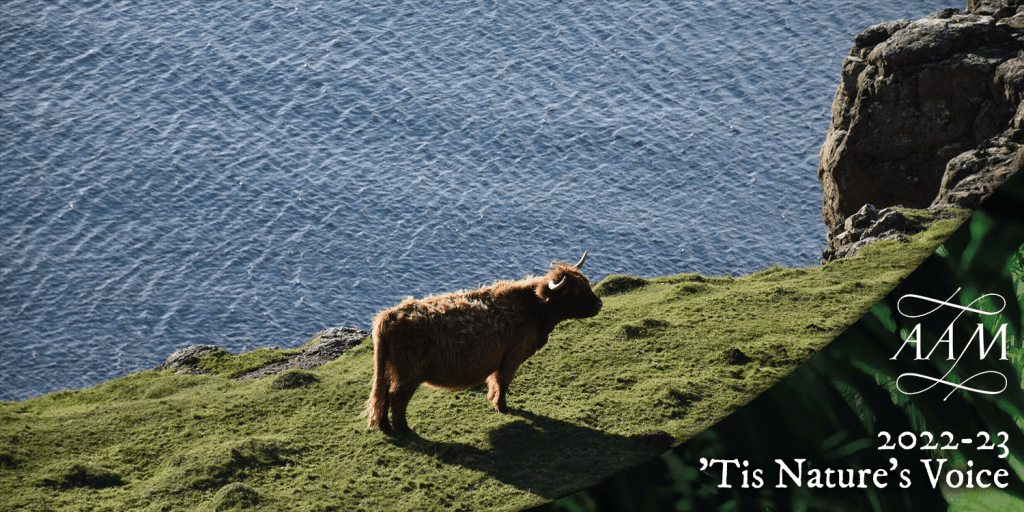
AAM: ‘Tis Nature’s Voice

‘Tis Nature’s Voice
Academy of Ancient Music
Bojan Čičić, Laurence Cummings
Barbican Hall, 30 June 2023


Mendelssohn: Hebrides Overture Op.26;
Violin Concerto in E minor, Op. 64
Beethoven: Symphony No. 6 ‘Pastoral’

The Academy of Ancient Music concluded its 2022/3 season, ‘Tis Nature’s Voice, with a venture into the early Romantic era, a suitable continuation of the theme of their opening concert, Hadyn’s The Seasons. They promised “thunderstorms, sea spray, nightingales and country dances and other beauties of nature as interpreted romantic style”. For those not used to music of the romantic era played on period instruments, this must have been a revelation. Indeed, it might also have been a revelation for some in the AAM as most of their repertoire stops before Mendelssohn and Beethoven.

Continue reading

Academy of Ancient Music: Il Trionfo del Tempo

’Tis Nature’s Voice
Handel: Il Trionfo del Tempo e del Disinganno (HWV46a)
Academy of Ancient Music, Laurence Cummings 
Milton Court, 11 May 2023


Il Trionfo del Tempo e del Disinganno was Handel’s first oratorio. It was composed a year after his 1707 arrival in Italy after three years in Hamburg where he exchanged his early career as a cathedral organist (in Halle) to that of a fledgling opera composer. He quickly fell in with an influential group of patrons in Rome, including Cardinal Pamphili who provided the libretto for Il Trionfo del Tempo e del Disinganno. Usually translated as The Triumph of Time and Disillusion, the alternative option of Time and Enlightenment was used for this excellent performance from the Academy of Ancient Music.

Continue reading

Bach: Six Motets

Bach : Six Motets
BBC Singers, Academy of Ancient Music, Peter Dijkstra
Milton Court Concert Hall, 3 March 2023

This BBC Singers’ Milton Court performance of the traditional grouping of Bach’s Six Motets (BWV 225–230) was imaginative and thoughtful, notably in two specific aspects. With one exception, they were sung in reverse order of BWV numbers, that exception being Komm, Jesu, komm (BWV 229) which was sung in the middle of the cantata Laß, Fürstin, laß noch einen Strahl. The concert will be broadcast on Wednesday 22 March on BBC Radio 3.

Continue reading

AAM. New Worlds: Genius – Mozart

New Worlds: Genius – Mozart
Academy of Ancient Music
Laurence Cummings

Ya-Fei Chuang, Robert Levin
Barbican, 1 July 2022


This concert saw the conclusion of the Academy of Ancient Music‘s New Worlds series, and the finale to Laurence Cummings’ first season as the AAM Music Director. Billed as “Grandeur, poetry and pure, unstoppable genius”, this imaginative programme contrasted Mozart’s Jupiter symphony with two little-known Mozart works, the Ballet sequence from Idomeneo (K367), and the Piano Concerto á3 (K242). The programme booklet for the concert can be accessed here.

Continue reading

AAM New Worlds Travelogue: Nicholas Lanier

New Worlds: TravelogueNicholas Lanier
Academy of Ancient Music
, Laurence Cummings
Anna Dennis, Thomas Walker
Milton Court & AAM LIVE stream. 18 February 2022

As part of their New Worlds series, the Academy of Ancient Music explored the life and times of the much-travelled lutenist, courtier and musical adventurer Nicholas Lanier in their Milton Hall and AAM LIVE streamed concert New Worlds | Travelogue. Lanier was from a French Huguenot family with an Italian mother. He was a court musician and composer to both King Charles I and Charles II, becoming the first Master of the King’s Music in 1625. He made several visits to Italy to acquire paintings for Charles I, during which he experienced the new style of Italian secondo pratica music from the likes of Claudio Monteverdi. He subsequently introduced the recitative style to England. He was painted by van Dyck in Antwerp and persuaded the King to bring Van Dyck to England.

Continue reading

Vivaldi’s Four Seasons

Vivaldi’s Four Seasons
Academy of Ancient Music
Richard Egarr, Rachel Podger

Live from The Barbican
First broadcast 27 June 2021. Available on-line until 29 June
.

Corelli: Concerto Grosso No 1 in D major, Op 6
Maria Grimani: Sinfonia to Pallade e Marte
Corelli: Concerto Grosso No 2 in F major, Op 6
VivaldiThe Four Seasons

Vivaldi’s Four Season’s is an inevitable war-horse guaranteed to attract audiences – in this case, a reduced socially-distanced audience for the live performance together with on-line viewers who have the option to view, for a modest fee, until 8pm on Tuesday 29 June. There are limits as to what performers can do with the Four Seasons, one being musical taste. But there is no limit as to the context in which a performance is set. And that is what makes this airing interesting, with its rare performance of the Sinfonia to Pallade e Marte by Maria Grimani, alongside two of Corelli’s well-known Concerto Grossi.

Continue reading

AAM Live: In stil moderno

In stil moderno: Castello, Strozzi & Claudio Monteverdi
Academy of Ancient Music

Streamed from West Road Concert Hall, Cambridge. 14 April 2021

Barbara Strozzi (1619-1677) : L’eraclito amoroso & Lagrime mie
Claudio Monteverdi (1567-1643): Et e pur dunque vero & Si dolce e’l tormento
Dario Castello (c1602-1631) : Sonate concertante in stil moderno, Libro Secondo

The second in the three-concert series of AAM Live 2021 events was initially billed as a farewell to their outgoing Music Director, Richard Egarr, who is now replaced by Laurence Cummings who directed the first of their AAM Live 2021 concerts, reviewed here. Although Egarr may have been an inspiration behind this programme of music from 17th-century Venice, the concert listed two directors, the AAM’s principal violinist Bojan Čičić and keyboard player Steven Devine. They were joined by mezzo Helen Charlston. Continue reading

Messiah

Handel: Messiah
Academy of Ancient Music, Richard Egarr

Live-stream from The Barbican, 19 December 2020

In what is becoming the ‘new normal’, the annual Academy of Ancient Music’s London performance of Handel’s Messiah was live-streamed (from behind a paywall) from London’s Barbican Hall. The socially-distanced, modest-sized period instrument orchestra (5,4,2,2,1 strings) and 17-strong choir filled the entire width of the stage with no apparent loss of acoustic focus in the recorded sound – the acoustics were excellent. Like any well-designed concert hall, the Barbican Hall retains the same acoustics whether or not there is an audience presence, the empty seats designed to have the same acoustic properties when empty as when sat upon. As far as I can tell, the concert is no longer available to watch, although this website might lead you to a possible viewing. The programme notes can be accessed here.

Continue reading

French Baroque music meets Indian Classical Dance

French Baroque music meets Indian Classical Dance
BBC Singers, Academy of Ancient Music, Sofi Jeannin
Sanskriti UK & Ankh Dance
Milton Court, 19 October 2018

Lully: Te Deum 
Rameau: In convertendo Dominus;
extracts from 
Les Indes galantes, Les fêtes d’Hébé Castor et Pollux 

In what was a rather brave bit of programming for a live BBC Radio 3 broadcast, the BBC Singers and the Academy of Music, directed by Sofi Jeannin, the new Chief Conductor of the BBC Singers, presented an evening of French Baroque music, the second half of which was accompanied by two contrasting forms of Indian dance. The first half was of liturgical pieces, starting with Lully’s jubilant 1677 setting of the Te Deum. This was first heard at Fontainebleau and later became the piece that led to Lully’s death after he stabbed himself in the foot with his conducting baton during Chapel Royal celebrations for the Sun King’s recovery from surgery – surgery that Lully decided, fatally, to refuse. No such calamity occurred here as Sofi Jeannin demonstrated her commendably straightforward style of conducting, her focus clearly on the music itself rather than on any sense of self-aggrandisement. She coped well with the complications of this particular occasion, which included a late start after an overrun of the previous Radio 3 show, and complicated coordination between dances, singers, instrumentalists, a BBC announcer and the paraphernalia of a live BBC broadcast.  Continue reading

Academy of Ancient Music: Dido and Aeneas

Dido and Aeneas
Academy of Ancient Music, Richard Egarr, Thomas Guthrie
The Barbican, 2 October 2018

For anybody who was not already familiar with the story of Purcell’s Dido and Aeneas, the Academy of Ancient Music’s semi-staged performance (directed by Thomas Guthrie) at The Barbican opened with something of a plot-spoiler. The first half was a 40-minute exploration of the funeral rites of the dead Dido, albeit a couple of hours or more before she was ‘laid in earth’. Actually, laid in earth she wasn’t, instead lying on a funeral catafalque over which Belinda, Aeneas and assorted mourners (the AAM chorus, who opened the show with some rhythmic drum bashing) acted out their reaction to her death as they remembered her. And when I write ‘she’ in fact it was a half-size puppet of the upper half of Dido who represented her throughout the evening. The full panoply of puppets came to the fore in the second half performance of Dido and Aeneas itself where the entire cast of soloists and chorus sported puppets – torsos for Dido and Aeneas, heads and gauze cloths for the rest. Continue reading

Handel’s Agrippina at The Grange

Handel: Agrippina
Academy of Ancient Music, Robert Howarth
The Grange Festival, Hampshire. 16 June 2018

Handel’s Agrippina was first performed in 1709 during the Venice Carnival when he was just 23. It was towards the end of his three-year stay in Venice and used a considerable amount of borrowed material from Handel and other composers. It was an immediate success, with a further 26 performances, but was not revived again until modern times. It is now considered his first major operatic success. With its story of intrigue, rivalry, and deception in historic Rome, Cardinal Vincenzo Grimani’s libretto for Agrippina is said to reflect his own political rivalry with Pope Clement XI. The plot tells of Agrippina’s ruthless plan to usurp her husband Emperor Claudius and place her son, the youthful Nerone, on the throne. The sexually provocative Poppea joins in the fray in a complex plan to undo Agrippina’ plot, not least in her attempts to discredit Ottone, who Claudius wants to create Emperor as a reward for saving his life. It certainly had many political and cultural undertones at the time, and perhaps still does today.

Stefanie True (Poppea)_Jonathan Best (Lesbo)_Handel's Agrippina_The Grange Festival 2018 ©Robert Workman.jpg

Continue reading

AAM: Italy in England

Italy in England: When Handel met Corelli
Academy of Ancient Music, Bojan Čičić, Frank de Bruine,
Milton Court. 19 October 2017

Corelli Concerto Grosso in D major Op. 6 No. 4
Handel Concerto for Oboe No. 3 in G minor
Geminiani Concerto Grosso Op. 5 No. 3 (after Corelli)
GB Sammartini Sinfonia in G major
Avison Concerto Grosso in D minor No 3 ‘The garden of harmony’ (after Scarlatti)
G Sammartini Concerto for Oboe in E flat major
Handel Concerto Grosso Op. 6 No. 5

Aided by some excellent programme notes by Lindsay Kemp, we were led gently through an exploration of the influence of Italian musicians, notably Corelli, on performers and composers in England during the 18th century, many of whom were themselves, immigrants. The opening Corelli Concerto Grosso demonstrated the influence of the concerto grosso form. The opening Adagio is written in the score as nine simple chords, but Bojan Čičić’s beautifully elegant violin flourishes turned it into a complete musical experience and demonstrated the importance of ornamentation in music of this period. Directing the Academy of Ancient Music from the leader’s position Čičić demonstrated his extraordinary musicianship, the delicacy of his violin tone always blending with the orchestral timbre, even when in a clear solo role – a very welcome change from violinist directors whose sound dominated their companions. As a director, his sense of timing and the cooperative way he worked with his companions were an inspiration. An example was the timing of the final ‘that’s it folks’ cadence of the opening Concerto grosso – a lovely moment after a frenetic movement where all the players seemed to be bowing as fast as they possibly could.  Continue reading

Academy of Ancient Music: The Bach Family

The Bach Family
Academy of Ancient Music, Lucy Crowe, Reinhard Goebel
Barbican. 18 June 2016

Unfortunately this concert will be remembered by me because, not for the first time, I found the behaviour of conductor Reinhard Goebel disturbing, both on and off stage. This started with his pre-concert talk, an event he totally dominated, arriving with his hands fumbling all over the hapless female AAM communications manager before announcing himself, and then suggesting that his much-handled companion also announce him. She then managed to ask one very simple question, which led to a rambling, incoherent, and often incorrect 30 minute monologue on practically anything but the question asked. For some reason, that probably didn’t reduce his ego, there was only one chair provided, meaning that the unfortunate communication manager ended up sitting at his feet on the floor at the edge of the dais. Amongst Goebel’s more alarming contentions was that Bach didn’t compose anything in the last two decades of his life, an extraordinary error that he only partially reined back on later in his talk. He also described Bach as a ‘nasty person’ who ‘hated the world’.

In the concert itself, Goebel pranced onto the stage clad in a clownish bright red cummerbund and matching bow tie and, bizarrely, carrying two batons. Continue reading

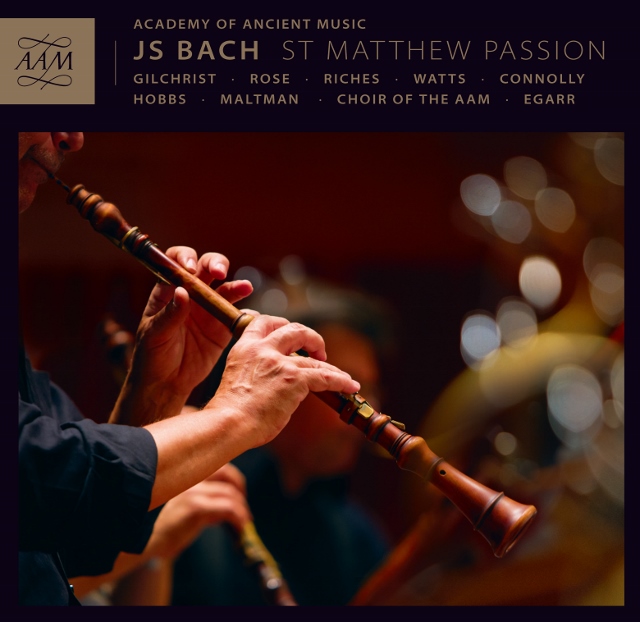
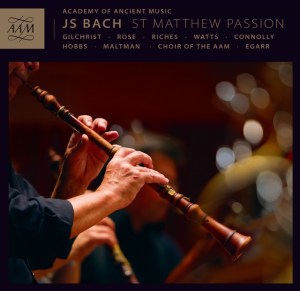
Bach: St Matthew Passion (1727 version)

Bach St Matthew Passion (1727 version)
Academy of Ancient Music, Richard Egarr.
AAM Records. AAM004.  

Richard Egarr director & harpsichord, James Gilchrist Evangelist, Matthew Rose Jesus, Elizabeth Watts soprano, Sarah Connolly alto, Thomas Hobbs tenor, Christopher Maltman bass. Choir of the AAM.   3 CDs. 58’40+49’39+36’19=144’38

Richard Egarr’s introductory article to this new recording of Bach’s most famous work is headed ‘Oh No, not again’.  It concludes with ‘Don’t be a bowl of petunias’, an enigmatic reference to the frequently reincarnated bowl of petunias in ‘The Hitchhikers Guide to the Galaxy’.  His article questions the perceived wisdom of assuming that later incarnations of a piece of music are inevitably the best and most complete.  Like Handel, Bach often changed and re-ordered his music, often for the most pragmatic of reasons.  Normally heard in the version developed from performances in 1736, 1742 and 1746, the Academy of Ancient Music has returned to its first known incarnation of the Matthew Passion, dating from an (assumed) Good Friday Vespers performance in Leipzig’s Thomaskirche in 1727.  This early version was copied down a few years after Bach’s death by a pupil of one of Bach’s singers, but we do not know why.  It is a remarkable survival.

There are several differences from the later version, many very subtle.  The major ones include the fact that the double choir and orchestra structure is weakened by having just one continuo group, rather than two.  This implies that the two choirs and their orchestras would have been positioned closer together, as they are on this recording.  In contrast, the separation of the two orchestras is then emphasised by having both orchestra leaders (rather than just one) take on the two big violin solos, the solo in Erbame dich played from orchestra 2, accompanied by orchestra 1, with Gebt mir meinen Jesum wieder the other way round.  Part One ends, not with the usual O Mensch, bewein dein Sünde groß, but with the simply-stated chorale Jesum lass ich nicht von mir.  The Second Part opens with Ach, nun ist mein Jesus hun!, but sung by a bass rather than an alto. This might have spiritual significance, but could equally have been the purely practical result of which singer happened to be in best voice at the time. Perhaps the most distinctive change from the later version comes closer to the end, with the famous bass aria Komm, süßes Kreuz.  This is normally the moment when the viola da gamba player takes centre stage for the complex obligato accompaniment.  But here Bach chooses the elegiac sound of the solo lute (with organ), a strikingly compelling tonal alteration to the more usual sound.  Other changes in instrumentation include the use of the organ and winds (rather than a ripieno choir or soloist) to bring out chorale melody in the opening chorus. More subtle changes are found in the relative reduction in ornamentation, notably in the lack of appoggiaturas (for example, in the orchestral accompaniment of So ist mein Jesus nun gefangen) – often tricky in performance.

Stephen Rose’s intelligent programme note introduces the liturgical and musical background to the Leipzig Passion.  It is difficult to imagine the response of the Leipzig congregation to first hearing a work of such power, but Rose helpfully analyses the Passion’s arias within the context of Luther’s 1519 three stages of meditation and contemplation on the Passion story, something listeners of the day would have understood better than we do today.

The Academy of Ancient Music field a strong cast of soloists and instrumentalists, with an exceptional performance from James Gilchrist as the ever-communicative Evangelist.  The two 10-strong choirs give gutsy readings of the turbo choruses although, when at full throttle, the sopranos display rather too much vibrato for my taste.

Richard Egarr’s interpretation is characteristically distinctive, not least for his occasionally relaxed approach to pulse and rubato.  For example, in the alto aria, Buß und Rei, (CD1:10) he lingers on the penultimate note of phrases, perhaps signifying the repentance and regret of the opening line. Moments like this certainly attracted attention on my first listen, but I found my initial surprise lessened with repeated listening.  Indeed, the performance as a whole combines musically strength with sensitivity, and can be thoroughly recommended, not just for the undoubted importance of hearing this rarely performed 1727 version.  I have only heard it live once before, during the 2012 Leipzig Bachfest performed by Bach Collegium Japan and the Tölzer Knabenchors under Masaaki Suzuki.

The CD was recorded over a 7-day period in St Jude-on-the-Hill, with Philip Hobbs as the distinguished producer and engineer.  It comes in a hardback booklet format, with the full text and an English translation. A sound sample and an introductory video can be found at http://www.aam.co.uk/#/recordings/discography/js-bach/bach-matthew-passion.aspx.

[https://andrewbensonwilson.org/2015/03/29/bach-st-matthe…n-1727-version/]
AAM Mat Pass