Krebs: Keyboard Works Volume 3 & 4

Johann Ludwig Krebs (1713 – 1780)
Keyboard Works Volume 3 & 4
Steven Devine, harpsichord
Resonus Classics RES10329 (77’30) & RES10344 (63’50)


Steven Devine continues his crustation-inspired (Krebs = crayfish or crab) series of recordings of Krebs’ keyboard works with Volumes 3 and 4. They follow the two earlier recordings reviewed here (Volume 1) and here (Volume 2). I understand there will now be two further CDs after the originally planned series of four, an essential and welcome addition needed to cover Krebs’ known harpsichord works. I should repeat the warning I gave in earlier reviews of this series that it only represents a part of Krebs’ keyboard music. The programme note essay gives the far more accurate ’Works for Harpsichord’ title. The works for organ fill another 7 full-sized CDs. Many of Krebs’ organ compositions show a direct Bach influence, often to a specific piece that Krebs then expands, often to enormous length and complexity. That is far less apparent in the harpsichord works on this recording, although the Bach-inspired moments are fairly easy to spot.
Continue reading

Picardy Players: Birch Tales

Birch Tales
The Picardy Players, James Batty
Art Workers’ Guild, 19 October 2024


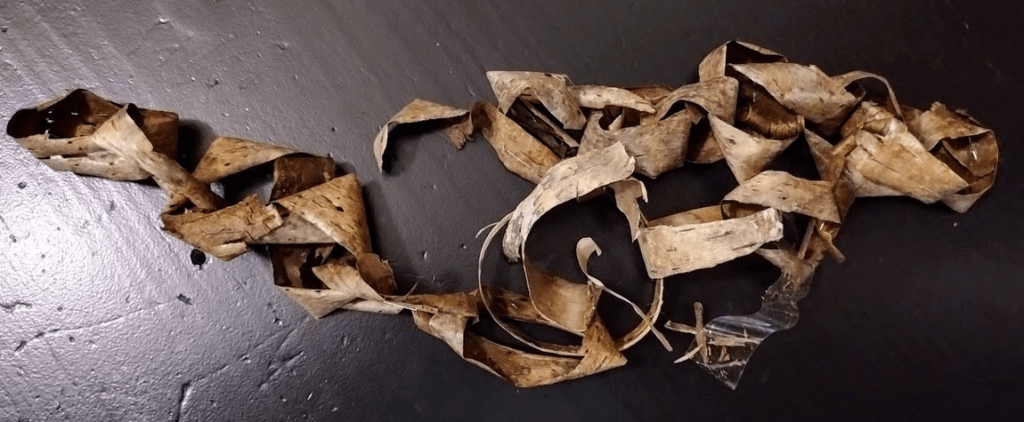
This fascinating “multi-sensory concert experience” from the Picardy Players ticked several boxes of musical and historical interest alongside the senses of sight, smell, taste and touch, represented by displays of birch bark, wafts of woodland smells, birch juice drinks from the bar, and a honey pastry and a little pendant tied to birch bark left for us on our seats – all explained in the brief programme note by linking them to the various tales that we were about to hear.

Continue reading

AAM: Charpentier’s Actéon & Rameau’s Pygmalion

Charpentier’s Actéon & Rameau’s Pygmalion
Academy of Ancient Music, Laurence Cummings

Anna Dennis, Rachel Redmond, Katie Bray, Thomas Walker
Milton Court, 9 October 2024

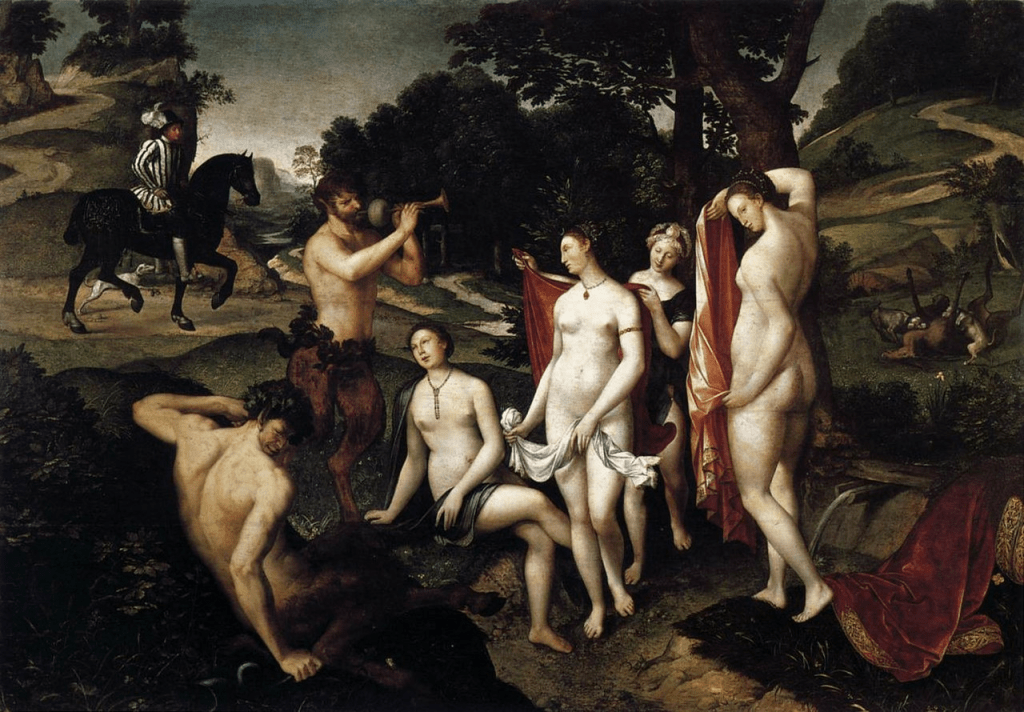
François Clouet: Bath of Diana (1558)

The Academy of Ancient Music opened its 2024/25 season, under the banner of Transformation, with a concert performance double-bill of French Baroque ‘operas’ or, more exactly, a Pastorale en musique and an Acte de ballet – Marc-Antoine Charpentier’s Actéon and Jean-Philippe Rameau’s Pygmalion. I am following those irritating promotional videos that encourage you to stay tuned until the end by urging you to read this review through to the end – this concert ended with one of the most extraordinary examples of musical professionalism and skill from the AAM’s musical director, Laurence Cummings, recently and deservedly appointed as an OBE.

Continue reading

The Sixteen. Purcell: The Fairy Queen

Purcell: The Fairy Queen
The Sixteen, Harry Christophers
Matthew Brook, Robin Blaze, Antonia Christophers
Cadogan Hall. 25 September 2024


There are many ways to perform Purcell’s The Fairy Queen, including a particularly energetic one at this year’s BBC Proms and another earlier in the year from HGO. In my review of the Proms version, I suggested that “… this must rank as one of the most inventive and entertaining” of the many versions of this musical extravaganza I have seen. I can now add this outstanding concert performance of Purcell’s music by Harry Christophers and The Sixteen to my list of favourites. Not only was it “inventive and entertaining” but, with the aid of one of the best programme booklets I have ever read and the lively, engaging and informative narrator, Antonia Christophers (I guess, a relation), the whole thing made perfect sense.

Continue reading

The Mozartists: Jommelli – a celebration

Niccolò Jommelli – a celebration
The Mozartists, Ian Page
Fflur Wyn, Ambroisine Bré, Hugo Brady

Wigmore Hall, 18 September 2024

“Vidi il mar tutto in procella” from Ricimero, re de’ Goti (1740)
“Se il povero ruscello” from Ezio (1741)
“Io già sento nel mio petto” from Merope (1741)
“Crescon le fiamme” from Didone abbandonata (1763)
“De’ miei desiri ormai… Che farò?” from Il Vologeso (1766)
Duetto, “La destra ti chiedo” from Demofoonte (1764)
“ Ombre che tacite qui sede” from Fetonte (1768)
“Hereuse paix tranquille” from La critica (1766)
“Fra l’orror di notte oscura” from Armida abbandonata (1770)
“Prendi l’estremo addio” from Ifigenia in Tauride (1771)
“Sol del Tebro in su la sponda” from Il trionfo di Clelia (1774)
“Misera Armida … Odio, furor, dispetto” from Armida abbandonata (1770)

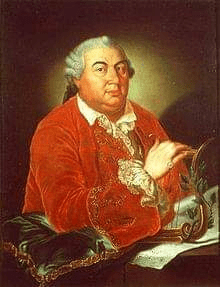
You would be forgiven for not having heard of Niccolò Jommelli (1714-1774), although he does have a Facebook profile, with the above profile picture – and now wants me to be his ‘Friend’. A prolific Neopolitan composer well-known in his day, he composed around 80 operas. He was described at the time as “the creator of a quite new taste, and certainly one of the foremost musical geniuses who have ever lived“. Selections from 11 of these were featured in this concert celebrating the 250th anniversary of his death, the first in The Mozartists’ 2024/25 season. Their exploration of Mozart and the composers around him in their MOZART 250 project has revealed many little-known delights, and Jommelli is certainly one of them. Of the five times I have reviewed music by Jommelli on this website, most have been courtesy of The Mozartists, including their 2016 concert performance of Jommelli’s opera Il Vologeso.

Continue reading

Laus Polyphoniae 2024, Antwerp

Laus Polyphoniae 2024
“VOX\VOCES, monophonic\polyphonic”
Antwerp, Flanders
23 August – 1 September 2024


Antwerp’s annual Laus Polyphoniae festival, as the name suggests, is devoted to music from the late Middle Ages and Renaissance, a period when polyphony was paramount. This year’s festival had the banner of VOX\VOCES, monophonic\polyphonic reflecting an investigation of links between monophonic and polyphonic music during the period. As usual, it was organised by AMUZ (Flanders Festival Antwerp) from its base centred around the baroque St. Augustine Church in the centre of Antwerp. An introductory essay to the festival and clickable details of all the events can be found here. The festival lasted for 11 days, but I was only able to review the first four days. which included the International Young Artist’s Presentation (IYAP) on the first Saturday, reviewed here.

Continue reading

International Young Artist’s Presentation 2024

International Young Artist’s Presentation
Laus Polyphoniae 2024
AMUZ, Antwerp. 24 August 2024

The International Young Artist’s Presentation (IYAP) is an annual coaching and presentation scheme promoted by AMUZ (Flanders Festival Antwerp) and the Musica Impulscentrum to help promising young musicians “grow into tomorrow’s stars”. Six young early music ensembles are invited to three days of coaching by international early music specialists before performing short programmes during public concerts on the first Saturday of the Laus Polyphoniae festival (reviewed here). Unlike most similar young artist events, it is not a competition but an informal opportunity for young musicians to develop their performing style. An invited Feedback Committee of concert promoters and others comment privately on their public performances. Scarily for me, and possibly them, these reviews are far from private, but I hope will be equally helpful.

Continue reading

Prom 40: St John Passion

BBC Proms: Bach’s St John Passion
Bach Collegium Japan, Masaaki Suzuki
Royal Albert Hall, 19 August 2024


Bach’s Passio secundum Joannem, the St John Passion, was first performed on 7 April 1724 during the Good Friday Vespers at the Nicholaskirche in Leipzig, a last-minute change from the originally planned Thomaskirche. It was less than a year since he took up the post of Thomaskantor, a post that, infamously, had been first offered to both Telemann and Graupner who both turned the offers down. The 300th anniversary of the first performance was one of several anniversaries celebrated during this year’s BBC Proms at the Royal Albert Hall. It was first performed complete at the Proms in 1967, although extracts had been incorporated into the popular ‘Bach Wednesdays’ since 1924.

Continue reading

National Early Music Association

National Early Music Association UK
Move to a subscription-free and open access model

The National Early Music Association UK (NEMA) was founded in 1981 as a coordinating body for the various strands of early musical activity in the UK and to promote the appreciation and performance of early music by amateurs and professionals. It is a Registered Charity (No. 297300). NEMA works alongside regional Early Music Fora (who run practical workshops and courses), and other early music organisations in the UK and worldwide. Over the years, it has produced numerous publications and organises regular academic conferences and other events. The current publications are Early Music Performance and Research and the NEMA Newsletter, both published twice yearly.

After more than forty years as a subscription-based membership organization, NEMA has now moved to a subscription-free and open-access model. Membership is now open to all, international as well as UK, with no subscription fee. A website has been set up at https://nema3.webnode.co.uk/ pending the redesign and relaunch of the main website. The most recent issues of the current two journals and newsletters are downloadable from the website, as is an 80-page index to all the past publications. The NEMA website will eventually include the complete back catalogue of publications going back 35 years, a record of previous conferences and events, together with links and other useful information.

Continue reading

Proms: Purcell’s The Fairy Queen

BBC Proms: Purcell’s The Fairy Queen
Les Arts Florissants, Le Jardin des Voix, Compagnie KÄFIG
Paul Agnew, conductor, Mourad Merzouki, choreographer/stage director
Royal Albert Hall, 6 August 2024


There are many ways to perform Purcell’s The Fairy Queen, but this must rank as one of the most inventive and entertaining. I have seen many versions of this musical extravaganza, including a bottom-numbingly-long version that attempted to recreate the original 1692 production when Purcell’s five masques were interspersed between sections of the spoken play, which was an appallingly turgid adaptation of Shakespeare’s Midsummer Night’s Dream. Composed to celebrate the anniversary of William and Mary’s wedding, Purcell’s five masques bear a marginal and rather metaphysical and academic relationship (explained here) to Shakespeare’s play, the revised version concentrating on the dream-like world of the fairies. The five masques are all introduced by Titania or Oberon, who may well have been played by eight or nine-year-old children, seemingly joined by a wider cast of young children.

Continue reading

Ymaginacions

Ymaginacions
Ludford: Mass Upon John Dunstable’s Square

La Quintana, Jérémie Couleau
Paraty 1123291. 61’15


Following on from their Heavenly Songes recording, reviewed here, the four strong enseble La Quintana returns to Nicholas Ludford for another of his mass settings, the Missa Feria II based, as the title reveals, on “John Dunstable’s Square”. The Square is a complex bit of Renaissance musicology that is helpfully explained in the CD notes. The recording is based on music that might have been heard in the medieval Royal Chapel of St Stephen’s, the undercroft of which still exists in the bowels of the Houses of Parliament in Westminster.

Continue reading

2024 York Early Music International Young Artists Competition

York Early Music International Young Artists Competition 2024
National Centre for Early Music
York, 13 July 2024


Founded in 1985, the biennial York Early Music International Young Artists Competition takes place in the National Centre for Early Music (NCEM) in the former church of St Margaret’s, Walmgate in York. As usual, it formed the conclusion of the annual York Early Music Festival. The competition is open to ensembles with at least three members aged 36 years or under with an average age of 32 or less. The repertory must be from the Middle Ages to the nineteenth century, and performers must use historically informed playing techniques, instruments and stylistic conventions.

This year, nine ensembles were selected by the Festival’s Artistic Advisors based on audio recordings but one, the Swiss-based ensemble BREZZA had to withdraw before the final. As usual, the two days before the final featured informal recitals under the guidance of conductor and keyboard player Steven Devine. These informal recitals allow finalists to adapt to the performance space and get to know the audience before the competition final. The Competition final takes place before an international jury (on this occasion Bart Demuyt, Philip Hobbs, Elizabeth Kenny, Lionel Meunier and Emily Worthington) with an audience that includes representatives of the broadcasting, recording, festival and music promotion worlds. It is a key opportunity to identify new and promising young talent.

The final was broadcast live on the NCEM YouTube channel, and can be viewed here – there is also a link to the detailed programme for the final. The final was also recorded by BBC Radio 3, and highlights will be broadcast on the Early Music Show on 3 November and will be available afterwards on BBC Sounds.

Continue reading

Royal Festival Hall: Organ at 70

Organ at 70
Ourania Gassiou & Eleni Keventsidou
Royal Festival Hall, 28 June 2024


Bach: Allegro from Brandenburg Concerto 2. arr. Reger for keyboard (4 hands)
Franck: Choral No.2 in B minor
Cochereau: Scherzo symphonique (from 12 Pieces)
Liszt: Funérailles from Harmonies poétiques et religieuses, S.173 arr. Nicolas Kynaston for organ
Reger: Rhapsodie in C sharp minor, Op.65 No.1; Toccata in E minor, Op.65 No.11
Leighton: Martyrs – dialogues on a Scottish psalm tune for organ duet, Op.73

As a continuation of the Royal Festival Hall’s “Organ at 70” celebrations of the influential concert hall organ (see an earlier event review here, and an organ history here), the two Greek organists Ourania Gassiou & Eleni Keventsidou, described in the publicity as the “Greek goddesses of the organ world”, presented an unusual concert of music that included pieces composed or arranged for two players. Each player had solo moments, with Ourania Gassiou pairing Franck’s second Choral with Cochereau’s ebullient Scherzo symphonique and Eleni Keventsidou contrasting Liszt’s elegiac Funérailles with two of Reger’s most dramatic and virtuosic works from his Op.65. They concluded with a performance of Kenneth Leighton’s 1976 duet, Martyrs.

Continue reading

The Renaissance Singers at 80

Sing Joyfully
The Renaissance Singers at 80
Renaissance Singers, The San Trovaso Consort, David Allinson
St. George’s Bloomsbury. 29 June 2024

Robert Fayrfax: Magnificat ‘Regale’ a5
Giovanni Pierluigi da Palestrina: Super flumina Babylonis a4
Jacobus Clemens: Ego flos campi a7
Orlando Lassus: Missa Puisque j’ay perdu a4, Kyrie and Agnus Dei
Heinrich Isaac: Virgo Prudentissima a6

Thomas Luis de Victoria: Four Mairan Antiphons
Alma redemptoris mater a8; Ave regina caelorum a8; Salve regina a8; Ave Maria a8
Mikolaj Zielenski: Magnificat a12

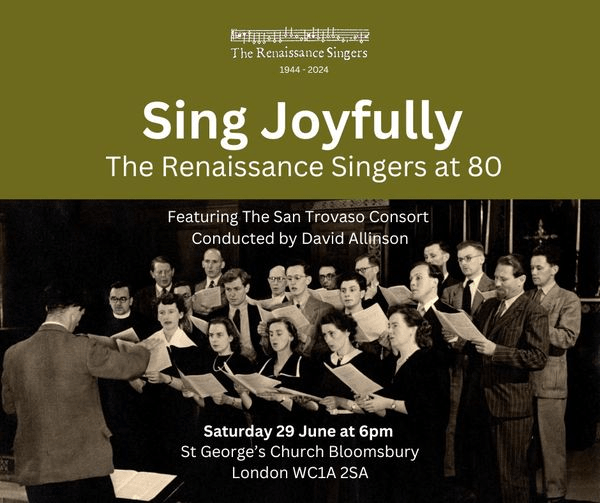
In July 1944, a newly formed choir gave its first concert as V2 bombs fell on London. Founded by Michael Howard, The Renaissance Singers was seen as the performing wing of the Renaissance Society and were motivated by a love of Renaissance vocal music. They aimed to recover lost masterpieces and share them with new audiences. At the time, the repertoire was unfamiliar, and there were few if any performing additions. Early audience members included Ralph Vaughan William, who became their second President. Under its current Musical Director David Allinson it is now one of the UK’s leading amateur chamber choirs specialising in early music, pioneering neglected composers, bringing original programmes to new audiences, and collaborating with top-flight musicians in a year-round programme of concerts and workshops.

Continue reading

Programme Notes: Two German Anniversaries: 1624 & 1674

Mayfair Organ Concerts
St George’s, Hanover Square, 2 July
2024

Two German Anniversaries: 1624 & 1674
Samuel Scheidt and Matthais Weckmann

Andrew Benson-Wilson

Samuel Scheidt (1587-1654)
Tabulatura nova, 1624
Echo ad manuale duplex forte et lene
Fantasia super Io son ferito lasso
Modus pleno Organo pedaliter: Benedicamus à 6 Voc

Matthias Weckmann (c1616-1674)
Canzon in G
Nun freut euch, lieben Christen gmein
Praeludium A.5 Vocem

This recital celebrates the 400th and 350th anniversaries of two of the most important German composers of the early to mid-17th century: Samuel Scheidt’s seminal three-volume 1624 Tabulatura nova and Matthias Weckmann, who died in 1674.

Continue reading

Georg Muffat: Missa in Labore Requies a 24

Georg Muffat: Missa in Labore Requies a 24
Le Banquet Céleste, La Guilde des Mercenaires, Damien Guillon
Château de Versailles Spectacles CVS106. 58’53


If you like your music loud and dramatic, with moments of calm, you will love this recording by Le Banquet Céleste and La Guilde des Mercenaires of Georg Muffat’s c1690 Missa in Labore Requies a 24. Muffat (1653-1704) is one of the most interesting composers of the high Baroque period, not least because of his ability to combine musical genres from many different countries. Born in Savoy, he studied during his early teens with Lully in Paris. After a period as organist at Strasbourg Cathedral, he studied law in Ingolstadt, before moving to Vienna, Prague and then Salzburg, where he worked for about 10 years (with Biber) in the court of the Prince-Archbishop. After further study in Rome, where he studied organ with Pasquini and met Corelli. he moved to Passau as Kapellmeister to the Bishosh of Passau. It was in Passau that we find the first mention of the monumental Missa in Labore Requies, Muffat’s only surviving sacred workThe score came into Haydn’s hands, passing on his death into the Esterházy archives and finally to the Budapest National Library.

Continue reading

Two German Anniversaries: 1624 & 1674

Mayfair Organ Concerts
St George’s, Hanover Square
Tuesday 2 July 2024, 1.10pm

Two German Anniversaries: 1624 & 1674
Samuel Scheidt and Matthais Weckmann
Andrew Benson-Wilson


This concert celebrates the 400th and 350th anniversaries of two of the most important German composers of the early 17th century: the publication in 1624 of Samuel Scheidt’s seminal three-volume Tabulatura nova and the death in 1674 of Matthias Weckmann.

Samuel Scheidt (1587-1654)
Tabulatura nova, 1624
Echo ad manuale duplex forte et lene
Fantasia super Io son ferito lasso
Modus pleno Organo pedaliter: Benedicamus à 6 Voc

Matthias Weckmann (c1616-1674)
Canzon in G
Nun freut euch, lieben Christen gmein
Praeludium A.5 Vocem

Continue reading

Forma Antiqva: “Farándula Castiza”

Farándula Castiza: Madrid, the melting pot
Forma Antiqva
London Festival of Baroque Music
St John’s, Smith Square. 15 May 2024


For around 40 years, and through several incarnations, the London Festival of Baroque Music was one of the highlights of London’s early music scene. Formally known as the Lufthansa Festival, their lengthy sponsorship by a major German airline helped bring a wealth of non-UK musicians to London. But things have changed for most such events in these hardened times, and the latest version of the festival is a shadow of its former self. The 2024 version managed just seven concerts, only one of which was not from the UK despite their promise to showcase “the world’s finest Baroque talent, delve into a captivating programme of chamber, choral, and solo works. Under the theme of “Overtures,” this year’s festival heralds the dawn of new musical beginnings. Explore the origins of Baroque forms and experience their evolving influence, style, and instrumentation”. An imaginative but largely inaccurate description of their actual programme which included rather a lot of Clare and Robert Schumann Mendelssohn, Handel, and Bach – not exactly the “origins of Baroque forms”!

The only non-UK import was the multi-format Spanish group Forma Antiqva, here five-strong with two violins, cello, theorbo and guitar. Their programme was Farándula Castiza: Madrid, the melting pot, a fascinating peek into the musical world of 18th-century Madrid, reflecting the musical influences from different countries and genres.

Continue reading

Renaissance Moderns: Britten Sinfonia, Marian Consort

Renaissance Moderns
Britten Sinfonia, Marian Consort, Lisa Illea
Milton Court, London. 11 May 2024

Binchois (arr. for strings by Lisa Illean): Two chansons
Dunstable: Regina Caeli
Thomas Adès: Darknesse visible
Lisa Illean: Arcing, stilling, bending, gathering (UK premiere)
Lusitano: Heu me Domine; Allor che ignuda
Gesualdo: Moro lasso; Hei mihi Domine; Sparge la more
Brett Dean: Carlo

This cleverly designed concert from the Britten Sinfonia and The Marian Consort was built around the music of Gesualdo and his influence on present-day composers, notably the Australian composer Lisa Illean whose compositions were a feature of the evening, including the European premiere of her Arcing, stilling, bending, gathering, a co-commission of the Britten Sinfonia.

There aren’t many concerts where the programme has a content warning “contains references to violence, murder and rape”. This one did, in reference to the pre-concert showing of Werner Herzog’s 1995 German television film “Gesualdo: Death for Five Voices“. It was a rather curiously stylised and imaginative depiction of the life of Gesualdo (1566-1613), shot in the locations in which his life unfolded including the Palazzo San Severo in Naples, where the famous double murder of his wife, Donna Maria d’Avalos, and her lover took place (shortly before he succeeded as Prince of Venosa), and one of the family estates, the Castello di Gesualdo, where he spent most of the rest of his life in a state of declining mental health, employing a servant to apply daily flogings.

Continue reading

The Mozartists

Mozart in 1774
The Mozartists
Ian Page, Samantha Clarke, Jane Gower
Wigmore Hall. 2 May 2024


Mozart: Symphony No. 28 in C, K.200
Paisiello: Povera prence… Deh, non varcar (from Andromeda)
Mozart: Bassoon Concerto, K.191
Epistle Sonata in D major, K.144
Crudeli, fermate… Ah, dal pianto (from La finta giardiniera)
Symphony No. 30 in D, K.202

Following the opening concert on the 10th anniversary of their monumental MOZART 250 project, which gave a retrospective view of the wider context of music in 1774 (reviewed here), Ian Page’s The Mozartists focussed on Mozart himself in a concert that could be said to reflect the first true masterpieces of the still very young composer. The relatively little-known Mozart pieces were composed in Salzburg at a time when a new archbishop restricted the pan-European travels that his predecessor had allowed Mozart and his father. Only for the last three weeks of the year was he able to travel to Munich for the premiere of his opera La finta giardiniera, commissioned by the Elector Maximillian III for the Munich carnival.

Continue reading

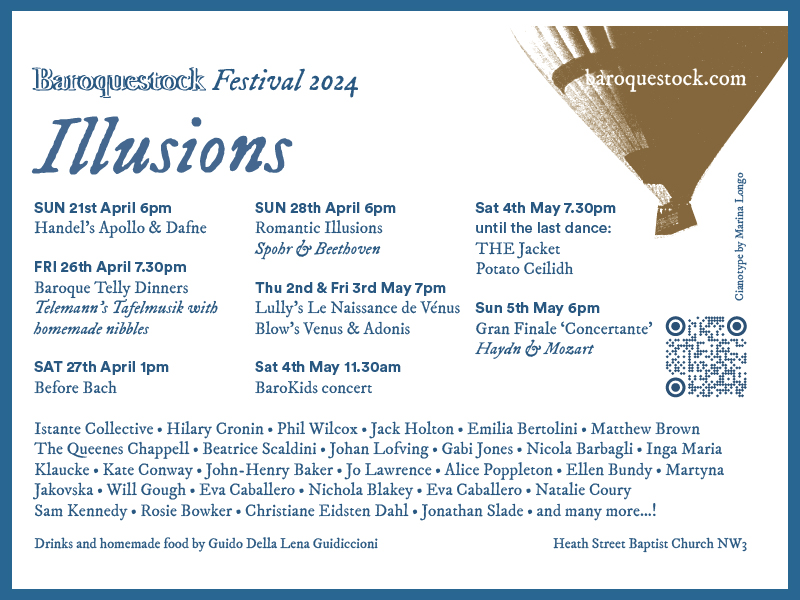
Baroquestock Festival: Lully & Blow

Lully & Blow – La naissance de Vènus & Venus and Adonis
Istante Collective, The Queenes Chappell
Baroquestock Festival 2024 @ Heath Street Baptist Church. 3 May 2024


Jean-Baptiste Lully – Le Ballet royal de la naissance de Vénus (LWV 27)
John Blow – Venus and Adonis


Under the title of Illusions, the ever-enterprising Baroquestock presented their Baroquestock Festival 2024 at their accommodating home base of Heath Street Baptist Church in Hampstead. The festival included 8 events spread over two weeks, one of the highlights being two semi-staged performances of Lully’s and Blow’s takes on the story of Venus. A fascinating pairing that covered the birth of Venus and Blow’s French-inspired version of the later story of Venus and Adonis.

Continue reading

HGO: Purcell – The Fairy Queen

Purcell, The Fairy Queen
HGO, HGOAntiqua Orchestra, Seb Gillot, Eloise Lally

Jacksons Lane Arts Centre, Highgate, 27 April 2024


Purcell’s ‘semi-opera’ is a complicated piece to perform and/or stage. Originally composed for a version of Shakespeare’s MIdsummer’s Nights Dream it includes incidental instrumental pieces (First and Second Music as the audience gathered, Act Tunes between acts, short symphonies at the start of each act and various dances) together with five staged masques at the end of each act. The whole thing lasts about 5 hours. I watched the bemused audience at Glyndebourne in 2009 as they sat through around 45 minutes of spoken text before the first masque. The music and text of the masques only bear a metaphorical relationship to the Shakespear tale. This impressive production by HGO (formally known as Hampstead Garden Opera) added an additional layer of interpretation by setting the whole thing as “a variety of incarnations by a magical tale-spinner, a photographer studying love through her camera lens”.  They promised to take us “through the gamut of human emotions … as we are taken into the photographer’s dream space where anything is possible. In a brief spoken introduction, we were told that “mischiefs are at play”. Indeed they were.

Continue reading

The Dragon of Wantley

Frederick Lampe: The Dragon of Wantley
New Sussex Opera, Bellot Ensemble, Toby Purser
Theatre Royal, Winchester. 28 April 2024


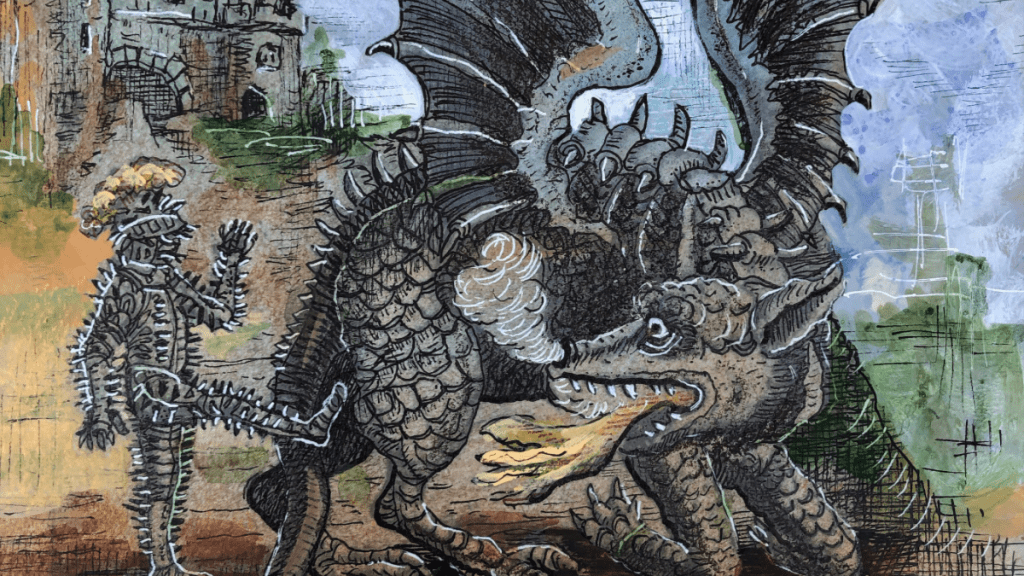
As part of a short tour of south-east England, the New Sussex Opera brought their production of Frederick Lampe’s 1737 opera The Dragon of Wantley (1737) to the splendid surroundings of the Theatre Royal, Winchester. It is a fascinating piece, full of political and musical allusions that would probably have been obvious to the London audience of the time but may evade the average 21st-century audience. It is based on a dragon-slaying legend at Wharncliffe Crags (aka Wantley), north-west of Sheffield. It was the subject of a 1685 broadside ballad and Lampe’s 1737 popular opera to a text by Henry Carey. The dragon causes havoc to the local community until the local squire, Moore of Moore Hall is persuaded to deal with it,. He demands a night (and more) from the 16-year-old Margery. The jealousy of his mistress Mauxalinda provides much of the plot. Eventually, a fatal kick to the dragon’s most vulnerable spot (pictured above) solves the dragon problem, if not the girlfriend issue.

Continue reading

Weelkes: What Joy so True

Weelkes: What Joy so True
Anthems, Canticles and Consort music by Thomas Weelkes
The Choir of Chichester Cathedral, The Rose Consort of Viols, John Bryan
, Charles Harrison
Regent Records. REGCD571. 77’12


The 400th anniversaries in 2023 of the death of Thomas Weelkes (1576-1623) and William Byrd (c1540-1623) threw into sharp focus the contrast between the fates and subsequent reputations of these two English composers. Not surprisingly, Byrd had the well-deserved lion’s share of the attention during their 2023 anniversary year. This enterprising recording gave a chance for Weelkes to have his say. It comes from Chichester Cathedral, where he was Organist and Master of the Choristers (informator choristarum) from his mid-20s, following four years as organist of Winchester College, where most of his madrigals seem to have been composed. He just about managed to retain the Chichester post until his death, despite frequent accusations of drunkenness and for being a “notorious swearer & blasphemer” which led to occasional periods of expulsion.

Continue reading

Haydn: The Creation (with dance)

Haydn: The Creation (with dance)
Scherzo Ensemble, Orpheus Sinfonia
Matthew O’Keeffe, conductor

Winchester College New Hall, 6th April 2024


Under their artistic director and conductor Matthew O’Keeffe and producer and general manager Stephanie Waldron, the Scherzo Ensemble (a charity since 2021) and their associated Longhope Opera provide training and development opportunities for emerging singers, including (commendably, paid) performances. One such was this imaginative realisation of Haydn’s oratorio, The Creation, in Winchester College’s New Hall (repeated the following day in St John’s, Smith Square). It was promoted as “a unique classical experience . . . where music seamlessly intertwines with dance, costume, and lighting, breathing new life into this timeless masterpiece . . . engaging the singers and instrumentalists in a captivating synergy of movement and sound alongside the dancers”. The performance showcased the emerging artists as soloists, choir, and dancers, together with the Orpheus Sinfonia chamber orchestra.

Continue reading

Bojan Čičić. Bach: Partitas & Sonatas

Bach: Partitas & Sonatas
Bojan Čičić, violin

Delphian DCD34300. 78’46+67’14, 2CDs


Many of Bojan Čičić‘s recordings have focussed on lesser-known composers, their music brought to life with inspiring performances. He now turns his attention to Bach with this recording of the Partitas & Sonatas (Sei solo à violin senza basso accompagnato), BWV 1001-1006. Unusually, the Partitas are on the first CD with the Sonatas on the second, rather than in the order that Bach seems to have intended with the two genres alternating. This allows us to concentrate on how Bach deals with the sequences of dance movements in the Partitas and the more formal Corelli-inspired four-movement structure of the Sonatas.

Continue reading

Academy of Ancient Music. St Matthew Passion

St Matthew Passion
Academy of Ancient Music, Laurence Cummings
The Barbican, 29 March 2024


The Academy of Ancient Music (an Associate Ensemble at the Barbican Centre) is celebrating the 50th anniversary of its foundation by Christopher Hogwood. At a time when practically everybody else was concentrating on the St John Passion, in its anniversary year, they promoted a special performance of the Matthew Passion in the Barbican Hall, directed by their Music Director, Laurence Cummings. What was special about it was that they took the music back to its Leipzig roots, with a small orchestra (or, to be exact, two small orchestras) and a choir of just 8 (4+4) singers, all of whom contributed solos (of various importance), including, in Choir 1, the key roles of the Evangelist and Christus and the multi-character bass in Choir 2.

Continue reading

Royal Festival Hall organ @ 70

The Royal Festival Hall organ @ 70
Saturday 23 March 2024


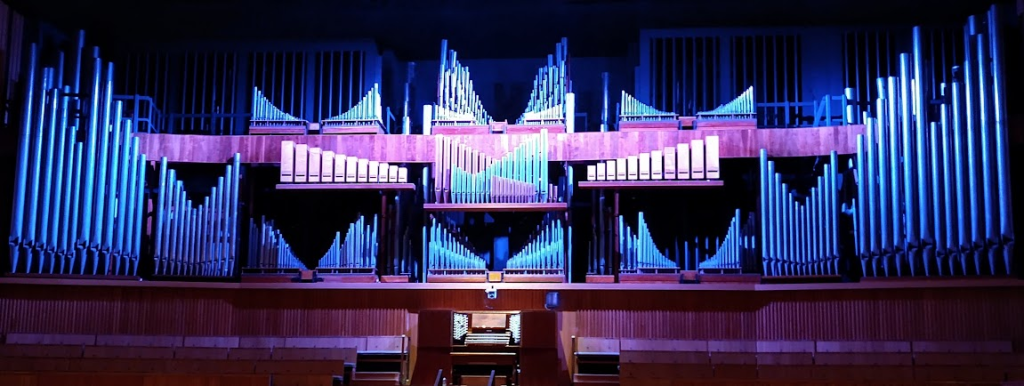
I have played organs dating back to the fifteenth and sixteenth centuries, so the 70th birthday of an organ might not appear to be that big a deal. But the organ in London’s Royal Festival Hall made an important, if controversial, contribution to the post-war British organ world. Designed by Ralph Downes, it was based on the Organ Reform Movement (Orgelbewegung) which started in Germany in the 1920s (with the enthusiastic support of Albert Schweitzer) and sought to reflect the style and construction techniques of pre-19th century organs, notably, in the early days, with a focus on the more historically informed performance of Bach. A detailed history of the RFH organ can be found here. Below is a photo of Ralph Downes inside the RFH organ with one of the tuners from the organ builders Harrison & Harrison of Durham, from his book Baroque Tricks.

Continue reading

Early Music Day recital: BEFORE BACH programme notes

Mayfair Organ Concerts – The Grosvenor Chapel
19 March 2024

Early Music Day concert
Andrew Benson-Wilson
BEFORE BACH

Conrad Paumann (c1410-1473) Incipit Fundamentum m.C.p.C;
Magnificat Octavi Toni. 2v
(From the Buxheimer Orgelbuch, c1460)

Hans Buchner (1483-1538) Magnificat anima sexti Toni. 2v

Hieronymus Praetorius (1560-1629) Magnificat Tertii Toni. 3v

Mathias Weckmann (1617-74) Magnificat II. Toni. 4v

Johann Pachelbel (1653-1706) Fantasia in G; Three Fugues from the Magnificat tertii Toni

Samuel Scheidt (1587-1654) Benedicamus à 6 Voc.1624

This is the first of two related Early Music Day concerts with the titles of BEFORE BACH and AFTER BACH. The second concert, AFTER BACH, is this Sunday, 24 March at 7.45 in Christ’s Chapel of Alleyn’s College of God’s Gift, 14 Gallery Rd, Dulwich SE21 7AD with music by Stanley, CPE Bach and Corrette. Today’s concert traces German organ music from around 1460 to Bach’s youth, with a focus on music for the service of Vespers, notably the Magnificat, one of the key musical elements of Vespers in both the Catholic and Lutheran traditions.

Continue reading

Early Music Day recital, Dulwich. 24 March 2024.

The Chapel of Christ of Alleyn’s College of God’s Gift
Gallery Road, Dulwich, SE21 7AD
Sunday 24 March 2024, 7:45


AFTER BACH
Andrew Benson-Wilson

Andrew’s annual Early Music Day concerts usually include music by JS Bach, reflecting the fact that Early Music Day is on 21 March, the date of Bach’s birth under the current calendar. This year Andrew is giving two Early Music recitals, with the titles of BEFORE BACH and AFTER BACH. As well as focussing on music from England, Germany and France (John Stanley, CPE Bach and Michel  Corrette) published in the years immediately following Bach’s death in 1750, the AFTER BACH recital also reflects the date of the 1760 George England organ and the rather unusual concert time of 7:45 in the evening.

AFTER BACH and AFTER DARK!

The 1760 George England organ was restored in 2009 by William Drake.
Organ details can be found here.
A link to the programme notes will eventually be posted here.

The Chapel of Christ and Alleyn’s College of God’s Gift adjoin the Dulwich Art Gallery.
Free street parking.
Admission is free, with a generous retiring collection.
Post-concert refreshments.

The first of the two linked Early Music Day recitals has the title BEFORE BACH and is on Tuesday 19 March at 1:10 in The Grosvenor Chapel.