Bach: Christmas Oratorio

Bach Christmas Oratorio
The Hanover Band and Chorus, Andrew Arthur
Philippa Hyde, Tim Morgan, Bradley Smith, Edward Grint

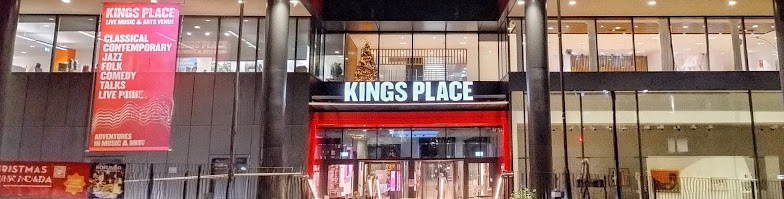
Kings Place, 22 December 2025

Bach’s Christmas Oratorio (Weihnachtsoratorium, BWV 248) is a collection of six cantatas performed in Leipzig on six separate occasions over the 1734 Christmas period. Each cantata was performed twice, in the Thomaskirche and the Nikolaikirche. They were performed on December 25th, 26th, and 27th, New Year’s Day, the first Sunday in the New Year, and finally Epiphany (6 January), covering the complete Lutheran Christmas season. Despite the separate nature of the performance schedule, it seems clear from the autograph title page that Bach saw the six cantatas as a unified whole. There is a logical sequence of keys, moving from D major, G, D, F, A and back to D, and the first and last cantatas are connected by Bach reuse of the chorale melody of Part I’s Wie soll ich dich empfangen for the last chorus of Part VI, Nun seid ihr wohl gerochen. That choral melody is the same as the Passion Choral in the St Matthew Passion. The different instrumentation would have made it difficult for Bach to have performed them all as a continuous whole, as is usually done nowadays in concert performances. On this occasion, as is usually the case, the 4th cantata, for New Year’s Day (the circumcision and naming of Jesus), was omitted.

Continue reading

Claire M Singer: Gleann Ciùin

Gleann Ciùin
Claire M Singer, LCO
Queen Elizabeth Hall, 7 December 2025

Solas; Ode to Saor;
56.9500° N, 3.2667° W; Maps; 57.0908° N, 3.6939° W;
Forrig; Gleann Ciùin.

Claire M Singer is a Scottish composer, cellist and performer of acoustic and electronic music who “draws inspiration from the dramatic landscape of her native Scotland, exploring rich harmonic textures and complex overtones that create ever-shifting melodic and rhythmic patterns disappearing almost as soon as they emerge”. Although she had previously composed some pieces for organists, her own introduction to the organ world came in her imaginative appointment in 2012 as music director at the Union Chapel, an enormous Congregational church and events venue in Islington, and home to a famous 1877 ‘Father’ Willis organ. She has since managed a major restoration of the organ and an impressive series of organ-related events, not least curating the annual Organ Reframed festival, focused on encouraging experimental music based on the organ. This event at the Queen Elizabeth Hall featured music from three of her five CDs (Solas, Saor and Gleann Ciùin), played on the Queen Elizabeth Hall organ with added electronics and orchestrations played by members of the London Contemporary Orchestra.

Continue reading

Ricordanze: a record of Love

Ricordanze: a record of Love
Music of the Biffoli-Sostegni manuscript
Musica Secreta, Laurie Stras
Lucky Music Ltd. LCKY005. 2CDs 50’28 + 51’20

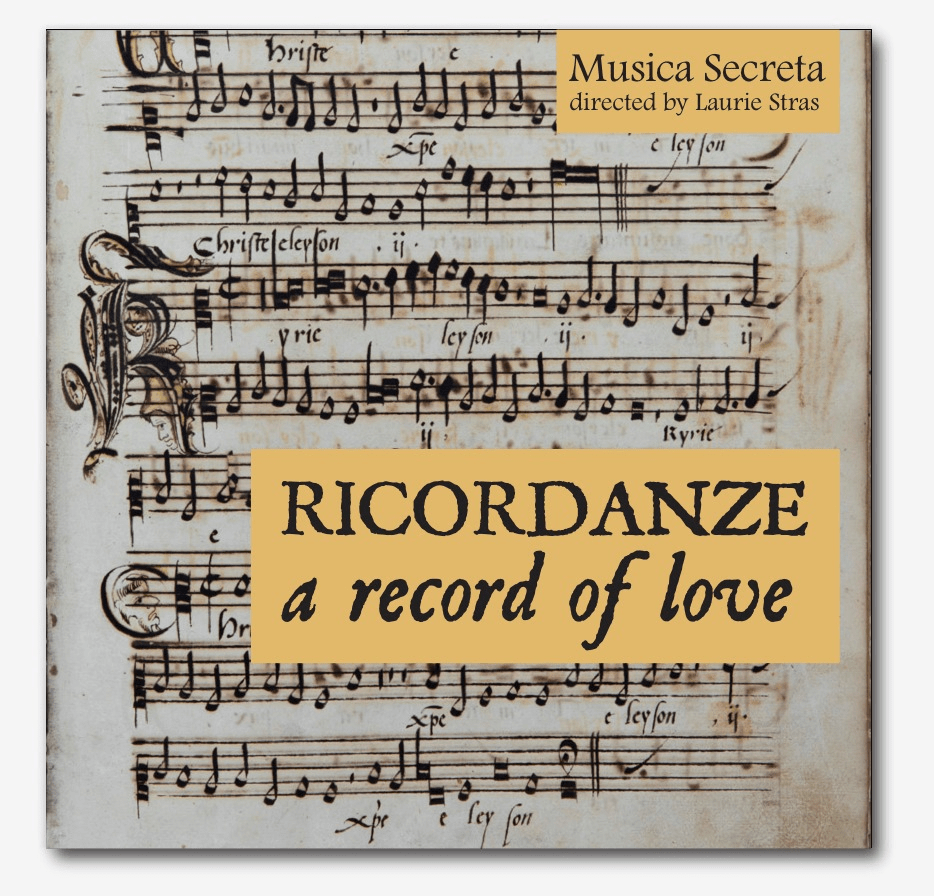
This recording from Musica Secreta is the result of serious musicological research combined with a labour of love – a fulfilling combination. Ricordanze: a record of Love is an audible culmination of a decade or more of research by Musica Secreta’s director, Laurie Stras (Emeritus Professor of Music at the University of Southampton), into the Biffoli-Sostegni manuscript (Bibliothèque du Conservatoire royal de Bruxelles, MS 27766). It dates from 1560, and is the only surviving manuscript of polyphony from a sixteenth-century convent. The title comes from the names of two nuns embossed on its binding. It belonged to San Matteo in Arcetri, a small convent community in the hills just south of Florence. It was where Suor Maria Celeste Galilei, the eldest daughter of Galileo Galilei, spent her life. Through the “haunting and extraordinary music of sixteenth-century nuns who sang their community through siege, plague, and deprivation”, the recording narrates the convent’s history, from the 1530 Siege of Florence to the final letters written by Suor Maria Celeste Galilei (a later convent choirmistress) to her father in 1634. The San Matteo is depicted in the left foreground (the red building) in Vasari’s painting of the 1530 Siege of Florence.

Vasari: Siege of Florence.

Continue reading

I Fagiolini: Monteverdi Vespers

Monteverdi Vespers of 1610
I Fagiolini, English Cornett & Sackbut Ensemble
Robert Hollingworth
St Martin in the Fields, 26 September 2025

The Monteverdi Vespers of 1610 is one of those enigmatic pieces with a complicated back story and fascinating performance quandaries, not unlike the Bach B minor Mass. Under the title of Vespers for the Blessed Virgin, it is part of a larger publication, Mass for the Most Holy Virgin for six voices, and Vespers for several voices with some sacred songs, suitable for chapels and ducal chambers. It combines music for a Mass and the Vespers together with “a few sacred songs” and a largely instrumental Sonata. It does not fit into either a traditional Mass or Vespers ritual. At the time, Monteverdi was maestro di capella to the Gonzaga Dukes of Mantua, but the score was personally dedicated and presented to the Borghese Pope Paul V in Rome, suggesting that it was a not-so-subtle calling card for preferment, representing as it does the wide scope of his compositional powers. Despite that, within three years, he was appointed maestro di capella at St Mark’s in Venice. It is unlikely that it was ever heard the Vespers in the form that we know it today. Indeed, it might never have been intended to be heard in that form.

Continue reading

Fugue State Films & RCO Cinema: Bach – The Great Toccata

The Great Toccata
Daniel Moult
Fugue State Films & RCO Cinema

I have reviewed several of the excellent films produced by Will Fraser’s award-winning Fugue State Films (see here). Their latest offering heralds a new and welcome collaboration with the Royal College of Organists in a new RCO initiative, RCO Cinema, which aims to bring “high-quality films about the organ and its music available to the widest possible audience around the world” Fugue State films on RCO Cinema will be available to watch, free, for around six to eight weeks. Future films will include pairs of films on the organ music of Olivier Messiaen and César Franck, giants of the 20th and 19th centuries. In the meantime, the first film to be offered on RCO Cinema is Fugue State Films’ The Great Toccata, featuring the distinguished English organist and teacher, Daniel Moult, Head of Organ Studies at the Royal Birmingham Conservatoire and an RCO Trustee. The film can be viewed on RCO Cinema here until the end of August 2025. If you are too late reading this to view it on RCO Cinema, streaming and box-set purchase and options are available here.

Continue reading

AAM: Beethoven’s 5th

Beethoven’s 5th
Academy of Ancient Music
Laurence Cummings, David Blackadder, trumpet
Academy of Ancient Music

Barbican Hall. 27 June 2025


Maria Theresia Ahlefeldt: Telemachus on Calypso’s Isle
Haydn: Trumpet Concerto
Beethoven: Symphony No. 5

In what was billed as “struggles, seduction and sparkling wit”, Laurence Cummings and the Academy of Ancient Music (AAM) gave another of their enterprising concerts, this time in the Barbican Hall. They opened with music from Maria Theresia Ahlefeldt, a composer little known today whose nationality seems to confuse many people. She was born in 1755 in Regensburg (then the permanent seat of the Imperial Diet of the Holy Roman Empire) as Princess Maria Theresia of Thurn and Taxis, the princely house that, since 1812, has had its seat in Regensburg’s Schloss Thurn und Taxis. After an ‘interesting’ early life of royal culture, privilege and intrigue, she eventually married a Danish Count against the wishes of her family (a criminal offence at the time for a royal), leading to her flight to Ansbach, part of the Brandenburg domains. In 1792, her husband later became director of the Royal Danish Theatre, where the ballet-opera Telemachus on Calypso’s Isle was first performed later the same year.

Continue reading

Bach: The Art of Fugue

Bach: The Art of Fugue
on Bach’s Original Instruments

Collegium Musicum ’23
OUTHERE/RAMEE
RAM2406. 82’41


Bach left many unanswered questions with his monumental Art of Fugue, one of which was which instruments they were intended to be played on – if, indeed, they were intended to be played at all. It was presented in open score, with a separate line for each line of music. This was common practice for many decades for music intended for scholarly or didactic purposes, particularly for organists. Samual Scheidt, for example, used the same format in his 1624 Tabulatura Nova, asking organists to copy the music into their own preferred format for performance. The instruments chosen for this interpretation by Collegium Musicum ’23 are very special: two 1729 violins and a viola by Johann Christian Hoffmann from the Leipzig Thomaskirche’s own collection of instruments of Bach’s time. The anonymous cello is from 18th-century Central Germany from the same collection. They are all usually displayed behind glass in the side room of the church.

Continue reading

OAE: Elgar

Elgar
Orchestra of the Age of the Enlightenment
Dinis Sousa, Frances Gregory
The Anvil, Basingstoke. 6 June 2025

In the South (Alassio)
Sea Pictures
Enigma Variations

The Orchestra of the Age of the Enlightenment has long since expanded their musical interests well beyond the bounds of the historical (18th-century Age of Enlightenment, not least into the music of the last 150 years or so, on this occasion focusing on the music of Edward Elgar from the years around 1900. Their conductor, the Portuguese Dinis Sousa, was making his debut with the orchestra. This must be a terrifying experience for any conductor, given the extraordinary musical knowledge of the OAE musicians and their willingness, in true Enlightenment manner, to question percived musical wisdom. It was also possibly his debut conducting an all-Elgar concert. Both experiences proved to be memorable for him; his rapport with the OAE players was obvious, as was his refreshing take on Elgar, notably his most famous piece, the Enigma Variations.

Continue reading

The Edward Lewis viol of 1703

The Edward Lewis viol of 1703
Henrik Persson
Barn Cottage Recordings BCR028. 72’44

Hely Suite in A minor; Suite in A major
Brown Three Ayres
Telemann Fantasia no. 6 in G major; Fantasia no. 7 in G minor
Sumarte Prelude and Daphne, Monsieur’s Almain, Lachryme; Fortune my Foe
Anon Dances from the Williamsburg Musick Song Book
Anon Suite in D major from the Brünner MS
Hume Good Againe

A companion recording to Newe Vialles Old Viols, reviewed here, focuses on the 1703 Edward Lewis bass viol, played by Henrick Persson. The music is by Benjamin Hely, Thomas Brown, Telemann, Richard Sumarte and Tobias Hume, together with dances from the Williamsburg Musick Song Book of 1738 (the only known compositions for viola da gamba from an 18th-century American source) and traces the development of solo viol music from Hume up to the time of Telemann. There are 14 bass viols by Edward Lewis known to have survived to the present day, of which only seven are in performance condition. The one used on this recording is the only playable one in the UK, owned by the viol maker, Jane Julier, who loaned the instrument. The sound is absolutely gorgeous, with rich and resonant harmonics, here helped by a generous acoustic.

Continue reading

Newe Vialles Old Viols

Newe Vialles Old Viols
Newe Vialles
Barn Cottage Recordings BCR027. 65’26

Benjamin Hely (d.1699): Sonatas in G minor and B flat major
Christopher Simpson (c.1604-1669): Divisions in C major and F major
John Jenkins (1592-1678): Dances and Divisions in G minor
William Young (d.1662): Duos for two bass viols
Daniel Norcombe (c.1576-1655): Tregian’s Ground
Nicola Matteis (c.1650-after 1714): Pieces for guitar and continuo
and arrangements of tunes from Playford and Sumarte

The possibly confusing title of this recording needs some explanation. As I understand it, Newe Vialles is the group’s name and Old Viols the title of the recording. Newe Vialles was founded in 2015 by Henrik Persson and Caroline Ritchie, the name coming from the “Newe Vialles” of Henry VIII’s court which replaced the “old vialles” (rebecs or fiddles), starting a long tradition of English viol-playing. My previous reviews of Newe Vialles can be found here. For this recording, they are in their consort format, with Henrik Persson and Caroline Ritchie joined by Lynda Sayce (theobo and lute) and James Akers (baroque guitar). Their programme is music for two division viols, played on two original English viols by John Pitts (1675) and Edward Lewis (1703). The concept for the recording is stated as … “If the original owners of these viols had met, what music might they have played? The programme encompasses repertoire from the latest sonatas by Benjamin Hely (who himself owned a viol by Pitts) to divisions by Christopher Simpson and John Jenkins, duos by William Young, and arrangements of popular tunes and grounds from the time. An imaginary glimpse into a private music meeting in the early years of the 18th century.”

Continue reading

Lyrebird Music appeal

Readers will know of the excellent Lyrebird Music editions of early keyboard music, many of which I have reviewed positively on this site. This small publisher is now under a legal threat which could affect its future. Please read the story and donate to help preserve this important early keyboard music publisher.

https://www.gofundme.com/f/lyrebird-music-please-help-save-this-music-publisher?fbclid=IwY2xjawHPqrNleHRuA2FlbQIxMQABHTCPyq3ZuAK4i040pFHhZ7G3fqoBWgiEM47n1GbRAXmrmYSbrCWYdguewQ_aem_PcUPgCtOLN7B5lDRbx_bFg

Matthias Weckmann: Complete Organ Works

Matthias Weckmann: Complete Organ Works
Léon Berben
1637 Stellwagen organ, St. Jakobi, Lübeck
1624 Hans Scherer organ, St. Stephanus, Tangermünde

Aeolus. AE-11431. 2CDs 72’27+78’29


Matthias Weckmann (c1616-1674) is one of the most interesting and influential of the North German pre-Buxtehude organist composers. Unlike most of the other organists in Hamburg, he was not a pupil of Sweelinck but was clearly influenced by those who were, not least his teacher for three years, Jacob Praetorius, organist of the Hamburg Petrikirche and Heinrich Scheidemann organist of the Catharinenkirche. His own organ playing was said to have combined elements of the style of both Praetorius and Scheidemann. His earlier musical training had been in Dresden when he was a chorister at the Saxon Court under the court composer Heinrich Schütz, a pupil of Giovanni Gabrieli. After his Hamburg years and a short period with Schütz in Denmark, he became the Electoral Court Organist in Dresden where he met and befriended the much-travelled Froberger, a pupil of Frescobaldi. The pair engaged in a famous keyboard competition arranged by the Saxon Elector. In 1655 he returned to Hamburg as organist of the Jakobkirche after a well-documented audition, records of which gave valuable information about the expectations of a Hamburg organist and practical information about, for example, registration practice at the time. He founded the Hamburg Collegium Musicum.

Continue reading

Krebs: Keyboard Works Volume 3 & 4

Johann Ludwig Krebs (1713 – 1780)
Keyboard Works Volume 3 & 4
Steven Devine, harpsichord
Resonus Classics RES10329 (77’30) & RES10344 (63’50)


Steven Devine continues his crustation-inspired (Krebs = crayfish or crab) series of recordings of Krebs’ keyboard works with Volumes 3 and 4. They follow the two earlier recordings reviewed here (Volume 1) and here (Volume 2). I understand there will now be two further CDs after the originally planned series of four, an essential and welcome addition needed to cover Krebs’ known harpsichord works. I should repeat the warning I gave in earlier reviews of this series that it only represents a part of Krebs’ keyboard music. The programme note essay gives the far more accurate ’Works for Harpsichord’ title. The works for organ fill another 7 full-sized CDs. Many of Krebs’ organ compositions show a direct Bach influence, often to a specific piece that Krebs then expands, often to enormous length and complexity. That is far less apparent in the harpsichord works on this recording, although the Bach-inspired moments are fairly easy to spot.

Continue reading

National Early Music Association

National Early Music Association UK
Move to a subscription-free and open access model

The National Early Music Association UK (NEMA) was founded in 1981 as a coordinating body for the various strands of early musical activity in the UK and to promote the appreciation and performance of early music by amateurs and professionals. It is a Registered Charity (No. 297300). NEMA works alongside regional Early Music Fora (who run practical workshops and courses), and other early music organisations in the UK and worldwide. Over the years, it has produced numerous publications and organises regular academic conferences and other events. The current publications are Early Music Performance and Research and the NEMA Newsletter, both published twice yearly.

After more than forty years as a subscription-based membership organization, NEMA has now moved to a subscription-free and open-access model. Membership is now open to all, international as well as UK, with no subscription fee. A website has been set up at https://nema3.webnode.co.uk/ pending the redesign and relaunch of the main website. The most recent issues of the current two journals and newsletters are downloadable from the website, as is an 80-page index to all the past publications. The NEMA website will eventually include the complete back catalogue of publications going back 35 years, a record of previous conferences and events, together with links and other useful information.

Continue reading

Ymaginacions

Ymaginacions
Ludford: Mass Upon John Dunstable’s Square

La Quintana, Jérémie Couleau
Paraty 1123291. 61’15


Following on from their Heavenly Songes recording, reviewed here, the four strong enseble La Quintana returns to Nicholas Ludford for another of his mass settings, the Missa Feria II based, as the title reveals, on “John Dunstable’s Square”. The Square is a complex bit of Renaissance musicology that is helpfully explained in the CD notes. The recording is based on music that might have been heard in the medieval Royal Chapel of St Stephen’s, the undercroft of which still exists in the bowels of the Houses of Parliament in Westminster.

Continue reading

Royal Festival Hall: Organ at 70

Organ at 70
Ourania Gassiou & Eleni Keventsidou
Royal Festival Hall, 28 June 2024


Bach: Allegro from Brandenburg Concerto 2. arr. Reger for keyboard (4 hands)
Franck: Choral No.2 in B minor
Cochereau: Scherzo symphonique (from 12 Pieces)
Liszt: Funérailles from Harmonies poétiques et religieuses, S.173 arr. Nicolas Kynaston for organ
Reger: Rhapsodie in C sharp minor, Op.65 No.1; Toccata in E minor, Op.65 No.11
Leighton: Martyrs – dialogues on a Scottish psalm tune for organ duet, Op.73

As a continuation of the Royal Festival Hall’s “Organ at 70” celebrations of the influential concert hall organ (see an earlier event review here, and an organ history here), the two Greek organists Ourania Gassiou & Eleni Keventsidou, described in the publicity as the “Greek goddesses of the organ world”, presented an unusual concert of music that included pieces composed or arranged for two players. Each player had solo moments, with Ourania Gassiou pairing Franck’s second Choral with Cochereau’s ebullient Scherzo symphonique and Eleni Keventsidou contrasting Liszt’s elegiac Funérailles with two of Reger’s most dramatic and virtuosic works from his Op.65. They concluded with a performance of Kenneth Leighton’s 1976 duet, Martyrs.

Continue reading

Georg Muffat: Missa in Labore Requies a 24

Georg Muffat: Missa in Labore Requies a 24
Le Banquet Céleste, La Guilde des Mercenaires, Damien Guillon
Château de Versailles Spectacles CVS106. 58’53


If you like your music loud and dramatic, with moments of calm, you will love this recording by Le Banquet Céleste and La Guilde des Mercenaires of Georg Muffat’s c1690 Missa in Labore Requies a 24. Muffat (1653-1704) is one of the most interesting composers of the high Baroque period, not least because of his ability to combine musical genres from many different countries. Born in Savoy, he studied during his early teens with Lully in Paris. After a period as organist at Strasbourg Cathedral, he studied law in Ingolstadt, before moving to Vienna, Prague and then Salzburg, where he worked for about 10 years (with Biber) in the court of the Prince-Archbishop. After further study in Rome, where he studied organ with Pasquini and met Corelli. he moved to Passau as Kapellmeister to the Bishosh of Passau. It was in Passau that we find the first mention of the monumental Missa in Labore Requies, Muffat’s only surviving sacred workThe score came into Haydn’s hands, passing on his death into the Esterházy archives and finally to the Budapest National Library.

Continue reading

Weelkes: What Joy so True

Weelkes: What Joy so True
Anthems, Canticles and Consort music by Thomas Weelkes
The Choir of Chichester Cathedral, The Rose Consort of Viols, John Bryan
, Charles Harrison
Regent Records. REGCD571. 77’12


The 400th anniversaries in 2023 of the death of Thomas Weelkes (1576-1623) and William Byrd (c1540-1623) threw into sharp focus the contrast between the fates and subsequent reputations of these two English composers. Not surprisingly, Byrd had the well-deserved lion’s share of the attention during their 2023 anniversary year. This enterprising recording gave a chance for Weelkes to have his say. It comes from Chichester Cathedral, where he was Organist and Master of the Choristers (informator choristarum) from his mid-20s, following four years as organist of Winchester College, where most of his madrigals seem to have been composed. He just about managed to retain the Chichester post until his death, despite frequent accusations of drunkenness and for being a “notorious swearer & blasphemer” which led to occasional periods of expulsion.

Continue reading

Bojan Čičić. Bach: Partitas & Sonatas

Bach: Partitas & Sonatas
Bojan Čičić, violin

Delphian DCD34300. 78’46+67’14, 2CDs


Many of Bojan Čičić‘s recordings have focussed on lesser-known composers, their music brought to life with inspiring performances. He now turns his attention to Bach with this recording of the Partitas & Sonatas (Sei solo à violin senza basso accompagnato), BWV 1001-1006. Unusually, the Partitas are on the first CD with the Sonatas on the second, rather than in the order that Bach seems to have intended with the two genres alternating. This allows us to concentrate on how Bach deals with the sequences of dance movements in the Partitas and the more formal Corelli-inspired four-movement structure of the Sonatas.

Continue reading

Byrd 1589: Songs of sundrie natures

Byrd 1589: Songs of sundrie natures
Alamire, Fretwork, David Skinner
Inventa INV1011. 2 CDs. 53’18+69’19=122’37


Following their 2021 recording of Byrd’s first song collection, the 1588 Psalmes, Sonets & Songs of sadnes and pietie (reviewed here), Alamire and Fretwork turn to what Byrd described as the result of his being “encouraged thereby, to take further paines therein, and to make the pertaker thereof, because I would shew my selfe gratefull to thee for thy loue, and desirous to delight thee with varietie, whereof (in my opinion) no Science is more plentifully adorned then Musicke“. The ensuing 1589 collection “Songs of sundrie natures” was intended “to serue for all companies and voyces: whereof some are easie and plaine to sing, [while] other more hard and dificult“. It is divided into songs of 3, 4, 5 and 6 parts and offers a wide choice of music for a wide range of musical abilities – a sensible financial arrangement, no doubt.

Continue reading

Irlandiani: Smock Alley

Irlandiani: Smock Alley
CD launch concert: Sands Music Room, Rotherhithe, Thursday 14 September 2023
Carina Drury & Poppy Walshaw, cellos, John-Henry Baker, violone, percussion
CD: First Hand Records, FHR144
plus Nathaniel Mander, harpsichord, Eimear McGeown, Irish flute


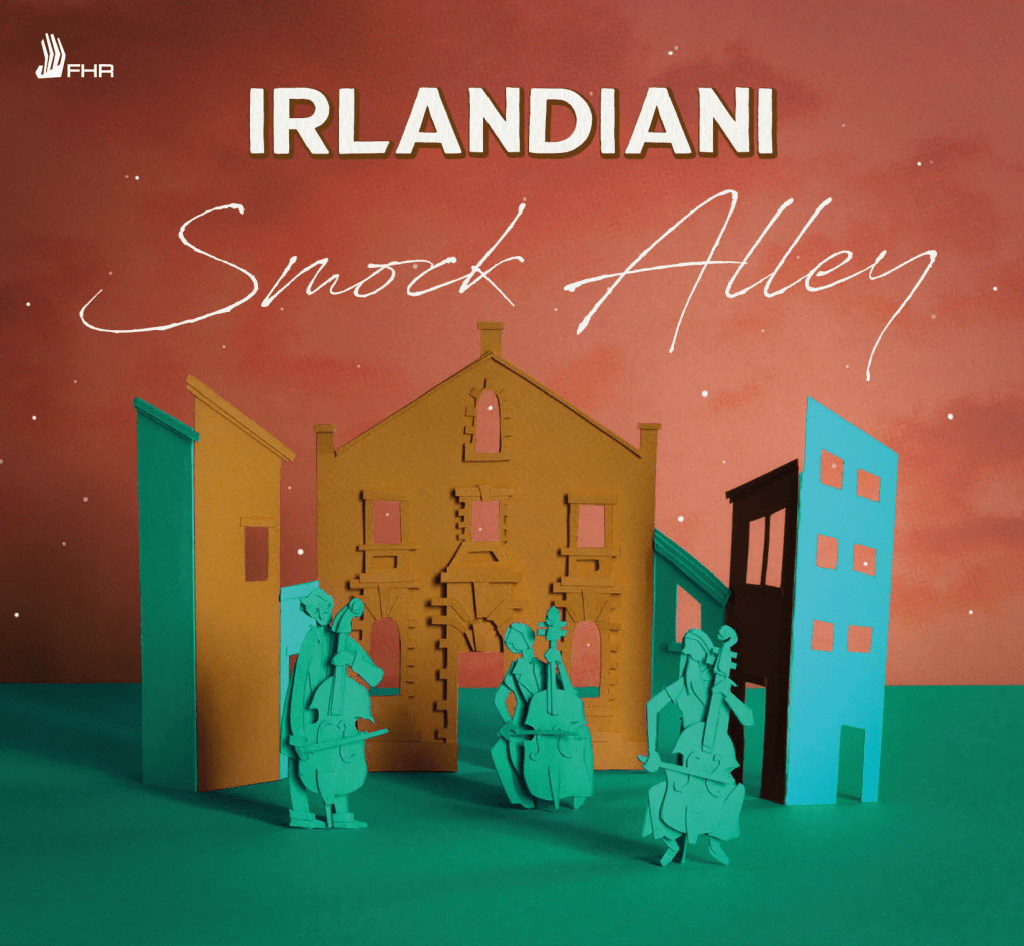
Following her earlier CD, Irlandiani (reviewed here) comes this latest recording from cellist Carina Drury and her collective group, also called Irlandiani. It is based on the musical life in and around the Smock Alley Theatre in 18th century Dublin. It features cello duos in the Galant style by the Neapolitan composer Tomasso Giordani who moved to Dublin in 1763 as musical director at the Smock Alley Theatre. As well as arrangements of 18th-century Irish melodies by musicians linked with the Smock Alley Theatre and its surrounds, the launch concert and recording also features music by Roseingrave, Scarlatti and Geminiani and a new piece by Carina Drury based on the Irish air Caoineadh Na Dtri Muire. If you are quick and live close enough, you can even catch the third of the laun

Continue reading

Handel’s Attick: Music For Solo Clavichord

Handel’s Attick: Music for Solo Clavichord
Julian Perkins, clavichords
Music by Arne, Ebner, Froberger, Handel, Kerll, D Scarlatti, Weckmann and Zachow

Deux-Elles DXL 1191. 75’33


This excellent recording from Julian Perkins is based on a story from Handel’s childhood, as told by John Mainwaring in his 1760 Memoirs of the Life of Handel. His father, suspicious of his musical interests, tried to stop him from playing any musical instruments at home. This led to Handel smuggling a tiny clavichord into the attic of their house so that he could practice at night, having “found means to get a little clavichord privately convey’d to a room at the top of the house“.

Continue reading

Bach: Harpsichord Concertos

J S Bach: Harpsichord Concertos
BWV 1052, 1054, 1055 & 1059
Steven Devine, Orchestra of the Age of Enlightenment
Resonus RES 10318. 63’30

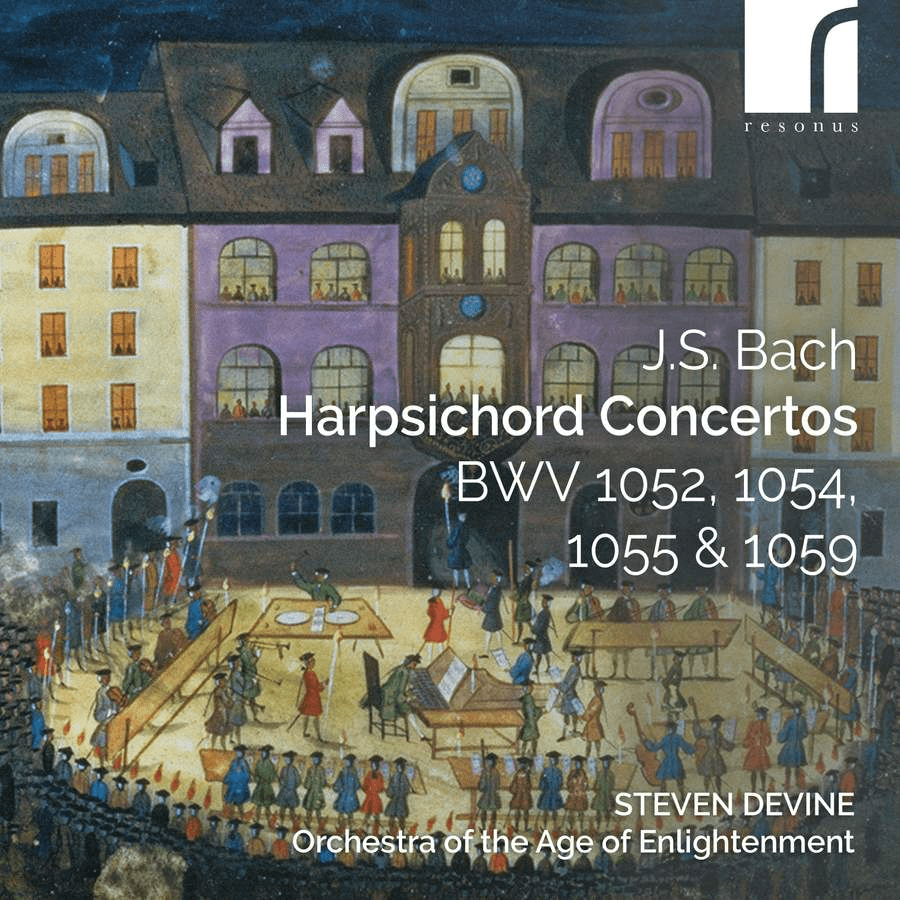
This very welcome addition to the world of Bach recordings features three well-known harpsichord concertos plus what is, in effect, an entirely new concerto. Steven Devine’s programme essay sets out the often complicated history of the music played. The manuscript of these concertos is in Bach’s own hand. It contains seven concertos and nine bars of a D minor concerto, BWV 1059. There is strong evidence that only the first six concertos were intended as a set, with Bach’s traditional sign-off (Finis. S. D. Gl.) appearing at the end of the sixth concerto. The following BWV 1058 seems to have been an unsuccessful attempt at converting a violin concerto into a harpsichord concerto. The few bars of a D minor concerto (given the BWV number of 1059 despite its brevity) are of particular interest in this recording.

Continue reading

Sietze de Vries: Bach’s Missing Pages

Bach’s Missing Pages: An Expanded Orgelbüchlein
Sietze de Vries, organ
Fugue State Films
. DVD (223′) & 2CDs (73’+68′)

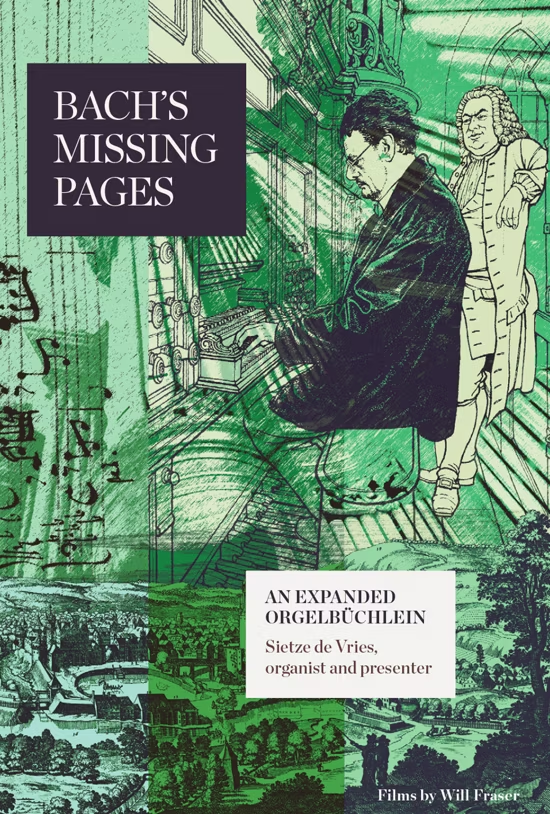
Hot on the heels of the extended, and now completed, Orgelbüchlein Project (which commissioned 118 new pieces to complete the chorales that Bach did not compose), comes this offering from Fugue State Films and Sietze de Vries. Over seven c30′ films (on one DVD) and two related CDs (which contain all the music from the films), Sietze de Vries plays all of the 45 chorales of Bach’s Orgelbüchlein. He then plays his own improvised chorale preludes in the style of Bach, using 45 of the 118 chorale melodies that Bach left titles for, but didn’t compose. In the videos, alongside his improvisations, he explores the philosophy of improvisation and shows how to improvise in the style of Bach, using the important historic organs in the Martinikerk, Groningen and the Petruskerk, Leens, both tucked away in the top right-hand corner of The Netherlands.

Continue reading

Programme notes: William Byrd

Christ’s Chapel of Alleyn’s College of God’s Gift
Sunday 9 July 2023
Andrew Benson-Wilson
plays music by
William Byrd (c1540-1623)


The sixte pavian Kinbrugh Goodd – The galliarde to the same BK32
Coranto BK21a
A Grounde BK9
Wolsey’s Wylde BK37
Fancy (Salve Regina?) BK46
Clarifica me Pater in three & four parts BK48/49
John Bull (1562-1628) Salve Regina Misere Cordi
(Salve Regina – Ad te Clamamas – Eia ergo – O Clemens – O dulcis virgo Maria)

This is the first of two related recitals celebrating the 400th anniversary of William Byrd, who died 400 years ago on 6 July 1623. This recital focuses on Byrd’s music in its different guises and genres, concluding with a piece by John Bull. ‘Byrd’s World’, on Tuesday 1 August in St George’s, Hanover Square at 1:10, will set two of Byrd’s finest keyboard pieces in the context of music of other composers of the time.

Continue reading

František Tůma: Te Deum

Tůma: Te Deum
Czech Ensemble Baroque, Roman Válek

Supraphon SU 4315-2. 54’11


Te Deum (1745)
Sinfonia ex C (1770s?)
Missa Veni Pater pauperum (1736)

This is a very welcome recording of music by František Ignác Antonín Tůma (1704-1774), a little-known composer outside of the Czech Republic. He was born in Bohemia-born and was active during the transitional period between the Baroque and the Galant and Classical eras. After early studies in Prague, he spent most of the rest of his life in Vienna, initially as Kapellmeister for Count Kinsky, the High Chancellor of Bohemia, who encouraged him to study with Johann Joseph Fux, the influential theorist who also influenced Haydn, Mozart and Beethoven. After Kinsky’s death, he became Kapellmeister to the dowager Empress, the widow of Charles VI. In addition to his composing activities, he was also an organist, bass gambist and theorbist

Continue reading

Bach: A Cembalo Certato E Violino Solo

A Cembalo Certato E Violino Solo
Bach: Complete Sonatas for obligato harpsichord and violin, plus 
Sonatas by CPE Bach, Graun, Schaffrath, Scheibe, Telemann

Phillipe Grisvard, Johannes Pramsohler
Audax Records. ADX 13783. 3CDS. 60’28, 73’10,75’07


Johann Sebastian Bach: Complete Sonatas for Harpsichord and Violin
BWV 1014–1019, BWV 1022, BWV 1020
Johann Adolph Scheibe: 3 Sonatas for Violin and Harpsichord
Christoph Schaffrath: Concerto in A Minor CSWV F:30
Carl Philipp Emanuel Bach: Sonata in B Minor, Wq 76
Johann Gottlieb Graun: Sonata in B-flat Major GWV Av:XV:46
Georg Philipp Telemann: Concerto in D Major, TWV 42:D6

This 3-CD package sets Bach’s Sei Sonate a Cembalo certato e Violino solo (together with two others whose authenticity is questioned) against similar pieces by other composers of Bach’s time, several of which are world premiere recordings. Each CD is a complete concert in itself, with two or three of the Bach Sonatas, a Sonata by Johann Adolph Scheibe plus related pieces by Georg Philipp Telemann & Christoph Schaffrath (CD1), Johann Gottlieb Graun (CD2), and Carl Philipp Emanuel Bach (CD3).

Continue reading

Bach: Music for alto

Bach: Music for alto
Barnaby Smith, Katie Jeffries-Harris

The Illyria Consort, Bojan Cičić
VOCES8 VCM152
. 72’16


Bach composed some of his finest music for the alto voice. This recording from countertenor Barnaby Smith and Bojan Čičić’s Illyria Consort features two of the best-known alto cantatas, Ich habe genug (BWV 82) and Vergnügte Ruh, Beliebte Seelenlust (BWV 170) alongside a wide selection of Bach’s other pieces for alto from the Matthew and St John Passions, the Mass in B minor, the Easter Oratorio and, on the digital version, the Christmas Oratorio. The music is arranged in a cycle moving from Candlemas, through the Passion to the Resurrection.

Continue reading

Fugue State Films: Bach and Expression

Bach and Expression
Fugue State Films: Organ Cinema

Film documentary.


Will Fraser’s Fugue State Films have built an impressive reputation for producing high-quality film documentaries on the world of organ music. Originally available in sumptuous box sets of DVDs and CDs and illustrative booklets, they have since expanded into digital access for their film. In the light of changing aspects of access to recorded content and the increase in streaming media, Fugue State Films, in conjunction with the Royal College of Organists have just announced an important new initiative, Organ Cinema. To celebrate and promote the launch, they are allowing free access to all their film documentaries for three days over this weekend, Friday 31 March to Monday 3 April. After that, a range of subscription options will be available.

Continue reading