Laus Polyphoniae 2024, Antwerp

Laus Polyphoniae 2024
“VOX\VOCES, monophonic\polyphonic”
Antwerp, Flanders
23 August – 1 September 2024


Antwerp’s annual Laus Polyphoniae festival, as the name suggests, is devoted to music from the late Middle Ages and Renaissance, a period when polyphony was paramount. This year’s festival had the banner of VOX\VOCES, monophonic\polyphonic reflecting an investigation of links between monophonic and polyphonic music during the period. As usual, it was organised by AMUZ (Flanders Festival Antwerp) from its base centred around the baroque St. Augustine Church in the centre of Antwerp. An introductory essay to the festival and clickable details of all the events can be found here. The festival lasted for 11 days, but I was only able to review the first four days. which included the International Young Artist’s Presentation (IYAP) on the first Saturday, reviewed here.

Continue reading

Laus Polyphoniae 2023, Antwerp

Laus Polyphoniae 2023
Antwerp. Townscape – Soundscape

Antwerp
18 – 22 August 2023

As the name implies, Antwerp’s annual Laus Polyphoniae festival is devoted to the music of the late Middle Ages and the Renaissance, a time when polyphony was paramount. Under the title of Antwerp: Townscape – Soundscape this year’s festival asked the question: “What did Antwerp sound like in the 15th and 16th centuries”? Alongside the shouting in the streets and markets and the dockland sounds, what music sounded in the churches and city palaces during Antwerp’s heyday?

Antwerp experienced an unprecedented economic and cultural boom in the late 15th and 16th centuries. The city was an international metropolis. Goods from all over the world were traded by merchant families who amassed large fortunes. Music was played in many places in the bustling city, from grand churches to private homes. The best singing masters were recruited to compose music for the liturgy. Publishers printed music for those who made music at home. Antwerp was also a centre of printing. Printers such as Phalesius and Plantin were renowned for the high quality of their music publications and surviving prints mean that music can still be performed. Several concerts during the festival were dedicated to these Antwerp music prints. 

Continue reading

Laus Polyphoniae – Polyphony of life

Laus Polyphoniae – Polyphony of life
Antwerp
19-23 August 2022

After a three-year Covid-induced hiatus when Laus Polyphoniae ran a much-reduced series of live and online events, the 2022 Festival restored the postponed 2020 edition, under the title Polyphony of life. As usual, the festival was run by AMUZ (Flanders Festival Antwerp) in conjunction with the Alamire Foundation, the study centre for music in the Low Countries and part of KU (Katholieke Universiteit) Leuven. As the name implies, Laus Polyphoniae is devoted to the music of the Middle Ages and the Renaissance when polyphony was paramount.

Continue reading

Stile Antico – Journey of the Mayflower

Stile Antico
The Journey of the Mayflower

Available free on YouTube until 28 November 2021

This is not a review, but an alert that the excellent vocal group Stile Antico have re-released their 2020 film, The Journey of the Mayflower, on their YouTube channel. It is available free for one week until the end of 28 November 2021. In this music drama, Stile Antico explore the story of the Mayflower Pilgrims, alongside music of the period. The Mayflower Pilgrims were puritans who sailed from Plymouth in September 1620 to what would become New England, seeking a life free from religious persecution. Despite their confidence that God’s favour was with them, their journey was beset with difficulties. Their arrival also heralded an era of destruction for the native Wampanoag tribe.

Continue reading

Antwerp: Laus Polyphoniae 2019

Laus Polyphoniae 2019
Mary of Burgundy & The Burgundian Court
Antwerp, Flanders. 16-20 August

The 26th annual Laus Polyphoniae explored the flourishing cultural scene in the time of Mary of Burgundy (1457-1482), one of the most powerful women in Western Europe during the late Middle Ages. She came to power in the Netherlands in 1477, aged 20, but found that her father, Charles the Bold, had left an empty state treasury, hostile neighbouring countries and domestic revolts. Thanks to her diplomatic skills, the young Duchess managed to calm the situation, notably in Flanders. She was the most sought-after bride in Europe with many suitors, eventually marrying Maximilian of Austria, thereby linking the House of Burgundy to that of the powerful Habsburgs. She died in 1482, at just 25 years old after a fall from her horse. The week-long Laus Polyphoniae festival featured secular and religious music relating to Mary of Burgundy and her time, performed by ensembles from Belgium and abroad, including Stile Antico, Ensemble Leones, Comet Musicke, Utopia and Huelgas Ensemble. I was able to attend for most of the first five days, including the International Young Artist’s Presentation (IYAP) events on the first weekend.  Continue reading

Antwerp: Laus Polyphoniae 2018

Laus Polyphoniae 2018
1618 / BEFORE
Antwerp, Belgium. 16-20 August.

This year’s Laus Polyphoniae festival (part of the Festival van Vlaanderen / Flanders Festival) celebrated two anniversaries. It is 25 years since the festival first started, and 400 years since the opening of the former St. Augustine’s Church (in 1618), now the home of AMUZ (Augustinus Muziekcentrum), the hosts of Laus Polyphoniae. The festival lasted from 16 – 26 August, and I was invited for the first four days, from the opening concert on Thursday 16 August to the lunchtime concert on Monday 20 August. Taking the date of 1618 as the hinge, the Laus Polyponiae festival ‘1618 / Before’, was the prelude to a further series of concerts under the title ‘1618 / Beyond’, the English names being original, not translations.

Focussing on music from the Middle Ages and Renaissance, the programme covered repertoire from the year 800 up to the early 17th century, when the early Baroque style began to emerge from the tradition of Renaissance polyphony. It featured musicians from Flanders and beyond, with a wide-ranging programme of concerts and events, the International Young Artist’s Presentation, and various associated events included a study day exploring the recently discovered Leuven Chansonnier and other educational activities. Unless otherwise noted, all the concerts took place in AMUZ.

IMG_20180819_215308901_LL.jpg

Continue reading

Laus Polyphoniae 2015 – Antwerp

Laus Polyphoniae – Antwerp

WP_20150825_19_32_43_ProThis year, Antwerp’s annual Laus Polyphoniae festival, now in its 22nd year, celebrated one it can claim as its own (at least for a period): the music copyist Petrus Alamire, creator of some of the most extraordinary music manuscripts in the decades around 1500. Born in Nuremburg, Alamire (a musical alias of Peter Imhof: A-la-mi-re)  soon moved to the Low Countries and quickly established himself as compiler of beautiful scores of music of Franco-Flemish composers, then at the peak of their importance. His clients included many of the crowned heads of Europe. His choirbooks contain more than 800 pieces, composed over a period of around 70 years, with the emphasis on masses, motets and chansons. Collectively they represent the development of the important Renaissance polyphonic style in the Low Countries and northern France. Continue reading

Stile Antico: Music for Compline

Music for Compline
Spitalfields Festival. Stile Antico
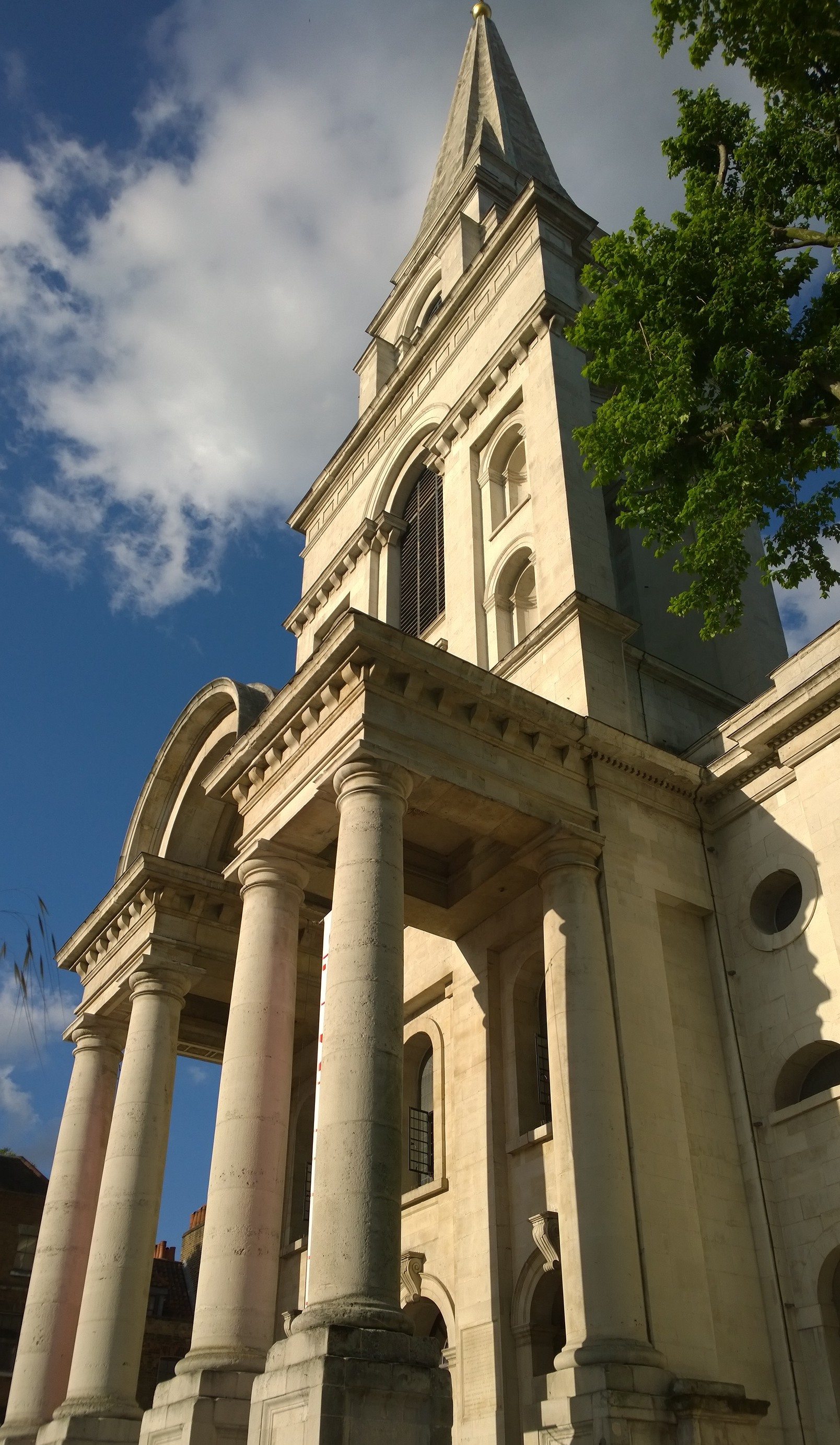
Christ Church, Spitalfields. 5 June 2015

WP_20150605_18_45_24_ProI have followed the fortunes of Stile Antico almost from the start of what is now their 10th year. They continue to impress me with their choice of programmes, their vocal skills and their ability to work together, without the distraction of a conductor. The 13 singers stand in a shallow arc, with the voice types mixed up. The eye contact between them is not only a necessity, but it also brings the audience into their world. It is a formula that obviously works well for them, and for their enthusiastic audiences around the world.

Their Spitalfields concert was based on the music from their first CD, and explored the range of English music composed during the 16th century for the office of Compline, a meditative service sung at dusk. The Catholic setting for most of the pieces was contrasted by a few examples of later Protestant versions based Continue reading