The Royal Festival Hall organ @ 70
Saturday 23 March 2024
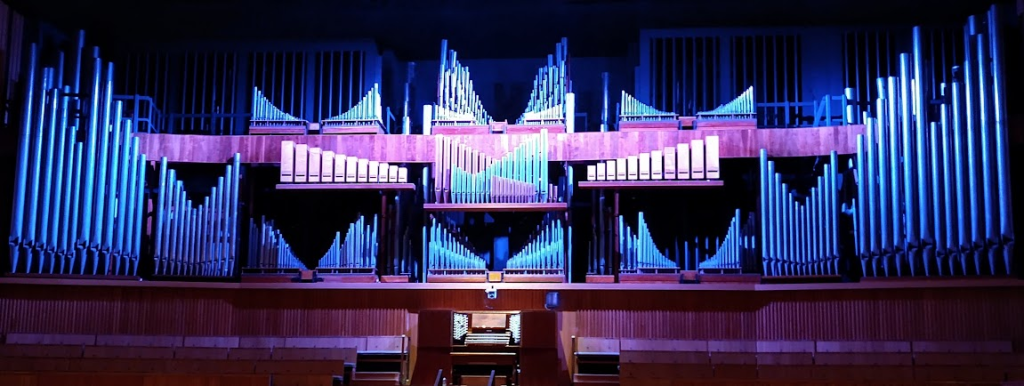
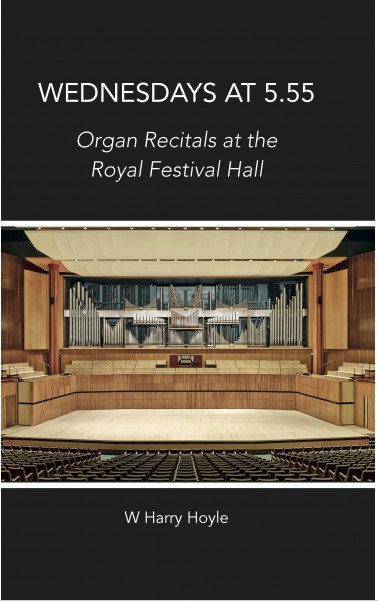
I have played organs dating back to the fifteenth and sixteenth centuries, so the 70th birthday of an organ might not appear to be that big a deal. But the organ in London’s Royal Festival Hall made an important, if controversial, contribution to the post-war British organ world. Designed by Ralph Downes, it was based on the Organ Reform Movement (Orgelbewegung) which started in Germany in the 1920s (with the enthusiastic support of Albert Schweitzer) and sought to reflect the style and construction techniques of pre-19th century organs, notably, in the early days, with a focus on the more historically informed performance of Bach. A detailed history of the RFH organ can be found here. Below is a photo of Ralph Downes inside the RFH organ with one of the tuners from the organ builders Harrison & Harrison of Durham, from his book Baroque Tricks.


 The Orchestra of the Age of Enlightenment have been celebrating their 30th anniversary year with a remarkably wide range of music, culminating with this Birthday Concert performance of Weber’s Der Freischütz. Perhaps most noted for their exploration of Baroque and Classical music, it can be forgotten that the OAE have also performed many pieces from the Romantic era, with remarkable success – indeed, their second concert, 30 years ago, under Roger Norrington, was devoted entirely to Weber. And so it was with this powerful semi-dramatised performance.
 The evening started, slightly unfortunately, with the Tragic Overture of Brahms, the bête noire of Bruckner and Hans Rott (pictured), and several others of a progressive ilk, such as Mahler. Unfortunate, because of the effect that Brahms’ withering comments on Hans Rott’s First Symphony had on the young composer. The unfortunate Rott (1858-84) was a student contemporary of Mahler and Hugo Wolf at the Vienna Conservatory, and studied organ with Bruckner, who saw him as his ‘favourite pupil’. Although Rott hadn’t impressed a conservatory competition panel with a piano reduction of the first movement, he went on to expand it into a four movement symphony. For reasons unknown, and certainly ill-advised, the then 22 year-old Rott showed the score to Brahms, an enemy of anything musically progressive, and of Bruckner and the Vienna conservatory. Brahms advised the already vulnerable young man to ‘give up composing’, leading to a possibly hallucinatory incident that resulted in him being committed
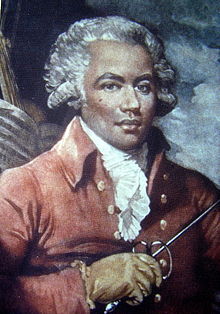 centred on the fascinating character Joseph de Bologne, Chevalier de Saint-George (b1745), the son of a wealthy French plantation owner in Guadeloupe, and his African slave. Educated back in France from the age of 7, he first became known as a fencer, graduating from the Academy of fencing and horsemanship aged 21 and somehow collecting the title of chevalier (knight) on the way. Quite how he achieved his skills in music is not known, but the composers Lolli and Gossec had already dedicated works to him before he was 21. He quickly became one of the leading Parisian violinists and orchestra leaders. He briefly lived in the same house as Mozart (the mansion of his mentor, the Duke of Orléans in Paris), and was leader of the enormous Masonic Loge Olympique orchestra, for which Haydn wrote his Paris Symphonies.
 Andrew Benson-Wilson : Early Music Reviews +