AAM: Charpentier’s Actéon & Rameau’s Pygmalion

Charpentier’s Actéon & Rameau’s Pygmalion
Academy of Ancient Music, Laurence Cummings

Anna Dennis, Rachel Redmond, Katie Bray, Thomas Walker
Milton Court, 9 October 2024
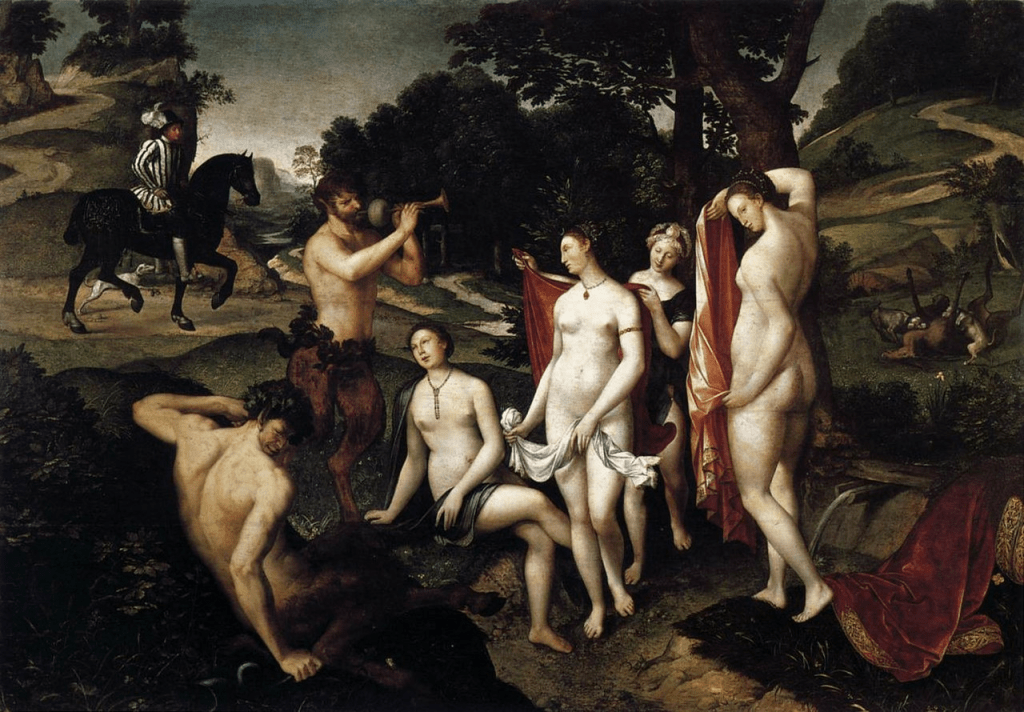
François Clouet: Bath of Diana (1558)

The Academy of Ancient Music opened its 2024/25 season, under the banner of Transformation, with a concert performance double-bill of French Baroque ‘operas’ or, more exactly, a Pastorale en musique and an Acte de ballet – Marc-Antoine Charpentier’s Actéon and Jean-Philippe Rameau’s Pygmalion. I am following those irritating promotional videos that encourage you to stay tuned until the end by urging you to read this review through to the end – this concert ended with one of the most extraordinary examples of musical professionalism and skill from the AAM’s musical director, Laurence Cummings, recently and deservedly appointed as an OBE.
Continue reading

BBC Proms: OAE – Bach Mass in B Minor

BBC Proms
Bach: Mass in B Minor
Orchestra & Choir of the Age of Enlightenment, John Butt
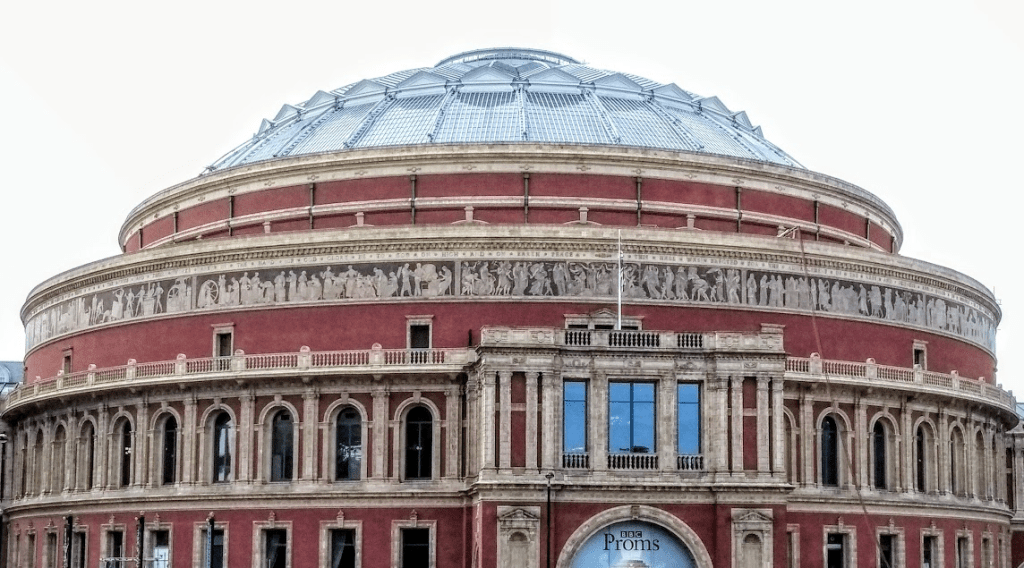
Royal Albert Hall, 29 March 2022

How should an atheist approach Bach? And, in particular, his Mass in B minor, arguably his finest work and one that, to him, seemed to sum up a lifetime of music dedicated to Soli Deo Gloria (Glory to God alone) – the meaning of the S.D.G that Bach appended to all his sacred works?

Continue reading

AAM. Haydn: The Creation

‘A New Created World’
Haydn: The Creation

Academy of Ancient Music, Laurence Cummings, Nina Dunn Studio
Barbican Hall. 28 Sep 2021, and online

After a successful series of AAM Live 2021 live-streamed Covid concerts, the Academy of Ancient Music returned to live performance with Haydn’s Creation, conducted in the Barbican Hall by Laurence Cummings, making his debut as the AAM’s new Music Director. Haydn’s joyous paean of praise to the Biblical creation story was a splendid way to open their post-lockdown “New Worlds” themed season. Their performance also featured inventive and elaborate video designs by Nina Dunn Studio, projected onto the wide wooden rear screen of the Barbican stage.

Continue reading

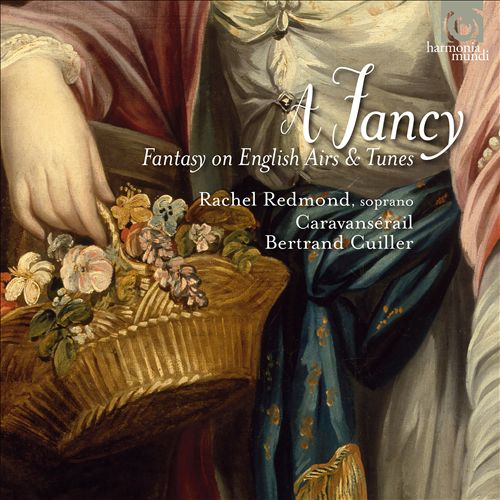
A Fancy: Fantasy on English Airs & Tune

A Fancy: Fantasy on English Airs & Tune
Rachel Redmond, Le Caravansérail, Bertrand Cuiller
Harmonia Mundi. HMM 902296. 66’04

Rachel Redmond - A Fancy: Fantasy on English Airs & Tunes

This recording was released in September 2017, but I have only become aware of it, having heard a concert performance during the 2019 Tage Alter Musik Regensburg (reviewed here). As well as being a musically outstanding recording, with excellent singing from soprano Rachel Redmond and playing from Le Caravansérail, directed by Bertrand Cuiller, this is an intelligent way of presenting the music of the English Baroque era. Much of the music of the post-Restoration period (from the mid-17th century) was written for the theatre, where plays included lots of music to set the scene and provide interludes. The resulting pieces are often short, and can be difficult to programme into a concert setting. In this recording, Le Caravansérail has concocted what is, in effect, a five-act mini-opera taking samples of music for the theatre by composers such as Matthew Locke, Henry Purcell, John Blow to make a coherent and well-balanced whole. Continue reading

Tage Alter Musik Regensburg 2019

Tage Alter Musik Regensburg 2019
Bavaria, Germany. 7-10 June 2019

The Regensburg Tage Alter Musik festival takes place annually from Friday to Monday over the Pentecost/Whitsun weekend, whose dates move linked to Easter. The 2019 festival, the 35th, took place over the weekend of 7-10 June, rather later than in previous years and the latest Pentecost weekend until 2030. With 15 concerts over these four days, it is a total immersion of early music performed in some spectacular buildings in Regensburg city centre. The historic city of Regensburg has its roots in the Celtic settlement of Radasbona and the Roman Castra Regina fort, remnants of which can still be seen. It was the early Medieval capital of Bavaria. The 12th-century bridge over the Danube increased its importance as a Free Imperial City within the Holy Roman Empire. It adopted the Reformation in 1542 but retained its Catholic Cathedral and Abbeys. From 1663 to 1806, it was the permanent seat of the Imperial Diet of the Holy Roman Empire, the so-called ‘Perpetual Diet’. The whole of the historic city centre is now a World Heritage Site. Continue reading