Proms: Monteverdi Orfeo

Proms: Monteverdi Orfeo
Monteverdi Choir & English Baroque Soloists
Royal Albert Hall. 4 August 2015

The 2015 Proms run until September 12For the second time this year, London sees Monteverdi’s Orfeo performed in a large circular space. After the Royal Opera House / Early Opera Company production in the Roundhouse early this year (review here) we now had the Monteverdi Choir and English Baroque Soloists in the vast space of the Royal Albert Hall in front of a packed audience of well over 5000 people.

For a work that was probably first performed in a space that in its entirety (including performers and audience) would have fitted onto the front part of the RAH stage, there are obvious issues of presentation. For this rather more than semi-staged performance, John Eliot Gardiner placed his 32 instrumentalist right and left of a central triangular area, the continuo group divided between the two sides with harpsichords and organ at the front of the two sides and pairs of chittarones on either side. The strings were to the left, the woodwind to the right, with the cornetts/trumpets and sackbuts on the top of the stage steps, just below the bust of Sir Henry Wood. The soloists were drawn from the 4o-strong choir, which tumbled onto the stage during the Toccata led by a jovial chap who looked as though he had been given a frame drum for Christmas, but hadn’t got round to reading the instruction manual, consequently beating it mercilessly with his fist. The youthful chorus of Nymphs and Shepherds (men in casual black, women in bright block colours) bounced around to the merciless thump of the drum and rattle of a tambourine. The two very professional-looking dancers who took over the front stage turned out to be the key soloists Mariana Flores and Francesca Aspromonte (Eurydice and Musica who, in a nice twist, also sang the role of the Messenger). Continue reading
Monteverdi Vespers of 1610 – OAE / Robert Howarth

Monteverdi Vespers of 1610
Orchestra & Choir of the Age of Enlightenment, Robert Howarth (Director)
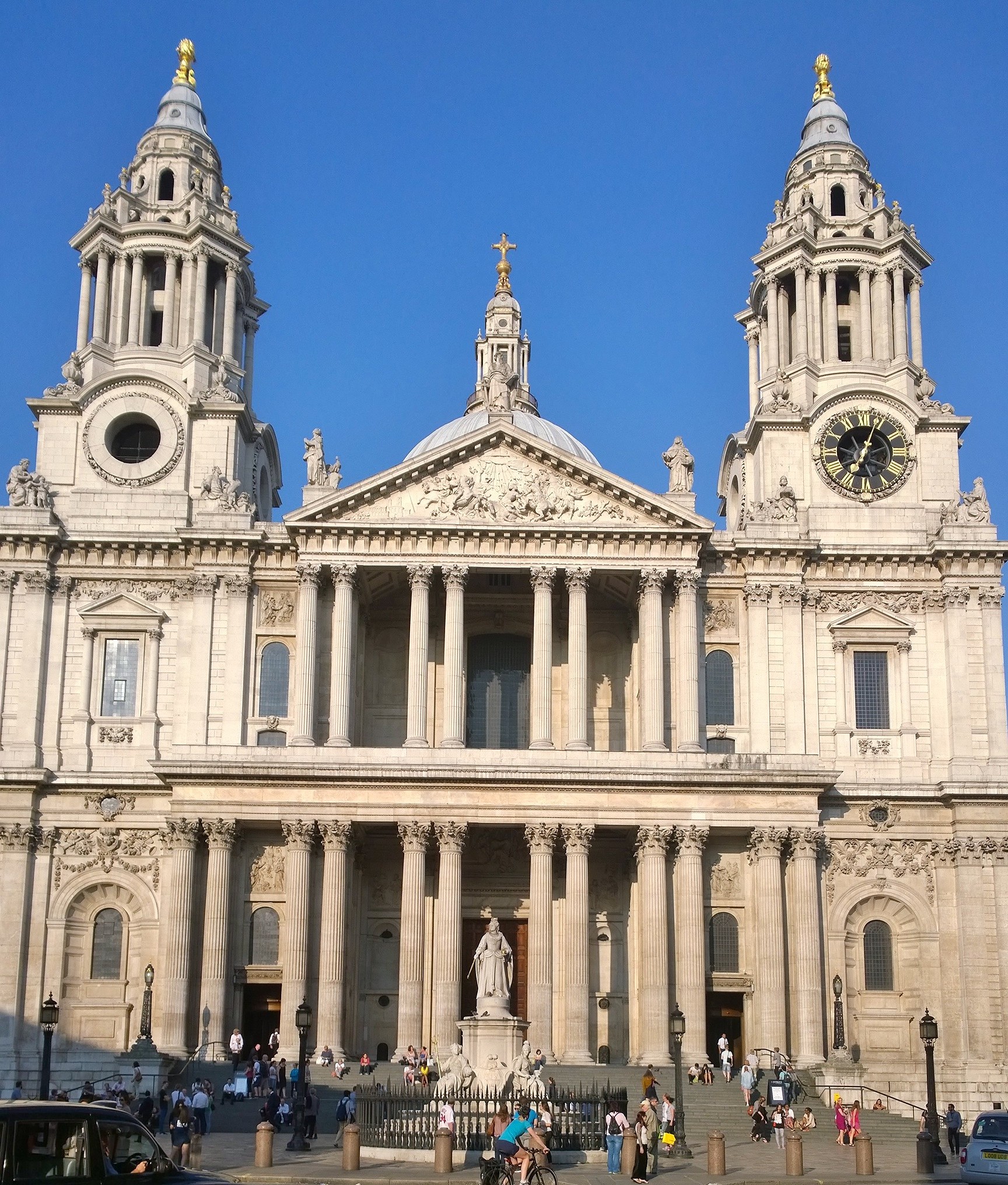
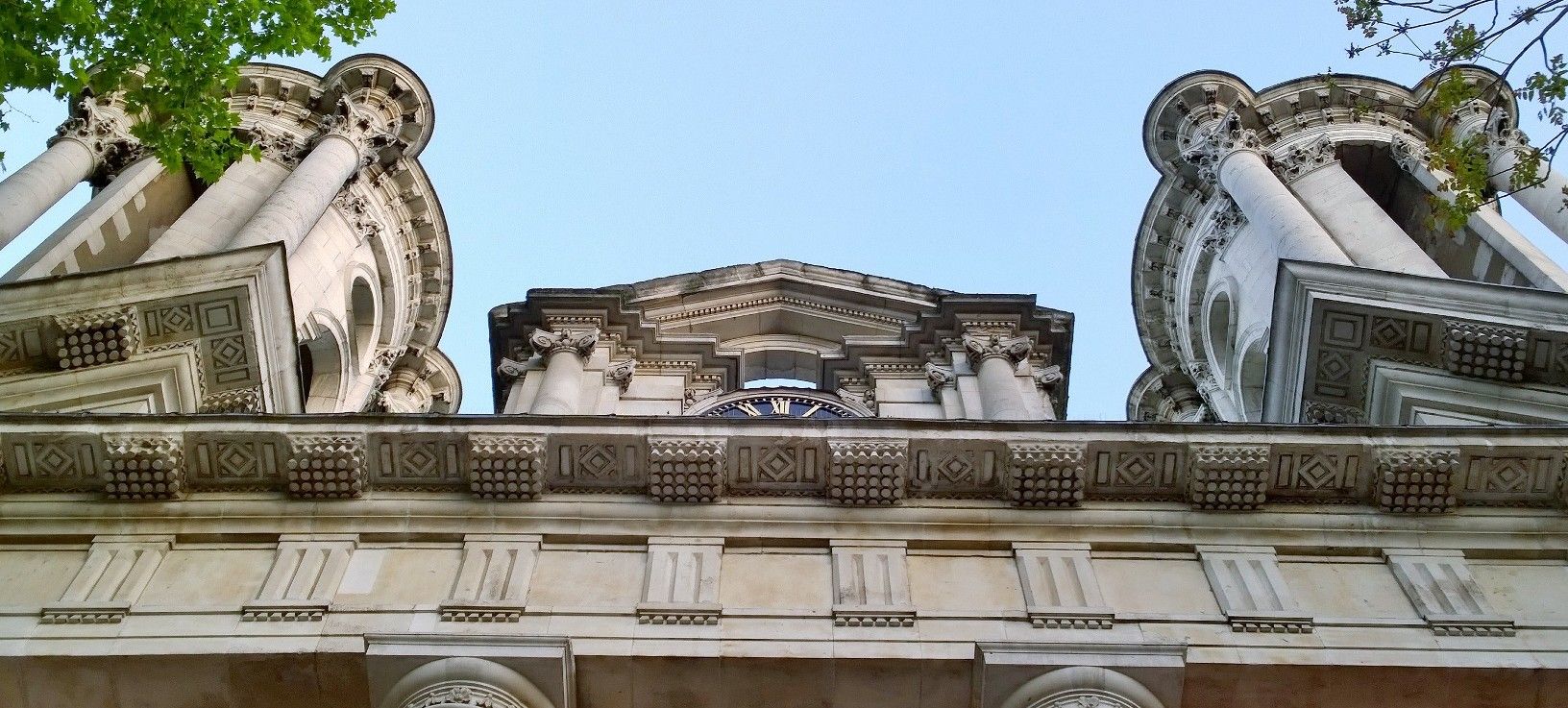
City of London Festival. St Paul’s Cathedral. 2 July 2015

WP_20150702_19_03_15_ProThere are many ways of performing Monteverdi’s 1610 Vespers, and conductor Robert Howarth’s interpretation with the Choir and Orchestra of the Age of Enlightenment must count as one of the finest; not just in the technical decisions (which are complex) but in the sheer magnificence of the performance itself. St Paul’s Cathedral is not an easy space to sing into, but the 23 singers of the OAE showed exactly how to do it. It was interesting comparing them to the 106 singers of LSO chorus in last week’s performance of the Haydn Creation, the OAE soloists and chorus producing a far clearer and more focussed sound. Continue reading

London Festival of Baroque Music – Day 4/5

‘Women in Baroque Music’
St John’s, Smith Square & Westminster Abbey, 18/19  May 2015

SJSS 2I couldn’t get to the lunchtime concert on day 3 of the festival, but it was given by soprano Rowan Pierce and the young group Medici, under the title of ‘Future Baroque’, with music by Handel, Bach, Royer, Telemann, Corelli and Vivaldi. Unless I have missed something, this was another event that seemed to bypass the festival’s theme, although it did include as its final work Agitata da due venti, a surviving fragment from Vivaldi’s opera L’Adelaide and later also included in his Griselda, composed for the virtuoso soprano Margherite Giacomazzi.

‘Leçons des ténèbres’
Julia Doyle & Grace Davidson, sopranos,
Jonathan Manson, bass viol, Steven Devine, harpsichord, organ & director

The Monday evening concert (St John’s, Smith Square, 18 May) Continue reading

Monteverdi: Il ritorno d’Ulisse in patria

MonteverdiIl ritorno d’Ulisse in patria
Boston Baroque, Martin Pearlman (conductor)
Linn CKD451.  3 CDs. 176’

Monteverdi’s 1640 Il ritorno d’Ulisse in patria is not as well-known as his Orfeo (1607) or L’incoronazione di Poppea (1643), partly because of the difficulties in preparing a performing edition from the rather scant surviving evidence. For this recording, made in the studio shortly after a semi-staged production in Boston in April 2014, Boston Baroque’s director, Martin Pearlman, uses his own relatively conservative edition. As well as the orchestral ritornellos Pearlman has added a few orchestral colourings (using strings, cornetts and recorders) to the continuo line (of two theorbos, guitar, cello, two harpsichords, organ and an attractively buzzy regal). The use of instruments such as the cello (a later development from the bass instruments of Monteverdi’s time) suggests a certain relaxing of strict instrumental authenticity, but this does not detract from an otherwise impression edition. There is a nice balance between the over-orchestrations of yesteryear and severely austere continuo-only interpretations. Indeed, one of the highlights is Pearlman’s use of the various instrumental colours, with particularly effective contributions being made by the continuo theorbo players. Continue reading

Ulysses returns to Iford

One of the posh frocks and picnic venues that combine musical excellence with spectacular gardens is Iford Manor, near Bath. This year’s early music offering was Monteverdi’s Il ritorno d’Ulisse in patria performed by the Early Opera Company (2 Aug 2014) in a setting that could not be more Italian. Iford’s Peto Garden is full of Italian references, and the operas take place inside a pastiche 100 year-old Italian cloister – one of the most intimate opera spaces I know.

The 12-strong (and vocally strong) cast was headed by mezzo Rowan Hellier as the complex and emotional confused Penelope with Jonathan McGovern as the returning Ulysses. Penelope’s three suitors were Callum Thorpe, Russell Harcourt and Alexander Robin Baker, with Oliver Mercer as their advocate Eurymachus. Elizabeth Cragg and Annie Gill made fine contributions as Minerva and Melanto, as did Daniel Auchincloss as Eumaeus, here portrayed as a gamekeeper. The Prologue was sensibly omitted, allowing the opening focus to be on Penelope’s grief.

The audience sit within a few feet of the central stage and it is impossible not to feel personally involved in the unfolding drama. It is a real test of the singers’ sense of character and voice to be able to project to such a close audience. Justin Way directed, using Christopher Cowell’s sensible ENO English translation, and an excellent and beautifully lit staging by Kimm Kovac, using imaginative and vaguely modern dress with a hint of the abdication era. Christian Curnyn directed his seven Early Opera Company players from the harpsichord, the violins of Catherine Martin and Oliver Webber being much in evidence.

[https://andrewbensonwilson.org/2015/03/30/ulysses-returns-to-iford/]

The Sixteen’s Vespers – Guildford Cathedral

Such is the profile and schedule of The Sixteen that I was surprised to find that their short tour of the Monteverdi Vespers was the first time they had toured with orchestra and choir together. Of their eight venues (six cathedrals, and two concert halls), I saw them in Guildford Cathedral (on 30 Jan), a pared-down Gothic building designed in the 1930s and finally opened in 1961. The acoustics are good, at least from my seat close to the performers, who were positioned in what would have been termed ‘the crossing’ (in front of the choir and chancel) if there had been proper transepts. Very professional looking TV cameras broadcast to monitors to the sell-out audience down the long nave. The sequence of movements was what has become the traditional one, as were several other aspects of the performance including, arguably, taking the sequialtera passages too fast. The (more substantial) Magnificat was sung at higher pitch. With 20 singers and 24 instrumentalists, this was an aurally powerful performance, although the tiny box organ was only occasionally audible. The use of such organs is common in the UK although I urge you to try and hear the Vespers (and any Bach cantatas, for that matter) performed with a church organ (for example, see my review of the Cantar Lontano recording in the October 2014 Early Music Review). The rest of the continuo group was cello, violone, chitarrone, harp and dulcian, with string/recorders and cornett/sackbuts divided left and right. The vocal soloists, all stepping forward from the choir, were sopranos Grace Davidson and Charlotte Mobbs, tenors Mark Dobell and Jeremy Budd and basses Ben Davies and Eamonn Dougan – all most impressive. Relatively limited use was made of the available space, the main exception being the tenor/theorbo duet Nigra Sum which was performed from halfway down the central aisle, and Jeremy Budd singing Audi coelum from the pulpit. The echo passages were sung from somewhere towards the altar.   As with their other cathedral venues, the singers in the Sonata sopra Sancta Maria were the local cathedral choristers, in this case Guildford’s very able girls choir.

Orfeo at the Roundhouse

The Roundhouse is the latest of the Royal Opera House’s ventures away from Covent Garden, another being the Sam Wanamaker playhouse at The Globe. The circular building (a former engine shed in North London, and one of my haunts in earlier rock concert days) made an impressive, if acoustical tricky, venue for Monteverdi’s Orfeo. The audience sit in a 270° arc around the off-centre circular stage with the instrumentalists of the Early Opera Company at the back of the stage.

The Prologue opened with a young and rather sour looking Pluto and his entourage processing down a long sloping gangway onto the stage and up to a raised dais above the orchestra and what turned out to be the entrance to Hades. The gods were accompanied by be-robed priests who turned out to be the three Pastore (billed as ‘Pastors’ – very droll). It had the air of a court house, with the gods sitting in judgement as the scene unfolded below. Musica (who turns into Euridice via an on-stage costume change) sat with Orfeo draped pieta-like across her lap, a touching scene reversed at the end of the evening.The only prop was a simple chair, with the other scenes created by a lively group of 14 child dancers and acrobats (from East London Dance) who created arches through which the protagonists moved, as well as the ripples of the Styx.

This was the first attempt at opera direction by the Royal Shakespeare Company’s former Artistic Director, Michael Boyd, and he sensibly resisted the temptation to overly embellish the plot. The sparse setting allowed the focus to be on the music itself, something that the young singers rose to with considerable aplomb. The Transylvanian baritone, Gyula Orendt was a most impressive Orfeo, the clarity of his voice overcoming some slight pronunciation difficulties and the curious spectacle of him being hoisted precariously into the air at the end. Mary Bevan was outstanding as Euridice and Musica, both with her acting and the beauty of her voice. The other members of the cast were of a similar high standard, including the chorus drawn from Guildhall students. However, I was not convinced about casting Susan Bickley as the Messenger. The playing of the Early Opera Company and Christopher Moulds’ musical direction was spot on. There is more I could write about some of the production issues, but will certainly remember this as a fine musical event.

[https://andrewbensonwilson.org/2015/03/23/orfeo-at-the-roundhouse-16-jan-2015/]