This is my body
Buxtehude Membra Jesu Nostri
Figure Ensemble, Frederick Waxman
The Swiss Church, Covent Garden. 15th March 2023
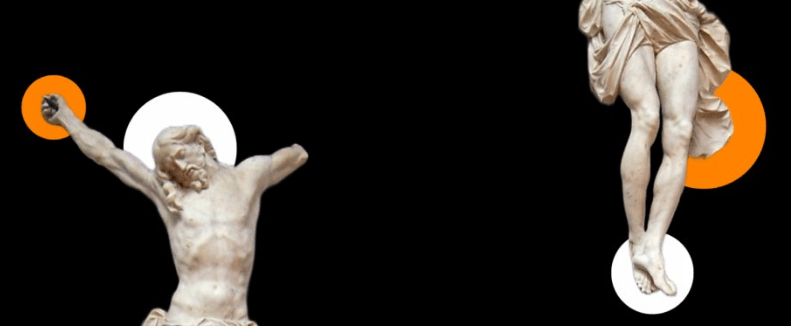
The “forward-thinking historical performance ensemble” Figure gave their impressive thought-provoking interpretation of Dieterich Buxtehude’s 1680 sequence of seven cantata meditations on the body of Christ, Membra Jesu Nostri. They described this as “an immersive, surround-sound performance” which allows the audience to “experience every emotion up close and stand within the Passion scene – in the body of the sound”. The sparse white-washed of the acoustically lively Swiss Church provided the perfect venue. Apart from a few chairs around the edge of the empty space, the audience stood in a space surrounded by four stages and a central platform. The seven instrumentalists were in the apse at the business end of the church. The five singers moved around the space, singing from the five platforms in various groupings. On one side wall was a projection of the texts in English while the other showed evolving drawings based on a statue that survives from Buxtehude’s time in Lübeck’s Marienkirche.

 (every other month) at St Michael’s, on South Grove, Highgate. They opened the series with a concert of music from the North German masters, Dietrich Buxtehude and his predecessor at the Lübeck Marienkirche (and father-in-law), Franz Tunder. Tunder is usually unfairly overlooked in favour of his successor, but it was he who started the famous series of Lübeck Abendmusik concerts that traditionally took place on the five Sundays before Christmas every year; a tradition that lasted until 1810. They (and the then aging Buxtehude) famously attracted the young Bach in 1705.
  Andrew Benson-Wilson : Early Music Reviews +