BBC Proms: Nathan Laube, organ

BBC Proms
Nathan Laube, organ
Royal Albert Hall, 28 August 2022
Wagner: Grand March
Franck: Grande pièce symphonique
Alkan: Scherzando from 11 Grands préludes
Liszt: Piano Sonata in B minor

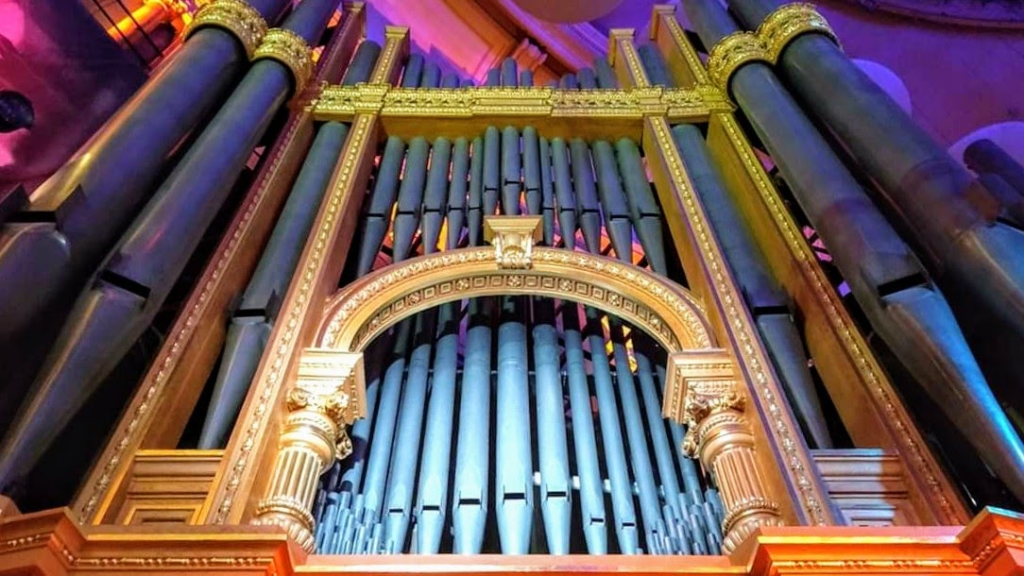
Yet again, the BBC Proms powers-that-be have chosen the most inappropriate time for an organ recital – a Sunday morning – when most organists are attempting to earn their keep. Although working organists can listen on catch-up, the sparse audience (sparse for the Royal Albert Hall that is, but sadly not for the average organ recital) reflected this strange programme planning. But there was also something about the programming of the concert itself which raised questions about the BBC’s approach to The Proms, which this year seems to be seen as a populist extension of Radio 2, rather than Radio 3.

Continue reading

BBC Proms: Organ recital 2

BBC Proms: Organ recital 2
Peter Holder, organ
Royal Albert Hall, 4 September 2021

Meyerbeer: Le prophète Coronation March, transcr. W. T. Best
Bach: Fantasia & Fugue in C minor, BWV 537
Widor: Symphony No. 5 – Allegro vivace (1st movt)
Saint-Saens: Fantaisie No. 1 in E flat major
Liszt: Fantasy & Fugue on ‘Ad nos, ad salutarem undam

The second of this year’s BBC Proms organ recitals was given by Peter Holder, sub-organist of Westminster Abbey, replacing Thomas Trotter. As part of the joint anniversaries of the Royal Albert Hall and centenary composer Saint-Saëns, the programme recreated elements of Saint-Saëns’ legendary performances on the Royal Albert Hall organ in the opening season of 1871 and in 1880.

Continue reading

Liszt: Une Divine Tragédie

 Liszt: Une Divine Tragédie
Thomas Ospital, organ
Editions Hortus: 149. 67’16

Orphée (transcription: Louis Robilliard)
Fantaisie et Fugue Ad nos, ad salutarem undam
Funérailles (transcription: Louis Robilliard)
Am Grabe Richard Wagners
Consolation IV

According to the programme notes, this recording takes the form of a ‘mini-opera’ (or Divine Tragedy), centred around Liszt’s monumental Ad nos, ad salutarem undam. The other four pieces on the CD, two of them modern transcriptions for organ, frame Ad nos, creating a wordless story that may (or may not) be based on the opening transcription (by Louis Robilliard) of Orphée. This arch-form piece introduces us to the concept of performing Liszt on a French, rather than German romantic organ, including an unusual cinema organ effect in the Molti più lento section. The organ is the 1989 van den Heuvel organ in the church of Saint-Eustache, Paris, an enormous instrument built in the grand tradition of the 19th-century French symphonic organ combined with many elements of the 20th-century neo-baroque that so influenced later French music from Messiaen to the then Titular Organist, Jean Guillou. A complex set of electronic wizardry was added in 2010, creating new interpretational and registration possibilities. Unfortunately, the CD includes practically no information about the organ, but it is readily available online. Continue reading

Dynamisch: the ‘Wind Organ’

Dynamisch
Die Orgeln der Stadtkirche Biel
Pascale Van Coppenolle
Tulip Records. Ture 201521. 2CDs 75’03+ 64’24

CD1. ‘From Hexachord to Chromatiscism’: Scheidt, Byrd, Frescobaldi, Bull, Sweelinck, Bach, Liszt
CD2. ‘Wind organ’ improvisations: Whistle for a While (Hans Koch, bass clarinet), Clusterizing (organ solo), Zebra (Jonas Kocher, accordion), Fusion (Hannah E. Hänni, voice), Sprinkling (Luke Wilkins, violin).

The city of Biel (official known as Biel/Bienne) in the Swiss canton of Berne lies on the boundary of the German and French speaking areas of Switzerland, hence its bilingual name. Rather appropriately, its town church contains two organs which also speak in two (or more) languages, from ancient to (very) modern, as represented on this fascinating double CD.

The first CD is based on the use by composers of the Hexachord, the first six notes of the major scale, usually written as Ut, re, mi, fa, sol, la. The first three pieces (Scheidt, Byrd, and Frescobaldi) are played on a modern (Metzler, 1994) version of the late Gothic organ of 1517 that briefly survived in the church until the Reformation authorities dismantled it just 10 years later. It has two manuals with pull-down pedals. The compass of the two manuals is the usual Gothic/Renaissance one of C-a” and F-a”, Continue reading