Johann Ludwig Krebs (1713 – 1780)
Keyboard Works Volume 3 & 4
Steven Devine, harpsichord
Resonus Classics RES10329 (77’30) & RES10344 (63’50)

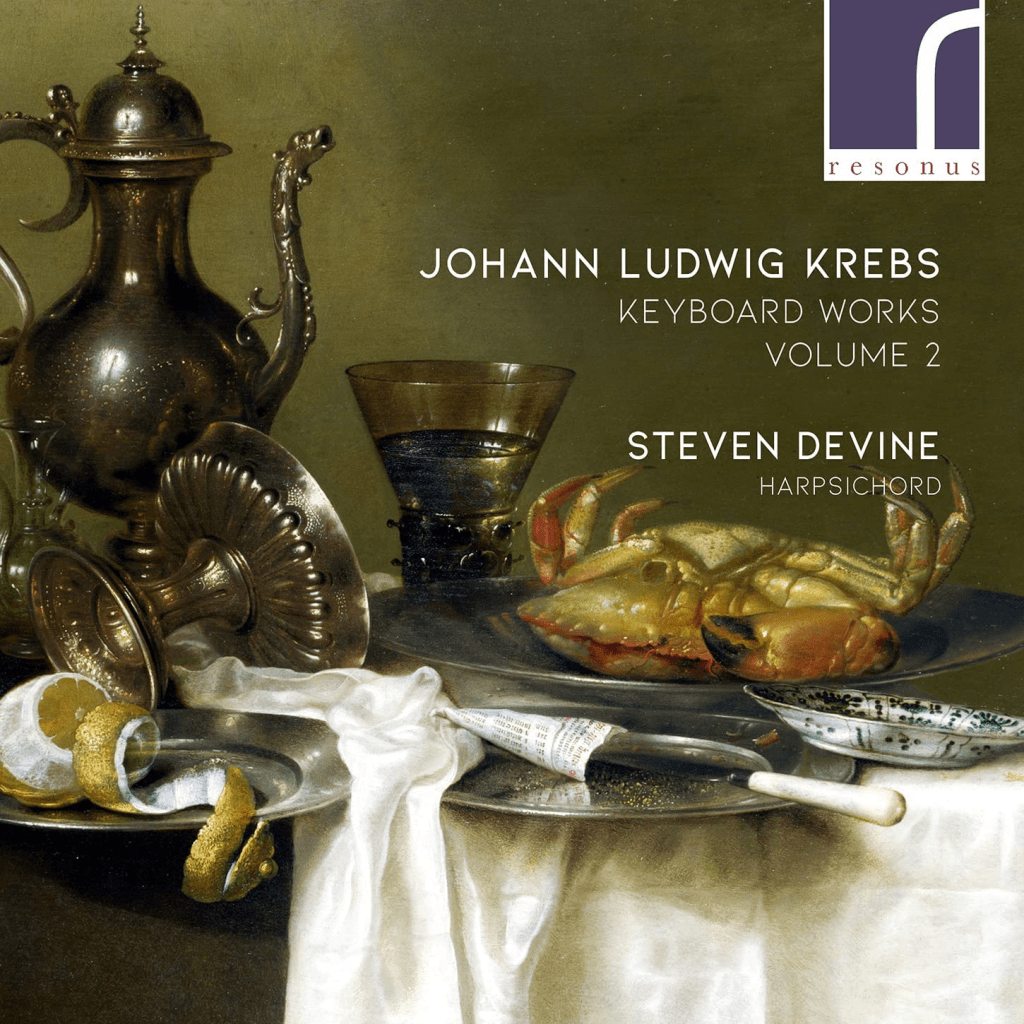
Steven Devine continues his crustation-inspired (Krebs = crayfish or crab) series of recordings of Krebs’ keyboard works with Volumes 3 and 4. They follow the two earlier recordings reviewed here (Volume 1) and here (Volume 2). I understand there will now be two further CDs after the originally planned series of four, an essential and welcome addition needed to cover Krebs’ known harpsichord works. I should repeat the warning I gave in earlier reviews of this series that it only represents a part of Krebs’ keyboard music. The programme note essay gives the far more accurate ’Works for Harpsichord’ title. The works for organ fill another 7 full-sized CDs. Many of Krebs’ organ compositions show a direct Bach influence, often to a specific piece that Krebs then expands, often to enormous length and complexity. That is far less apparent in the harpsichord works on this recording, although the Bach-inspired moments are fairly easy to spot.
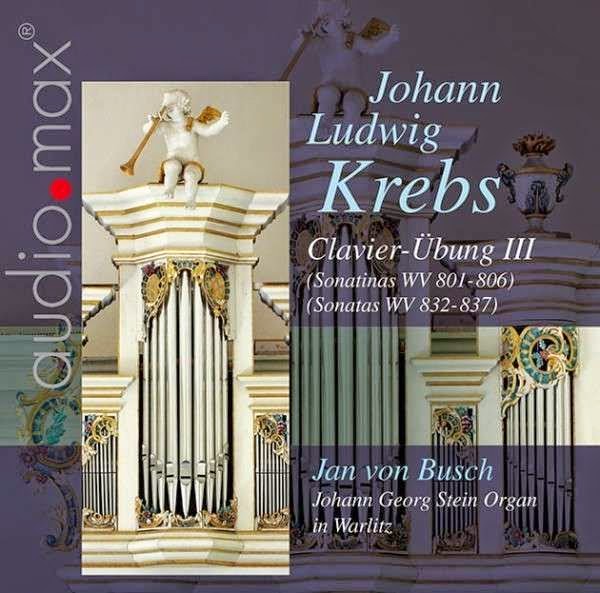 This CD produces an interesting meeting of minds between the composer Johann Ludwig Krebs and the organ builder Johann Georg Stein, both born a few miles from each other (near Weimar) and at about the same time (1712/13). Both absorbed local influences in their craft, before stylistically moving into a new style. Krebs, of course, was the favourite pupil of JS Bach, leading to Bach’s comment about him being the “best crayfish (Krebs) in the brook (Bach)”. It is to Krebs that we owe the preservation of much of Bach’s organ music. His own organ compositions are often based on recognisable Bach pieces, often extended to quite extraordinary lengths and developed into the early Classical style. So it something of a relief to hear him composing in miniature form.
  I have been watching violinist Johannes Pramsohler make his mark in the world of period violin playing over the past few years, and this CD shows that his growing reputation is well deserved. This well-chosen programme of relatively unknown Sonatas from the Bach circle, is a telling reminder that although his later fame came from his organ playing, Bach’s early childhood was spent learning the violin from his violinist father. As Pramsohler’s notes point out, it was only when the 10 year-old Bach, now orphaned, moved into his organ-playing elder brother’s house, that he started to focus on the organ. But he kept his father’s violin, his only inheritance, all his life. Although only one work is definitely by Bach, with two possibly Bach’s, Bach is suffused throughout the other works, by Pisendel, Graun and Krebs, representing the extraordinary flowering of musical talent in 18th century Weimar, Leipzig and Dresden. The Graun and Krebs works are world premiere recordings, taking us into a slightly later musical period. The CD ends with Bach’s extraordinary Fugue in g (BWV 1026).
  Andrew Benson-Wilson : Early Music Reviews +