Mozart’s World: A Little Night Music
Orchestra of the Age of Enlightenment
Kati Debretzeni, director, Katherine Spencer, clarinet
The Anvil, Basingstoke. 20 January 2026
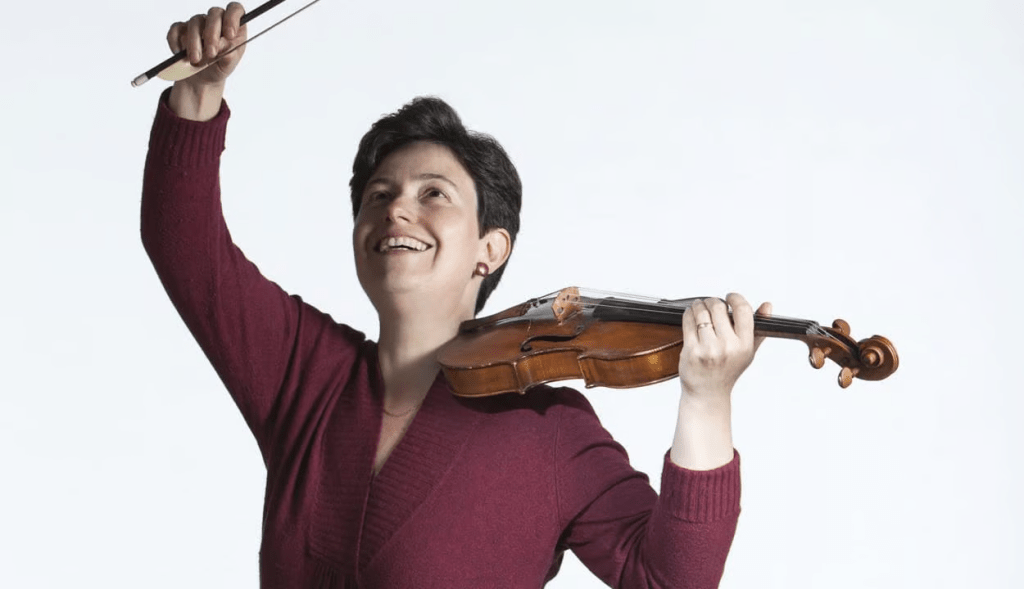
Kati Debretzeni
Juan Crisóstomo de Arriaga: Overture in F minor Op. 1 (1817)
Mozart: Clarinet concerto
Michael Haydn: Divertimento in G (1780)
Mozart: Eine kleine Nachtmusik
The Orchestra of the Age of Enlightenment is opening its 40th anniversary year with a short tour of a fascinating programme that, in inevitable OAE style, merges well-known pieces with little-known gems. They started their tour in the excellent acoustic of Basingstoke’s Anvil concert hall, a space that, although large, coped with the modest chamber-sized band with an appropriate intimacy. The three composers were linked by time, birthdays and friendship. Two of Mozart’s best-known pieces were balanced by music from his friend Michael Haydn and the extensively monikered Basque composer, Juan Crisóstomo Jacobo Antonio de Arriaga y Balzola, born in Bilbao 50 years to the day after Mozart. He was known as the ‘Spanish Mozart’ in honour of his prodigious talent, the birthdate link, and his tragically early death, just before his 20th birthday. Another link, which the concert organisers may not have noticed, is that both Arriaga and Mozart shared the same first two baptismal names (based on their birthdays being the feast of St. John Chrysostom, although Mozart’s first names of Joannes Chrysostomus didn’t last much beyond baptism.


 Andrew Benson-Wilson : Early Music Reviews +