Handel: L’Allegro, il Penseroso ed il Moderato, 1740

Handel: L’Allegro, il Penseroso ed il Moderato 1740
Gabrieli Consort & Players, Paul McCreesh
Signum SIGCD392. 2 CDs.  77’12+64’26=141’38.

 L’Allegro, il Penseroso ed il Moderato, Concerto Grosso in G (Op 6/1), Concerto Grosso in E Minor (Op 6/3), Organ Concerto in B-Flat (O  7/1)

Handel’s L’Allegro, il Penseroso ed il Moderato is one of his most attractive and approachable, but also his most complex and confusing, works. It is not clear what it is. It is not an opera, an oratorio, ode or cantata, but was loosely described at the time as ‘an entertainment’. There is no plot, no human characters or underlying narrative. The title is in Italian, the text in English. The three ‘characters’ of the title represent the contrasting temperaments of mirth (Allegro) and melancholy (Penseroso), joined, in the third part, by Moderato, the voice of reason, restraint and, it seems, “chaste love”. Two of the ‘roles’ are each sung by three different voices (Allegro by tenor, boy treble and bass; Moderato by baritone, soprano and tenor), with Allegro on one occasion sung as a duet. Continue reading

Handel: Giove in Argo

Handel: Giove in Argo
Britten Theatre, 26 March 2015
Laurence Cummings conductor
London Handel Orchestra

Like London busses, you can wait for ages to hear a pasticcio opera, and then three come along at once. After Fabio Biondi’s reconstruction of Vivaldi’s compilation L’Oracolo in Messenia at The Barbican and Opera Settecento’s excellent concert performance of Handel’s 1732 compilation opera Catone in Utica (both reviewed below), along came Handel’s 1739 Giove in Argo. It was considered lost until some arias were discovered a few years ago. John H Roberts has reconstructed and edited the score (for Bärenreiter), adding missing recitatives. After recent outings in Göttingen, Hanover and Halle, this was the first UK performance since 1739. It was given in the intimate space of the Britten Theatre with singers from the RCM International Opera School as part of the London Handel Festival.

The plot is loosely drawn from Ovid’s Metamorphoses. It focuses on the antics of a rather naughty Giove (Jove/Jupiter) and his attempts to seduce Continue reading

Opera Settecento – Catone in Utica

Handel/Leo/Hasse’ Catone in Utica
St George’s, Hanover Square.
17 March 2015

Opera Settecento.  Tom Foster, musical director.
Erica Eloff & Christina Gansch, sopranos, Emilie Renard, mezzo, Christopher Robson, counter-tenor, Christopher Jacklin, bass-baritone.  

This might be the year that we grow to love pasticcio operas, with Fabio Biondi’s well received reconstruction of Vivaldi’s compilation L’Oracolo in Messenia at The Barbican (see my review at https://andrewbensonwilson.org/2015/03/30/vivaldis-loracolo-in-messenia/) and now Opera Settecento’s excellent concert performance of Handel’s 1732 Catone in Utica, given in Handel’s own church of St George’s, Hanover Square as part of the London Handel Festival.

Handel used to present one pasticcio opera each season, a collecting together of arias, generally by other composers, some of it already well-known to the audience, to slot into the recitative of an opera. In the case of Catone in Utica, Handel drew principally on Leonardo Leo’s 1729 Catone, to a libretto by Metastasio.  Handel reduced Leo’s recitatives and jettisoned all but eight of his arias, adding six by Johann Adolf Hasse (although not from Hasse’s own 1732 version of Catone), along with other arias by Porpora, Vivaldi and Vinci. He also removed one of Metastasio’s characters, leaving just five protagonists. As with most pasticco operas, the recitatives are all-important in carrying the plot. However the arias were more plot-neutral, and were therefore more easily transferred from other operas to suit the strengths of Handel’s available singers.

Metastasio’s libretto is based on the historic Cato the Younger (Marcus Cato ‘Uticensis’), an adversary of Julius Caesar in the last days of the Roman Republic. After Caesar’s defeat of Pompey, Cato and Pompey’s widow Emilia have fled to Utica, near Carthage, on the North African coast. Caesar arrives and tries to toady up to Cato, much to the disgust of Emilia and the confusion of Marzia, Cato’s daughter.  She seems to be rather taken with Caesar, despite her father’s wish that she marry Arbace, Prince of Numidia. Cato rejects Caesar’s offer to share the dictatorship of the empire (and marriage to Marzia, already Caesar’s secret lover), and is eventually defeated by Caesar’s army, leading to his suicide and the start of the dictatorship of Imperial Rome.
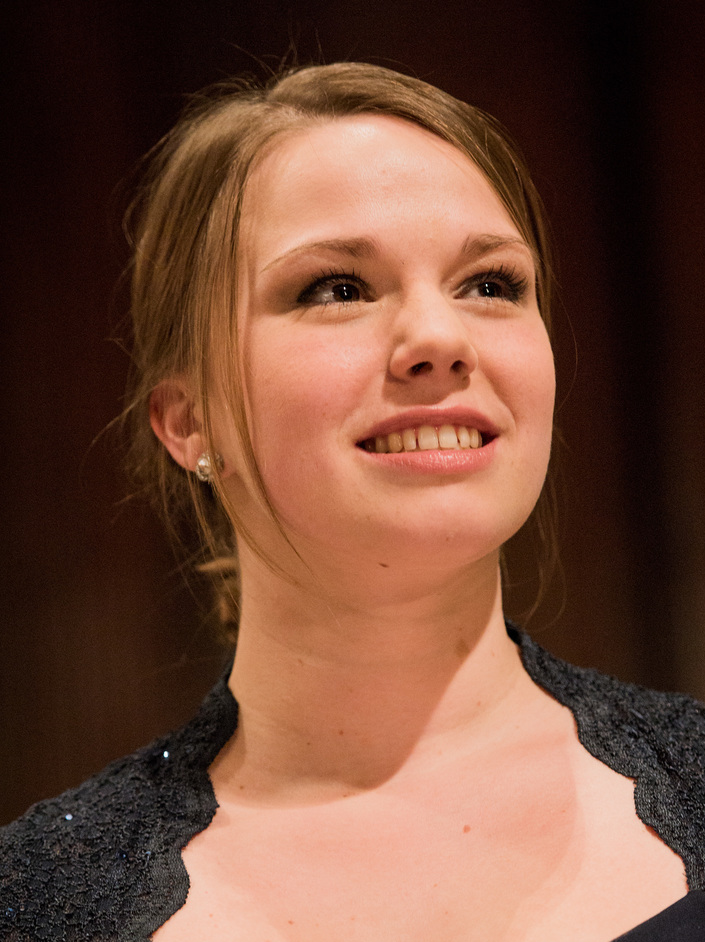
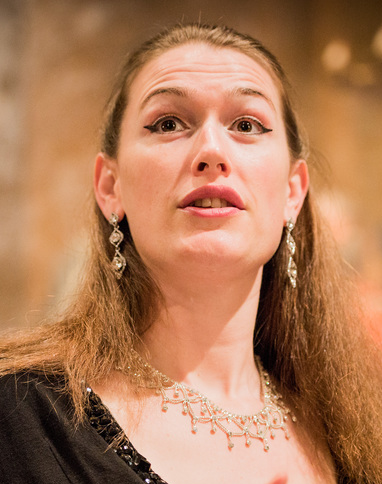
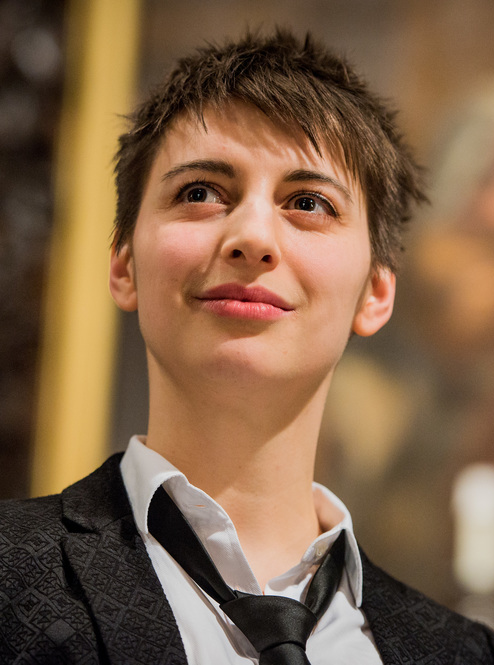
Catone in Utica - George Frederick Handel - St George’s, Hanover Square - 17th March 2015Musical Director - Tom FosterMarzia - Erica EloffEmilia - Christina GanschArbace - Emilie RenardCatone - Christopher RobsonCesare - Christopher Jacklin

In Handel’s version, Cesare is changed to a bass, Cato was sung by the castrati Senseino, and Arbace was a contralto trouser role. One of the strengths of Opera Settecento’s performance was the excellent choice of singers. Christopher Jacklin was the imposing Cesare, his opening aria, Non paventa del mare le procella from Porpora’s Siface (one of four based on storm-tossed seas) being a spectacularly virtuosic showpiece with an enormous range, wide vocal leaps and rapid scales, all delivered with aplomb. Vivaldi’s So che nascondi was a similarly bravura aria.
Catone in Utica - George Frederick Handel - St George’s, Hanover Square - 17th March 2015 Musical Director - Tom Foster Marzia - Erica Eloff Emilia - Christina Gansch Arbace - Emilie Renard Catone - Christopher Robson Cesare - Christopher JacklinEmilia was sung by Christina Gansch, a young Austrian soprano who impressed me (and the judges) when I heard her singing in the final of Innsbruck’s Cesti Baroque Opera Singing Competition in 2013. Her opening aria, Chi mi toglie (from Hasse’s Attalo) demonstrated her beautifully warm and well-rounded tone. She later excelled in Sento in riva a l’altre sponde (from the same Hasse opera), accompanied by hushed strings and featuring an excellent expansion of the melodic line in the da capo.  Her concluding virtuosic showpiece Vede il nocchier la sponda, again with outstanding treatment of the da capo and a wonderful cadenza, drew enthusiastic approval from her fellow singersAlthough this was a concert performance, I was very impressed with Christina Gansch’s acting ability.

Catone in Utica - George Frederick Handel - St George’s, Hanover Square - 17th March 2015 Musical Director - Tom Foster Marzia - Erica Eloff Emilia - Christina Gansch Arbace - Emilie Renard Catone - Christopher Robson Cesare - Christopher JacklinErica Eloff was Marzia.  Her arias ended all three of the Acts, positively with È follia se nascondete, mournfully with So che godendo vai and stunningly virtuosic with the conclusion of the opera, Vò solcando un mar crudele.

Emilie Renard seems to be cornering the market in trouser roles, always helped by her choice of clothing and attractive acting Catone in Utica - George Frederick Handel - St George’s, Hanover Square - 17th March 2015 Musical Director - Tom Foster Marzia - Erica Eloff Emilia - Christina Gansch Arbace - Emilie Renard Catone - Christopher Robson Cesare - Christopher Jacklinability. Here she was Arbace, her showpiece coming with Vivaldi’s Vaghe luci, luci belle, featuring outstanding da capo ornamentation and vocal flourishes. The role of Catone was to have been taken by counter-tenor Andrew Watts, but his indisposition led to his very short notice replacement by Christopher Robson, much to his credit.  Sadly, he was not on good form vocally, with an over-use of portamento and awkward breaks of register, although his concluding Per darvi alcun pegno was touching as Catone resigns himself to his fate.

I was very impressed with Tom Foster’s light touch direction from the harpsichord, as well as his sensitive continuo realizations, allowing himself just one real flourish as Arbace and Cesare, rather awkwardly reveal their joint love for Marzia. The youngish instrumentalists of the Orchestra of Opera Settecento played with musical sensitivity, with a notable contribution from cellist Natasha Kraemer. Oboeist Leo Duarte was responsible for producing the score, based on a manuscript from Hamburg.
Handel Peace & Celebration – European Union Baroque Orchestra

Handel Peace & Celebration European Union Baroque Orchestra, Choir of Clare College Cambridge, Alex Potter, Lar Ulrick Mortensen.
Obsidian CD711 69’ 34”
    £13 from http://www.eubo.eu/shop/CD711.

Zadok the Priest, Let thy hand be strengthened, Concerto Grosso Op3/2, My heart is inditing, Ode for the Birthday of Queen Anne, The King shall rejoice.

This is live recording (with a little judicious patching) of a St John’s, Smith Square concert (under the title ‘Handel: A Royal Celebration’) that I reviewed in last December’s issue of Early Music Review.  It is a timely issue in the anniversary year of the accession of the first Hanoverian King, George I.  The talented young musicians of EUBO (a training orchestra re-formed each year) come to the fore in the Concerto Grosso Op 3/2, with its distinctive Largo featuring two cellos and oboe (played exquisitely by Guillermo Turina Serrano, Nicola Paoli and Clara Geuchen).  The rest of the piece involves outstanding playing by the two violinists Zefira Valova (the concertmaster for this tour, and formally a EUBO member) and Roldán Bernabé-Carrión.

For the rest of the disc they are in an accompaniment role.  The outstanding feature of the vocal works is the opening movement of the Birthday Ode, ‘Eternal source of light divine’, beautifully sung by Alex Potter, with the terrifying trumpet solo played with absolute conviction and surety by EUBO trumpeter Sebastian Philpott. You should buy this CD for this track alone – it is spine-tingling!  I noted in my concert review that the other soloists were drawn from the Clare College choir, “with varying degrees of success”.  The choir as a whole however do sound good, although there is occasionally a bit of a wobble from the alto line.  In these shaky financial times, EUBO needs the support of funders more than ever.  Buying this CD is a particularly good investment in the future of young musicians.

First published in Early Music Review, April 2014.

Et in Arcadia ego: Italian Cantatas and Sonatas. Concentus VII

Et in Arcadia ego: Italian Cantatas and Sonatas
Concentus VII
Resonus RES10142  67’16

Handel Mi Palpita il Cor, Pensieri notturni di Filli, Sonata pour l’Hautbois; Alessandro Scarlatti Filli tu sai s’io t’amo; Francesco Mancini Recorder Sonata 1 in d; Antonio Lotti Ti sento, O Dio bendato.

Emily Atkinson (soprano), Louise Strickland (recorder), Belinda Paul (oboe & recorder), Amélie Addison (cello) & Martin Knizia (harpsichord)

This CD, from a relatively new London-based group, explores music performed in the Roman Academy of Arcadia (Pontificia Accademia degli Arcadi).  It was founded in 1690, a year after the death of, and in homage to, Queen Christina of Sweden, a major patron of the arts who moved to Rome after her 1654 abdication.  The Academy took its inspiration from an idealised world of rural innocence, and advocated a simple and direct style in music and poetry. The two opening Handel’s cantatas, the pastoral Pensieri notturni di Filli and the more dramatic Mi Palpita il Cor, demonstrate the attractive and approachable style of his early years in Italy.  Music from Naples and Venice complete the programme.

Alessandro Scarlatti’s cantata Bella s’io t’amo includes a recently discovered opening recitative – the arias are notable for the use of obligato recorder, unusual in Scarlatti’s cantatas. The CD notes include English translations of the texts, which generally focus on the complicated love lives and amours of the likes of Clori and Phyllis.

One of the delights of the cantatas on this CD is that they are accompanied by recorders or oboe as well as the harpsichord and cello continuo group.  Louise Strickland and Belinda Paul demonstrated excellent articulation and use of baroque ornaments in their contributions to the bucolic sound world, and in the two instrumental sonatas, for oboe and recorder respectively that contrast with the vocal works.

The continuo playing by Amélie Addison and Martin Knizia is sensitive and entirely appropriate for the period and genre.  The simple harpsichord realisations are particularly welcome – far too many harpsichords over-do continuo realisations.

Emily Atkinson has an attractive and clear voice, her gentle inflexions adding to the Arcadian mood of the cantatas. Only in final aria of Pensieri notturni di Filli does the voice begin to show signs of struggle with Handel’s tricky flurry of notes.

http://concentus7.com/?page_id=435

COVERRES10142-500x500[

[https://andrewbensonwilson.org/2015/04/03/et-in-arcadia-ego-italian-cantatas-and-sonatas-concentus-vii/]

‘Bewitched’

Bewitched
Les Passions de l’Ame, Robin Johannsen, Meret Lüthi.
Deutsche harmonia mundi / Sony Music 88843040882.  60’06.
Corelli La Follia; Geminiani ‘The Enchanted Forest’; Handel Armida abbandonata.

Bewitched
I praised the début CD (‘Spicy’, Deutsche harmonia mundi  88883748742) from the Swiss violinist Meret Lüthi and her Bern-based period-instrument orchestra, Les Passions de l’Ame in my review in Early Music Review (February 2014).  I am equally impressed with their second CD.  As with ‘Spicy’ they have produced an imaginative programme, in this case combining two pieces linked to the story of the crusader Rinaldo and his doomed love affair with the sorceress Armida, as told by Torquato Tasso in his La Gerusalemme Liberata.  After the opening salvo of Corelli’s La Follia variations, intended to represent the wildly contrasted emotions of Armida, we hear the first part of Francesco Geminiani’s orchestral suite ‘The Enchanted Forest’ (La Foresta Incantata), incidental music written for a 1754 pantomime ballet in the Grand Théâtre du Palais de Tuileries in Paris based on Tasso’s story. We do not know how the music would have been performed in the original production, as all that survives is this two-part suite, a collection of dance-like pieces of varying length and mood.

After the first part of the Enchanted Forest (in d minor), we hear Handel’s c1708 take on the story, the dramatic secular cantata Armida abbandonata (Dietro l’orme fugaci, HWV 105) for solo soprano, sung by the American soprano Robin Johannsen. I was impressed by Robin Johannsen when I first heard her in Hasse’s Romolo ed Ersilia at the 2011 Innsbrucker Festwochen der Alten Musik. Her singing is beautifully clear and focused, with a sensitively honed vocal timbre and an effective use of ornaments and da capo elaborations and the occasional use of a very gentle vibrato to colour the notes. She captures the contrasting moods of Handel’s exquisite cantata to perfection.  The opening accompagnato is interesting for having the continuo accompaniment provided by the solo violin alone, played by the director of Les Passions de l’Ame, Meret Lüthi.

We then return to the D major second part of The Enchanted Forest, the sensuous and subdued opening very effectively continuing the desolate mood of the Siciliana at the end of Armida abbandonat, before the full orchestra, with trumpet and horns blazing, takes overThe central part of the second half is a dramatic multi-section piece that could be a mini-opera in its own right. The playing of the 19 musicians of Les Passions de l’Ame is excellent, and is combined with sensitive continuo accompaniment to the Handel.  Merit Lüthi directs from the violin with an impressively light touch, bringing out both the Italian and French influences in Geminiani’s music.  At the time, Charles Burney thought he was too French, and the French thought he was too Italian! Today we appreciate the benefits of both musical styles.

You can hear extracts on the Les Passions de l’Ame website at http://lespassions.ch/cms/en/discography

[https://andrewbensonwilson.org/2015/03/24/bewitched-robin-johannsen-les-passions-de-lame-meret-luthi/]

HANDEL ORGAN RECITAL. St George’s, Hanover Sq. 7 April 1:10.

The London Handel Festival and Mayfair Organ Concerts present a lunchtime organ recital by

Andrew Benson-Wilson

Handel Overtures and Organ Concertos, arranged for solo organ by Handel, Babell and Walsh c 1755. Played on the ‘Handel House’ chamber organ and the 2012 Richards Fowkes & Co organ in Handel’s own church of St George, Hanover Square in London’s Mayfair. SGHS Handel organ_crop 2