
Mayfair Organ Concerts – The Grosvenor Chapel
17 March 2026
Andrew Benson-Wilson
Early Music Day recital
Francisco Correa de Arauxo (1584–1654)
Libro de tientos y discursos de musica practica y theoríca de organo (1626)
Tiento de Quinta Tono 6′
Tiento de Quarto Tono 4’30
Segundo Tiento de Quarto Tono – a modo de canción 5’30
Quinto Tiento de Medio Registro de Baxones de Primero Tono 4’30
Tiento de dos tiples, de Septimo Tono 7′
Tiento de medio registro de tiple de Sexto Tono – a modo de Batalla 10′
Grosvenor Chapel
Early Music Day. Correa de Arauxa: “Libro de tientos . . . Facultad organica” (1626)
Mayfair Organ Concerts
Andrew Benson-Wilson, organ
The Grosvenor Chapel
South Audley Street, Mayfair, London W1K 2PA
Tuesday 17 March 2026, 1:10
Francisco Correa de Arauxo (1584–1654)
Libro de tientos y discursos de musica practica y theoríca de organo
intitulado Facultad organica (1626)
Tiento de Quinta Tono (5)
Tiento de Quarto Tono (15)
Segundo Tiento de Quarto Tono – a modo de canción (16)
Quinto Tiento de Medio Registro de Baxones de Primero Tono (34)
Tiento de dos tiples, de Septimo Tono (54)
Tiento de medio registro de tiple de Sexto Tono – a modo de Batalla (63)
This year’s annual Early Music Day recital focuses on the publication, exactly 400 years ago, of the monumental Libro de tientos y discursos de música practica, y theorica de organo intitulado Facultad organica (“Book of Tientos and Discourses on Practical and Theoretical Organ Music entitled Organic Faculty“) by the Spanish organist, composer, and theorist Francisco Correa de Arauxo.
Correa de Araujo was born in Seville. In 1599, aged just 15, he became organist of San Salvador, the second most important church in Seville. He became a priest around 1608, but became embroiled in various tussles with the authorities. In 1608, he was ordained as a priest. He maintained the Seville post until 1636 when, after many unsuccessful attempts to become cathedral organist, he was, after four years at Jaén Cathedral, appointed organist at Segovia Cathedral, where he stayed for the rest of his life, despite repeated offers from Seville to return as cathedral organist.
Organ Recital. Schlick: Tabulaturen etlicher lobgesang (1512)
Andrew Benson-Wilson
The Grosvenor Chapel
South Audley Street, Mayfair, London W1K 2PA
Tuesday 5 August 2025, 1:10
Arnolt Schlick
Tabulaturen etlicher lobgesang (1512)
Salve Regina (5 verses)
Pete quid vis, Hoe losteleck, Benedictus, Primi toni, Maria zart, Christe
Da pacem (3 settings)
Described as “one of the greatest masters who have left their imprint on the history of organ music”, Arnolt Schlick (c1455-c1525) was one of the most important members of the influential group of late Renaissance German organ composers known as the Colourists, together with Conrad Paumann and Paul Hofhaimer. He lived and worked in the important university city of Heidelberg. In his late 20s, he was appointed court organist to the Palatinate Elector. In 1486 played the organ for the coronation of the future Holy Roman Emperor, Maximilian I, as King of the Romans.
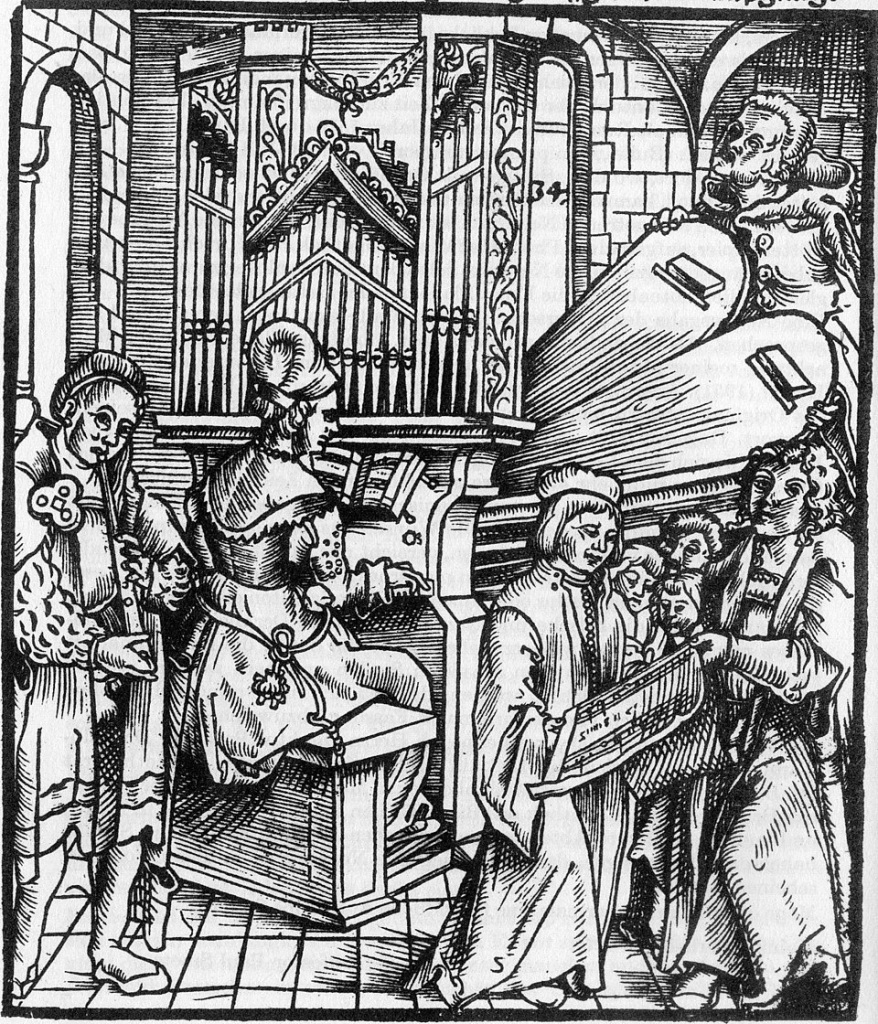
Title page of Spiegel der Orgelmacher und Organisten, 1511
My London organ recitals: August to October 2025
My London organ recitals
August to October 2025
Tuesday 5 August, Grosvenor Chapel, 1:10.
For the anniversary of Arnolt Schlick (c1455-c1525), I will play all the pieces from his 1512 Tabulaturen etlicher lobgesang, including the large-scale Da pacem and Salve Regina, the latter described as “one of the truly great masterpieces of organ art”.

Monday 8 September, Christ Church, Spitalfields 7.30.
Under the title of “Mr. Stanley, I Presume!” this will be an exploration of English 18th-century life through the organ music of John Stanley (1712-1786) – “the best organist in Europe, maybe in the world”. It will include music reflecting country house saloon soirees; the hunting horns, shepherd songs and birdsong of the English countryside; the trumpets of military marches; and jovial London pleasure gardens. Played on the internationally renowned 1735 Richard Bridge organ.

Sunday 19 October, St Lawrence (Little Stanmore) Whitchurch HA8 6QS, 3pm.
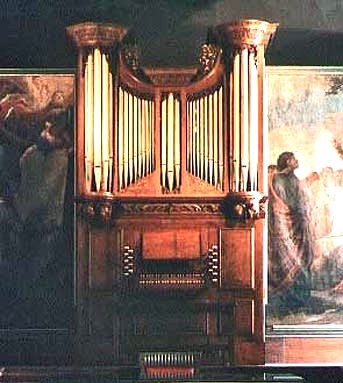
Thirty years ago, I gave the opening recital on this Goetze & Gwynne organ, based on the surviving parts of the 1716 Gerard Smith organ that Handel played when he worked for the Duke of Chandos at Cannons. This anniversary recital of English 17th-century music will honour the lives of Martin Goetze and Dominic Gwynne. The church is a short walk from Canons Park underground station.
More details to follow in due course, including booking details for the Spitalfields and Whitchurch concerts.
Recital programme notes: The 1725 audition for the first organist of St George’s, Hanover Square
Mayfair Organ Concerts
St George’s, Hanover Square
11 March 2025
St George’s, Hanover Square 300th Anniversary
The 1725 audition for the first organist

Johann Christoph Pepusch (1667-1752) Lesson in D (Two Aires)
William Croft (1678-1727) Voluntary IX in d; Voluntary X in D;
Handel (1685-1759) Fugue in B flat; Fugue in a (HWV607/609)
Francesco Geminiani (1687-1762) Duo in F
Thomas Roseingrave (1690-1766) Voluntary & Fugue in f; Fugue in d.
This recital celebrates the 300th anniversary of St George’s, Hanover Square. The church was consecrated on 23 March 1725. It was designed by the architect John James, the son of the head of the Holy Ghost School in Basingstoke where a plaque in his honour has been unveiled. He was architect for two other London churches with an organ interest, St Mary’s Rotherhithe and St Lawrence Whitchurch. The 1725 Hanover Square organ was built by Gerard Smith, nephew and successor of the famous ‘Father’ Smith. Its case remains as the central part of the current organ. A panel of Pepusch, Croft, Handel and Geminiani choose Thomas Roseingrave as organist, noting that he was best able to improvise a fugue on the given subject. This recital includes music by the four assessors and concludes with fugues by Roseingrave.
Early Music Day recital: BEFORE BACH programme notes
Mayfair Organ Concerts – The Grosvenor Chapel
19 March 2024
Early Music Day concert
Andrew Benson-Wilson
BEFORE BACH
Conrad Paumann (c1410-1473) Incipit Fundamentum m.C.p.C;
Magnificat Octavi Toni. 2v
(From the Buxheimer Orgelbuch, c1460)
Hans Buchner (1483-1538) Magnificat anima sexti Toni. 2v
Hieronymus Praetorius (1560-1629) Magnificat Tertii Toni. 3v
Mathias Weckmann (1617-74) Magnificat II. Toni. 4v
Johann Pachelbel (1653-1706) Fantasia in G; Three Fugues from the Magnificat tertii Toni
Samuel Scheidt (1587-1654) Benedicamus à 6 Voc.1624
This is the first of two related Early Music Day concerts with the titles of BEFORE BACH and AFTER BACH. The second concert, AFTER BACH, is this Sunday, 24 March at 7.45 in Christ’s Chapel of Alleyn’s College of God’s Gift, 14 Gallery Rd, Dulwich SE21 7AD with music by Stanley, CPE Bach and Corrette. Today’s concert traces German organ music from around 1460 to Bach’s youth, with a focus on music for the service of Vespers, notably the Magnificat, one of the key musical elements of Vespers in both the Catholic and Lutheran traditions.
Early Music Day recital, Grosvenor Chapel, 19 March 2024
Andrew Benson-Wilson, organ
Mayfair Organ Concerts
The Grosvenor Chapel
South Audley Street, Mayfair, London W1K 2PA
Tuesday 19 March 2024, 1:10

BEFORE BACH
Andrew’s annual Early Music Day recitals are usually focussed on the music of JS Bach, reflecting the fact that Early Music Day is on 21 March, the date of Bach’s birth under the current calendar. This year, Andrew is giving two Early Music recitals, with the titles of BEFORE BACH and AFTER BACH. This first recital traces the history of German organ music from the Buxheimer Orgelbuch c1460 to Johann Pachelbel, the teacher of Bach’s older brother, Johann Christoph Bach. It seems likely that the 9-year-old Bach met Pachelbel at his older brother’s 1694 wedding.
Other composers represent the south, centre and north of Germany, including Hans Buchner (1483-1538), Hieronymus Praetorius (1560-1629), Mathias Weckmann (1617-74) in his anniversary year, and Samuel Scheidt (1587-1654)) in the 400th anniversary of his Tabulatura nova (1624).
The recital focussed on music written for the Catholic and Lutheran service of Vespers, notably the Magnificat, one of the key musical moments of the service in both churches. We hear versions from five composers, concluding with Scheidt’s Modus Pleno Organo Pedaliter Benedicamus à 6 Voc, composed for the conclusion of a Vespers Service as well as being the final piece in the Tabulatura nova.
Conrad Paumann (c1410-1473) Incipit Fundamentum m.C.p.C;
Magnificat Octavi Toni.
(From the Buxheimer Orgelbuch, c1460)
Hans Buchner (1483-1538) Magnificat anima sexti Toni.
Hieronymus Praetorius (1560-1629) Magnificat Tertii Toni.
Mathias Weckmann (1617-74) Magnificat II. Toni.
Johann Pachelbel (1653-1706) Fantasia in G; Three Fugues from the Magnificat tertii Toni
Samuel Scheidt (1587-1654) Benedicamus à 6 Voc. 1624
Early Music Day concert – Bach & Böhm
Andrew Benson-Wilson, organ
Mayfair Organ Concerts
The Grosvenor Chapel
South Audley Street, Mayfair, London W1K 2PA
Tuesday 21 March 2023, 1:10
Bõhm: Partita Freu dich sehr, o meine Seele
Trio Freu dich sehr, o meine Seele
Bach: Fantasia in c BWV 562i
Bõhm: Vater unser Im Himmelreich
Bach: Praeludium con Fuga in c BWV 546
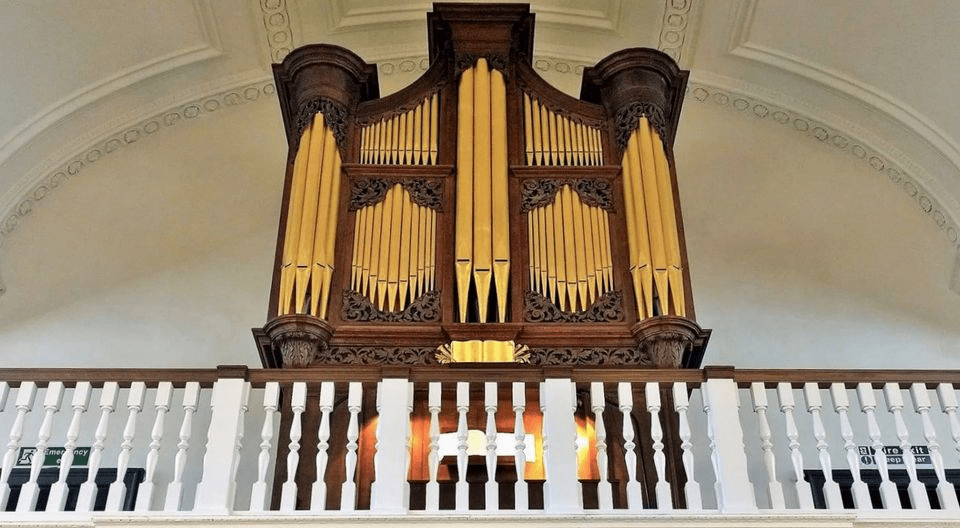
This recital is a contribution to Early Music Day, the international celebration of early music that takes place annually on 21 March, the anniversary of Bach’s birth. The programme contrasts the music of one of Bach’s earliest influences with two of his mature organ works. When he was 15, Bach became a student at the Michaelisschule in Lüneburg. Georg Böhm was organist of the nearby Johanniskirche, the principal town church. The organ there was built in 1553 by Hendrik Niehoff, and is pictured below.
There is clear evidence that the young Bach knew Bõhm, and may have been a pupil of his. One of the earliest Bach manuscripts is a copy of a piece by Reinken owned by Bõhm. The two Bach pieces are powerful examples of his mature style, the first demonstrating the clear influence of French music, that he may have first experienced in Lüneburg and nearby Hamburg. The monumental Praeludium et Fuga in c shows the influence of Italian music, notably in the concerto-like Praeludium. Both Bach pieces were played as final voluntaries during the late Queen’s funeral and committal.
Programme notes: Two Baroque Giants
Mayfair Organ Concerts. The Grosvenor Chapel. 9 August 2022
Andrew Benson-Wilson plays music by
Two Baroque Giants – Buxtehude & de Grigny
Dietrich Buxtehude (1637-1707)
Praeludium in d minor BuxWV 140
Ciacona in e minor BuxWV 160
Nicolas de Grigny (1672-1703).
Recit de Tierce pour le Benedictus
Dialogue de flûtes pour l,’Elevation
Dialogue (Agnus Dei II)
from Premier livre d’orgue (1699)
Buxtehude
Te deum laudamus BuxWV 218
Praeludium – Te deum laudamus – Pleni sunt coeli -Te martyrum – Tu devicto
Although Buxtehude and de Grigny were born 35 years apart, the music in this recital was composed at about the same time, around 1690/1700. They were composed for very different social, religious and musical settings, Buxtehude for Lutheran Lübeck in North Germany, and de Grigny for Catholic Reims in France. The organs they played were very different, but one of the joys of the English 18th-century-inspired Grosvenor Chapel organ is that it includes elements of both German and French instruments. Bach owned music by both composers and even added some of his own ideas to de Grigny’s Premier livre d’orgue. Bach’s youthful 200-mile walk to Lübeck to meet the ageing Buxtehude is well known.
Andrew Benson-Wilson – two Baroque giants
Two Baroque Giants – Buxtehude & de Grigny
Andrew Benson-Wilson, organ
The Grosvenor Chapel
South Audley Street, Mayfair, London W1K 2PA
Tuesday 9 August 2020, 1:10

Music by Dietrich Buxtehude (1637-1707) and Nicolas de Grigny (1672-1703).
Although Buxtehude and de Grigny were born 35 years apart, the music played in this recital was composed at about the same time, around 1690/1700. They were composed for very different social, religious and musical settings, Buxtehude for Lutheran Lübeck, North Germany, and de Grigny for Catholic Reims, France. The organs they played were also very different, but one of the joys of English 17th/18th organs is that they include elements of both the German and the French instruments.
The overriding figure in the music of these two is JS Bach. He knew their music and owned manuscripts of both composers, even adding some of his own ideas to de Grigny’s 1699 Premier livre d’orgue. Bach’s youthful walk to Lübeck to hear the ageing Buxtehude is well known.
Andrew Benson-Wilson plays Sweelinck
Mayfair Organ Concerts
The Grosvenor Chapel
South Audley Street, Mayfair, London W1K 2PA
Tuesday 24 August 2020, 1:10
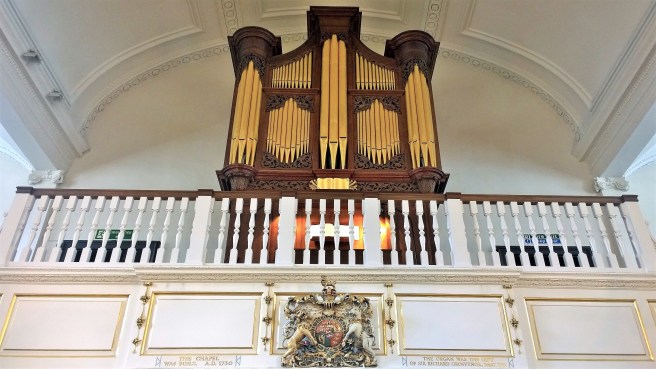
Andrew Benson-Wilson
plays music by
Jan Pieterszoon Sweelinck
Commemorating the 400th anniversary of the death of the famed ‘Orpheus of Amsterdam’, Jan Pieterszoon Sweelinck (1562-16 October 1621), Andrew Benson-Wilson gives an organ recital of pieces reflecting the different styles and genres of Sweelinck’s music. He was the most influential teacher of his day, attracting many students from German-speaking areas. Several of them went on to create the Hamburg school of organ composition which culminated in the music of Buxtehude and Bach.
Sweelinck: recital programme notes
Mayfair Organ Concerts
The Grosvenor Chapel, Mayfair
Tuesday 21 August 2021
Andrew Benson-Wilson
plays music by
Jan Pieterszoon Sweelinck
d. 16 October 1621
Some forthcoming organ recitals

From organrecitals.com. Link to the live webpage here.
Andrew Benson-Wilson plays Bach: influenced by Reincken
Mayfair Organ Concerts
The Grosvenor Chapel
South Audley Street, Mayfair, London W1K 2PA
Tuesday 13 August 2019, 1:10
Andrew Benson-Wilson
plays music by
J S Bach
influenced by Johann Adam Reincken
Johann Adam Reincken (1643-1722) was organist of Hamburg’s famous Katharinenkirche and a close friend of Buxtehude. This recital is linked to a recital of his music given earlier this year at St George’s, Hanover Square. That recital included his monumental chorale fantasia on An Wasserflüssen Babylon composed around 1650. At around 20 minutes long, it the longest known piece of its type in the whole 17th century North German repertoire. It was known by Bach who, while at school in Luneburg, aged around 15 copied the entire piece out from a copy owned by Georg Böhm. It is believed that he also travelled to Hamburg to hear Reincken play. In 1720, shortly before Reincken’s death, Bach visited Hamburg and improvised a lengthy fantasia on the same chorale in homage to Reincken, who commented: “I thought that this art was dead, but I see that it lives in you”. Bach also transcribed several of Reincken’s instrumental pieces for keyboard.
This recital includes one of Bach’s Reincken transcriptions, a Toccata that is clearly influenced by Reincken’s dramatic style, and Bach’s chorale prelude on An Wasserflüssen Babylon, which includes a very obvious reference to Reincken’s chorale fantasia. It ends with Bach’s giant Fantasia in G minor, which may have been played during Bach’s 1720 visit to Hamburg. The accompanying Fugue is based on a popular Dutch tune and might have been Bach’s homage to Reincken, who was born in The Netherlands.
Toccata in D minor BWV 913
An Wasserflüssen Babylon BWV 653
Sonata in A minor (after Reincken Hortus musicus) BWV 965
Fantasia in G minor BWV 542i
The organ is by William Drake
Admission is free, with a retiring collection
Andrew Benson-Wilson plays Scheidt: Tabulatura Nova I
The Grosvenor Chapel
South Audley Street, Mayfair, London W1K 2PA
Tuesday 11 September, 1:10
Andrew Benson-Wilson
plays
Samuel Scheidt (1587-1654)
Tabulatura Nova I
Andrew’s series of concerts featuring the North German pupils of Sweelinck, the ‘Orpheus of Amsterdam’, continues with two recitals of music by one of his most distinguished pupils, Samuel Scheidt. His influential three-volume Tabulatura Nova was published in 1624. It is one of the most important of all collections of organ music. Its 58 pieces are a comprehensive demonstration of compositional styles. This recital, played on the William Drake organ in the Grosvenor Chapel, features three large-scale pieces from Volume 1 of the Tabulatura Nova.
Cantio Sacra: Wie gleuben all an einen Gott
Fantasia: Io son ferito lasso
Cantio Belgica: Ach du feiner Reuter
The next Scheidt recital will be on the famous Frobenius organ in the chapel of The Queen’s College Oxford, on Wednesday 24 October 2018, starting at 1:10. It will be of pieces from Volume 3 of the Tabulatura Nova, in the form of Lutheran Organ Vespers.
Both concerts are free admission, with retiring donations welcomed.
LHF: Handel Singing Competition
Handel Singing Competition: Semi-Final
London Handel Festival
Grosvenor Chapel, Mayfair, 28 March 2018
The annual Handel Singing Competition was founded in 2002 as an integral part of the London Handel Festival (LHF). This year it attracted 116 applicants, seemingly down in numbers from the 150 that the LHF quote as the norm. A private first round was held over several very snowy days around the end of February, although sound files could be submitted by those unable to be there. Eleven of the 116 made it through to this, the public semi-final, held on the Wednesday of Holy Week. Perhaps holding the semi-final of a singing competition during one of the busiest of the year for singers was not the brightest idea – I know of singers that did not enter because they knew they would inevitably be busy that week.
The competition is open to singers between 23 and 33 years old on 1 February 2018. The prizes are first: £5000, second: £2000, audience: £300, finalists: £300. All finalists are guaranteed lunchtime recitals during the 2019 London Handel Festival, and many past finalists are also asked to perform solos in other prestigious concerts during the Festival and abroad. The 2018 London Handel Festival, for example, includes 20 previous finalists.
More 2017 recitals

From organrecitals.com/abw.
Programme notes: Weckmann recital
The Grosvenor Chapel, Mayfair
Tuesday 1 November 2016
Andrew Benson-Wilson
Matthias Weckmann (1616-1674)
Praeludium A . 5 . Vocum
Canzon in G
Nun freut euch, lieben Christen gmain
Fantasia ex D
Toccata ex d
Komm, heiliger Geist, Herr Gott
Matthias Weckmann is one of the most influential 17th century organist composers of the North German school. He was born in Thuringia, studied in Dresden with Schütz, a pupil of G. Gabrieli, and in Hamburg with Jacob Praetorius, a Sweelinck pupil. He settled in Hamburg in 1655 as organist of the Jacobikirche where he remained until his death. He is buried beneath the Jacobikirche organ. It was said that Weckmann “moderated the seriousness of Praetorius with the sweetness of Scheidemann, and also introduced many new elegant discoveries“. After Andrew’s Benson-Wilson’s performance of his monumental set of chorale variations on Es ist das Heil kommen her at St George’s, Hanover Square (on 11 October), today’s programmes looks at a selection of Weckmann’s free works, together with two contrasting three-verse works based on chorales.
The Praeludium A . 5 . Vocum is anonymous in the original manuscript, but there are stylistic reasons why it is likely to be by Weckmann, Continue reading
Grosvenor Chapel: Weckmann (b1616)

Mayfair Organ Concerts
The Grosvenor Chapel, South Audley Street, Mayfair , London W1K 2PA
1 November 2016, 1:10-1:50
Matthias Weckmann (1616-1674)
In the last of his three recitals of the organ music of Matthias Weckmann (in his anniversary year), Andrew Benson-Wilson plays the William Drake organ in the Grosvenor Chapel, South Audley Street, Mayfair in a programme of a Praeludium, Toccata, Canzon, Fantasia and two contrasting chorale-based works.
Programme Notes – Nicolaus Bruhns (b1665) – The surviving organ works
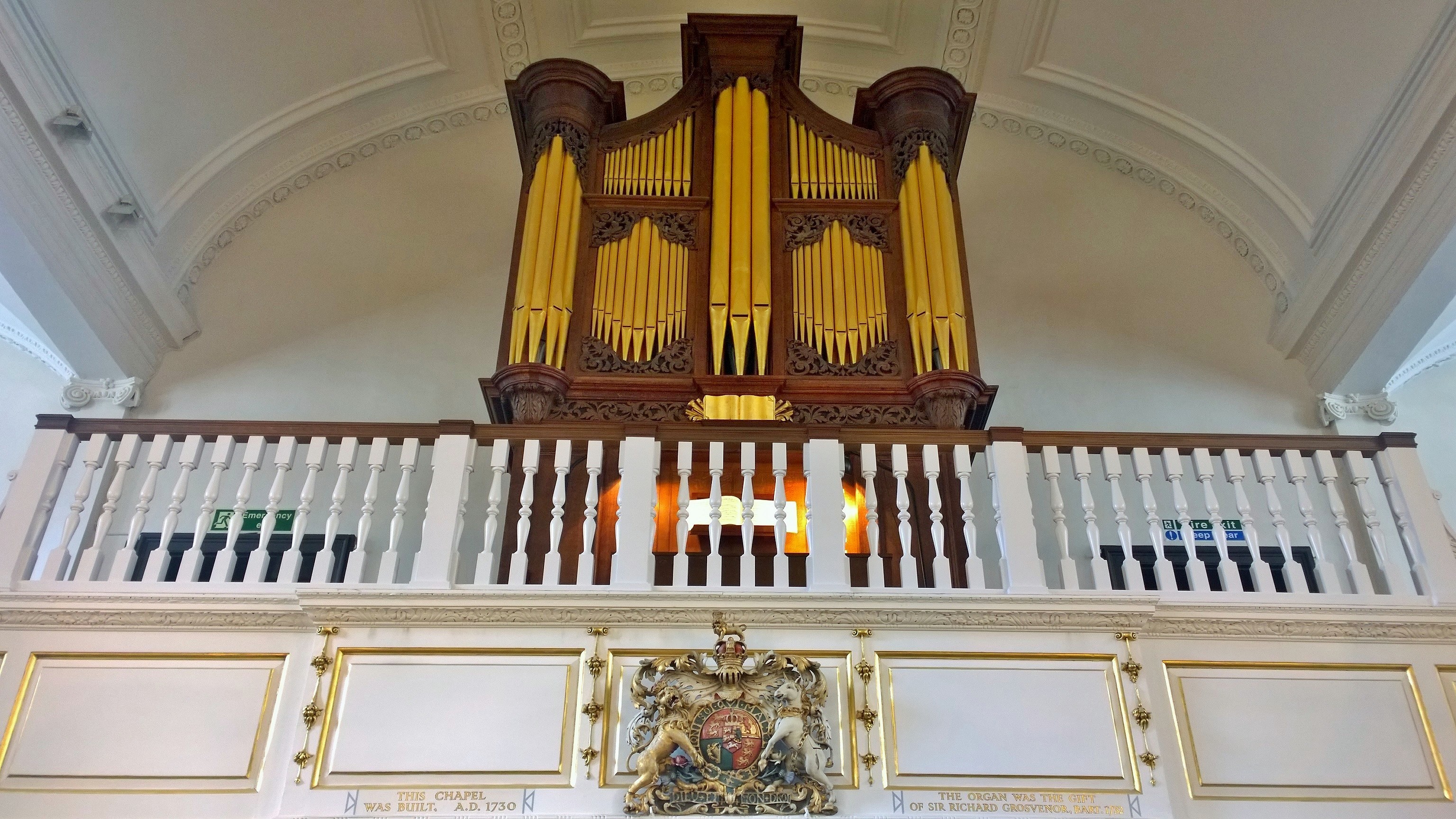 The Grosvenor Chapel, Mayfair
Tuesday 4 August 2015
Nicolaus Bruhns (b1665) – The surviving organ works
 Andrew Benson-Wilson : Early Music Reviews +