Gabrieli: Purcell – Fairy Queen

Purcell: The Fairy Queen
Gabrieli Consort & Players, Paul McCreesh
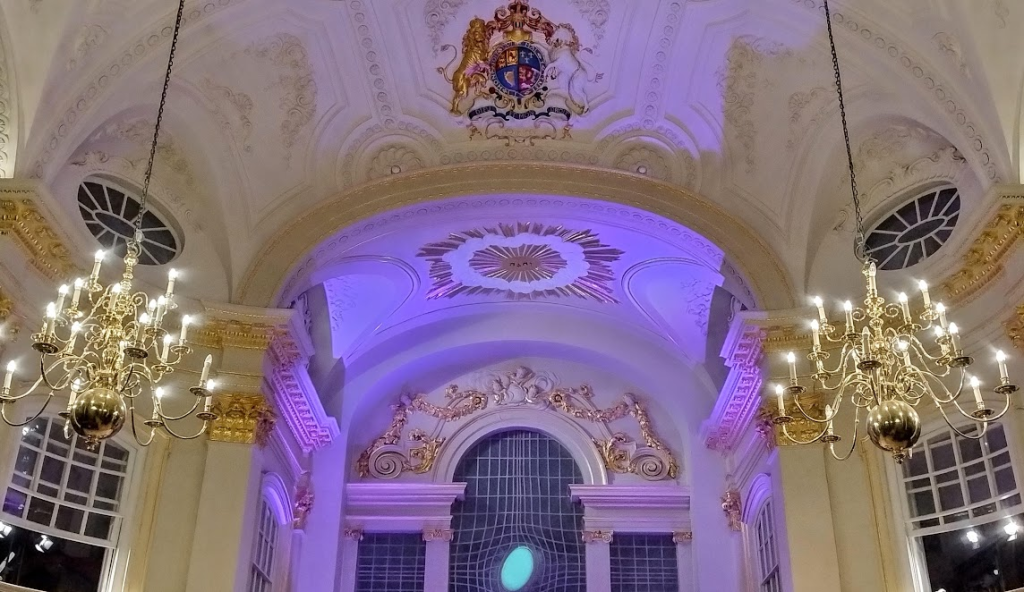
St Martin-in-the-Fields. 7 November 2025

The Fairy Queen is one of Gabrieli’s calling cards, with many performances over the years. I last reviewed them in 2018 at St John’s, Smith Square, shortly before they recorded it (SIGCD615). Several of the singers and players from that recording remain for their latest London performance in St Martin-in-the-Fields.

Continue reading

Proms: Purcell’s The Fairy Queen

BBC Proms: Purcell’s The Fairy Queen
Les Arts Florissants, Le Jardin des Voix, Compagnie KÄFIG
Paul Agnew, conductor, Mourad Merzouki, choreographer/stage director
Royal Albert Hall, 6 August 2024


There are many ways to perform Purcell’s The Fairy Queen, but this must rank as one of the most inventive and entertaining. I have seen many versions of this musical extravaganza, including a bottom-numbingly-long version that attempted to recreate the original 1692 production when Purcell’s five masques were interspersed between sections of the spoken play, which was an appallingly turgid adaptation of Shakespeare’s Midsummer Night’s Dream. Composed to celebrate the anniversary of William and Mary’s wedding, Purcell’s five masques bear a marginal and rather metaphysical and academic relationship (explained here) to Shakespeare’s play, the revised version concentrating on the dream-like world of the fairies. The five masques are all introduced by Titania or Oberon, who may well have been played by eight or nine-year-old children, seemingly joined by a wider cast of young children.

Continue reading

HGO: Purcell – The Fairy Queen

Purcell, The Fairy Queen
HGO, HGOAntiqua Orchestra, Seb Gillot, Eloise Lally

Jacksons Lane Arts Centre, Highgate, 27 April 2024


Purcell’s ‘semi-opera’ is a complicated piece to perform and/or stage. Originally composed for a version of Shakespeare’s MIdsummer’s Nights Dream it includes incidental instrumental pieces (First and Second Music as the audience gathered, Act Tunes between acts, short symphonies at the start of each act and various dances) together with five staged masques at the end of each act. The whole thing lasts about 5 hours. I watched the bemused audience at Glyndebourne in 2009 as they sat through around 45 minutes of spoken text before the first masque. The music and text of the masques only bear a metaphorical relationship to the Shakespear tale. This impressive production by HGO (formally known as Hampstead Garden Opera) added an additional layer of interpretation by setting the whole thing as “a variety of incarnations by a magical tale-spinner, a photographer studying love through her camera lens”.  They promised to take us “through the gamut of human emotions … as we are taken into the photographer’s dream space where anything is possible. In a brief spoken introduction, we were told that “mischiefs are at play”. Indeed they were.

Continue reading

Purcell: The Fairy Queen

Purcell: The Fairy Queen
Gabrieli Consort and Players, Paul McCreesh

St John’s, Smith Square. 1 November 2018

The Gabrieli Consort and Players could probably perform The Fairy Queen in their sleep, such is their experience of Purcell’s music, and this particular work, over many years. They have performed it at the BBC Proms, the Barbican, the Spitalfields Festival and many other venues around the world. They now plan to record it, along with King Arthur, early in the New Year, with the same forces as appeared in this St John’s, Smith Square performance. Their crowdfunding campaign page can be found here.

One of the continuing successes of the Gabrieli’s and their director Paul McCreesh is their ability to reinvent themselves and to continually question and push boundaries in their approach to their music making. For this particular recording (and this concert) they stress that “Gabrieli also brings a forensic understanding of contemporaneous performance techniques to this repertoire, including a new bow hold for string players which transforms articulation and influences tempi; wind instruments using more basic, coarser reeds, for a more martial sound; and natural trumpets performing on instruments without holes, playing entirely through the adjustment of embouchure – a high wire act!“. This was also the premiere of a new performing edition, prepared by McCreesh and Christopher Suckling, their principal bass violinist. It was performed at the low ‘French’ pitch of 392Hz and the violins played using French bow holds.  If this suggests an academic approach to music making, the experience of this concert proved to be anything but. It was a compelling and exuberant performance, semi-staged, albeit with only one ‘prop’ – in the shape of an enormous bleached-white wig for Mopsa, aka Charles Daniels. Continue reading