
Bach: Goldberg Variations
Nathaniel Mander, harpsichord
ICSM / Chronos ICSM018. 42’28
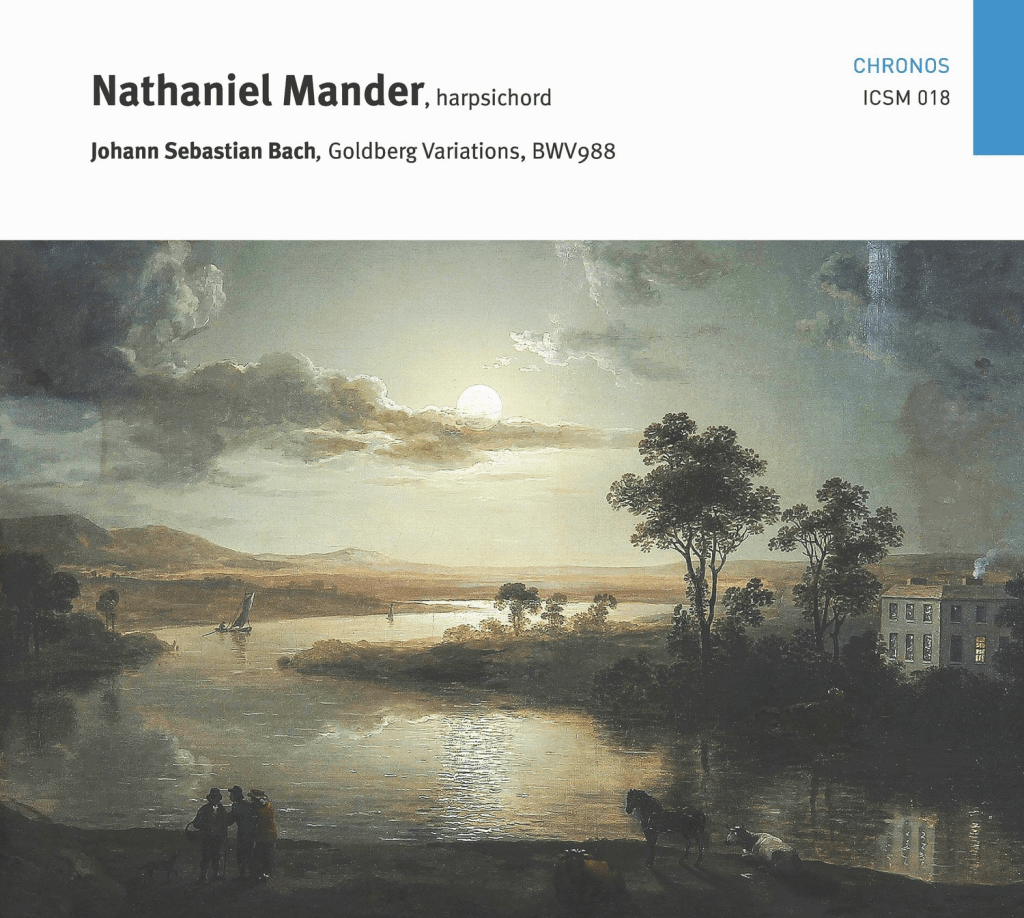
The Goldberg Variations is one of the most complex of all Bach’s keyboard works to understand and perform, so it is a brave move for anybody to make it their debut recording. However, Nathaniel Mander does have at least one distinguished predecessor in Glen Gould’s 1955 debut recording. It was published in 1741 under the (publisher’s) title of Clavierubung IV, following the earlier Clavierubung I, II, and III. The title implies that it is ‘Keyboard practice’, but it certainly is far more than that. Bach (who called it Aria with diverse variations for a harpsichord with two manuals) notes that it was “composed for connoisseurs, for the refreshment of their spirits”, which gives a far more appropriate impression of its status. The legend that Bach wrote the variations for Johann Gottlieb Goldberg is almost certainly not true, not least because Goldberg was just 13 at the time. But he was clearly a gifted player, and was a student of Bach’s son, Wilhelm Friedemann in Dresden, and also took lessons with J.S. Bach in Leipzig.
 Andrew Benson-Wilson : Early Music Reviews +