My London organ recitals
August to October 2025
Tuesday 5 August, Grosvenor Chapel, 1:10.
For the anniversary of Arnolt Schlick (c1455-c1525), I will play all the pieces from his 1512 Tabulaturen etlicher lobgesang, including the large-scale Da pacem and Salve Regina, the latter described as “one of the truly great masterpieces of organ art”.

Monday 8 September, Christ Church, Spitalfields 7.30.
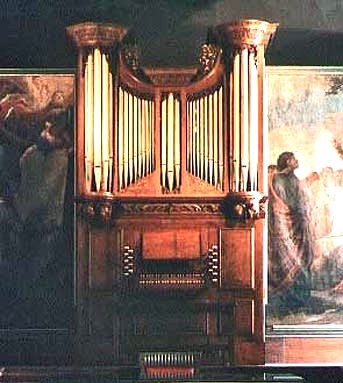
Under the title of “Mr. Stanley, I Presume!” this will be an exploration of English 18th-century life through the organ music of John Stanley (1712-1786) – “the best organist in Europe, maybe in the world”. It will include music reflecting country house saloon soirees; the hunting horns, shepherd songs and birdsong of the English countryside; the trumpets of military marches; and jovial London pleasure gardens. Played on the internationally renowned 1735 Richard Bridge organ.

Sunday 19 October, St Lawrence (Little Stanmore) Whitchurch HA8 6QS, 3pm.
Thirty years ago, I gave the opening recital on this Goetze & Gwynne organ, based on the surviving parts of the 1716 Gerard Smith organ that Handel played when he worked for the Duke of Chandos at Cannons. This anniversary recital of English 17th-century music will honour the lives of Martin Goetze and Dominic Gwynne. The church is a short walk from Canons Park underground station.
More details to follow in due course, including booking details for the Spitalfields and Whitchurch concerts.


 Spitalfields Music has been an extraordinary musical and community success since its foundation 40 years ago. Starting life with a 1966 concert to help save Nicholas Hawksmoor’s architecturally important Christ Church Spitalfields (which was then, unbelievably, under threat of demolition) it soon grew into a ‘Summer Festival of Music’ led by Richard Hickox. Initially under the auspices of the Friends of Christ Church, it became an independent organisation and charity in 1989, setting up their continuing community and education programme two years later. Under the artistic and managerial leadership of the likes of Judith Serota, Michael Berkely, Judith Weir, Jonathan Dove, Diana Burrel, Abigail Pogson and the current Chief Executive, Eleanor Gussman, it has grown into an major musical and community force in London, sharing their passion for music with nearly half and million people, attracting more than 325,000 audience members to events in more than 70 venues in the Spitalfields and Tower Hamlets area. Alongside their Summer and Winter Festivals, they run an enormous Learning & Participation programme involved more than 125,000 people.
 Andrew Benson-Wilson : Early Music Reviews +