Mayfair Organ Concerts – The Grosvenor Chapel
17 March 2026
Andrew Benson-Wilson
Early Music Day recital
Francisco Correa de Arauxo (1584–1654)
Libro de tientos y discursos de musica practica y theoríca de organo (1626)
Tiento de Quinta Tono 6′
Tiento de Quarto Tono 4’30
Segundo Tiento de Quarto Tono – a modo de canción 5’30
Quinto Tiento de Medio Registro de Baxones de Primero Tono 4’30
Tiento de dos tiples, de Septimo Tono 7′
Tiento de medio registro de tiple de Sexto Tono – a modo de Batalla 10′
Andrew Benson-Wilson
Early Music Day. Correa de Arauxa: “Libro de tientos . . . Facultad organica” (1626)
Mayfair Organ Concerts
Andrew Benson-Wilson, organ
The Grosvenor Chapel
South Audley Street, Mayfair, London W1K 2PA
Tuesday 17 March 2026, 1:10
Francisco Correa de Arauxo (1584–1654)
Libro de tientos y discursos de musica practica y theoríca de organo
intitulado Facultad organica (1626)
Tiento de Quinta Tono (5)
Tiento de Quarto Tono (15)
Segundo Tiento de Quarto Tono – a modo de canción (16)
Quinto Tiento de Medio Registro de Baxones de Primero Tono (34)
Tiento de dos tiples, de Septimo Tono (54)
Tiento de medio registro de tiple de Sexto Tono – a modo de Batalla (63)
This year’s annual Early Music Day recital focuses on the publication, exactly 400 years ago, of the monumental Libro de tientos y discursos de música practica, y theorica de organo intitulado Facultad organica (“Book of Tientos and Discourses on Practical and Theoretical Organ Music entitled Organic Faculty“) by the Spanish organist, composer, and theorist Francisco Correa de Arauxo.
Correa de Araujo was born in Seville. In 1599, aged just 15, he became organist of San Salvador, the second most important church in Seville. He became a priest around 1608, but became embroiled in various tussles with the authorities. In 1608, he was ordained as a priest. He maintained the Seville post until 1636 when, after many unsuccessful attempts to become cathedral organist, he was, after four years at Jaén Cathedral, appointed organist at Segovia Cathedral, where he stayed for the rest of his life, despite repeated offers from Seville to return as cathedral organist.
Organ recital: Byrd to Blow
The Friends of St Lawrence
“Byrd to Blow”
17th-century English organ music,
for the 30th anniversary of the Goetze & Gwynne ‘Handel’ organ
Andrew Benson-Wilson
St Lawrence, Whitchurch
Whitchurch Lane, Edgware HA8 6QS
Sunday 19 October, 2025. 3pm

30 years ago, Andrew Benson-Wilson gave the all-Handel opening recital on the new Goetze & Gwynne ‘Handel’ organ, a reconstruction of the 1716 Gerard Smith instrument using the original Grinling Gibbons case and surviving elements of the original organ. Handel used the original 1716 organ when he worked for the Duke of Chandos at Cannons in 1717/18.
Having given two subsequent recitals of music by Handel, Andrew now returns to explore English organ music from the century leading up to Handel’s time, ranging from Byrd to Blow, with music by William Byrd, John Bull, Orlando Gibbons (d1625), Thomas Tomkins, John Lugge, Matthew Locke and John Blow. It will feature pieces for “double organ”, a genre that developed during the 17th-century. The recital will also honour the lives of the organ builders, Martin Goetze and Dominic Gwynne. Click here to find out more about the organ.
Programme notes: Schlick: Tabulaturen etlicher lobgesang (1512)
Mayfair Organ Concerts – The Grosvenor Chapel
5 August 2025
Andrew Benson-Wilson
Arnolt Schlick
Tabulaturen etlicher lobgesang (1512)
Salve Regina (5 verses) 12’
(Salve regina – Ad te clamamus – Eia ergo, advocata- O pia – O dulcis Maria)
Pete quid vis 3’, Hoe losteleck 3’, Benedictus 2’30,
Primi toni 2’, Maria zart 2’30, Christe 1’30
Da pacem (3 settings) 7’
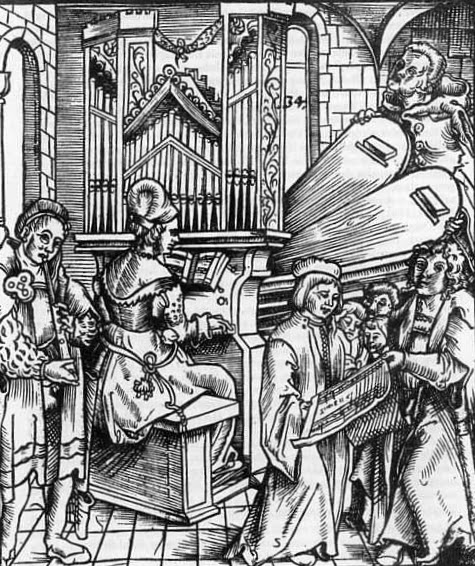
Title page of Spiegel der Orgelmacher und Organisten, 1511
Arnolt Schlick (c1455-c1525) has been described as”one of the greatest masters who have left their imprint on the history of organ music“. He was one of the most important members of the influential group of German late Renaissance organ composers, known as the Colourists. Others include Conrad Paumann and Paul Hofhaimer. Schlick lived and worked in the important university city of Heidelberg. In his late 20s, he was appointed court organist to the Palatinate Elector. In 1486 he played the organ for the coronation of the Habsburg Maximilian I as the King of the Romans. In 1511, he published the Spiegel der Orgelmacher und Organisten, the first German treatise on organ building and performance. The following year he published the Tabulaturen etlicher lobgesang und lidlein uff die orgeln un lauten (Tablatures of Several Canticles and Songs for the Organ and Lute). The collection shows the early development of keyboard music. Conveniently, the organ pieces fit into the length of a lunchtime recital.
Organ Recital. Schlick: Tabulaturen etlicher lobgesang (1512)
Andrew Benson-Wilson
The Grosvenor Chapel
South Audley Street, Mayfair, London W1K 2PA
Tuesday 5 August 2025, 1:10
Arnolt Schlick
Tabulaturen etlicher lobgesang (1512)
Salve Regina (5 verses)
Pete quid vis, Hoe losteleck, Benedictus, Primi toni, Maria zart, Christe
Da pacem (3 settings)
Described as “one of the greatest masters who have left their imprint on the history of organ music”, Arnolt Schlick (c1455-c1525) was one of the most important members of the influential group of late Renaissance German organ composers known as the Colourists, together with Conrad Paumann and Paul Hofhaimer. He lived and worked in the important university city of Heidelberg. In his late 20s, he was appointed court organist to the Palatinate Elector. In 1486 played the organ for the coronation of the future Holy Roman Emperor, Maximilian I, as King of the Romans.
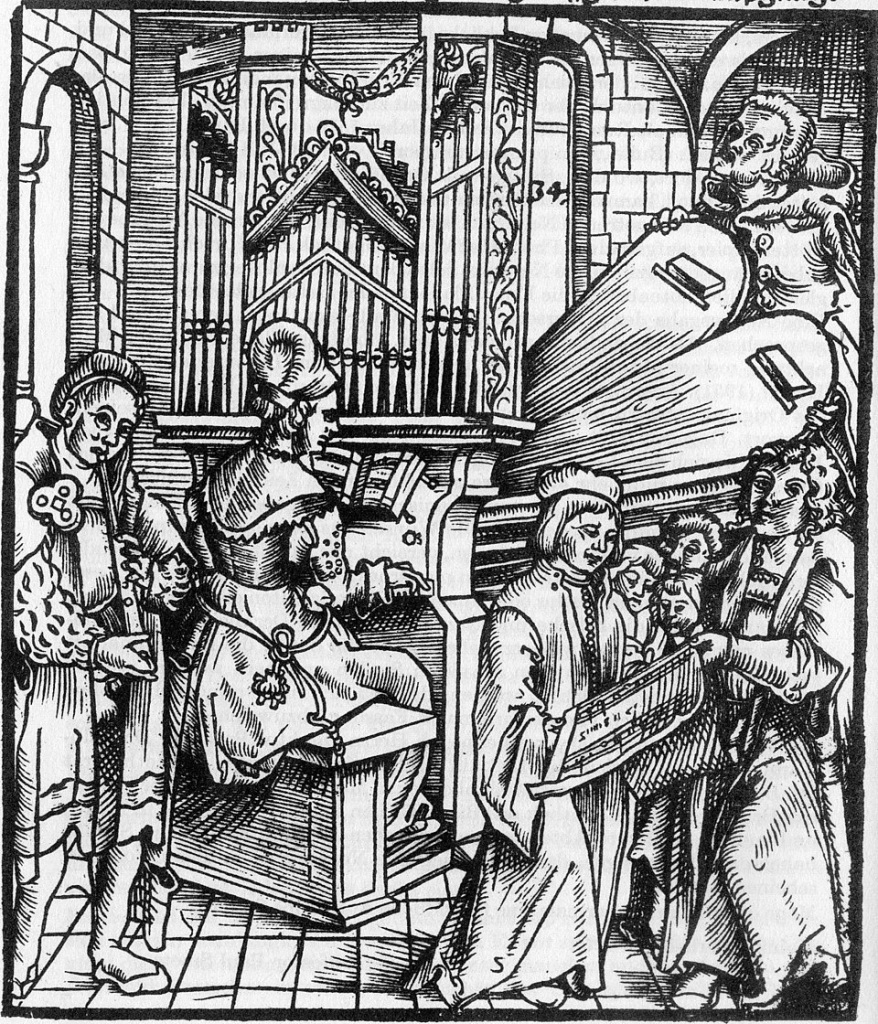
Title page of Spiegel der Orgelmacher und Organisten, 1511
My London organ recitals: August to October 2025
My London organ recitals
August to October 2025
Tuesday 5 August, Grosvenor Chapel, 1:10.
For the anniversary of Arnolt Schlick (c1455-c1525), I will play all the pieces from his 1512 Tabulaturen etlicher lobgesang, including the large-scale Da pacem and Salve Regina, the latter described as “one of the truly great masterpieces of organ art”.

Monday 8 September, Christ Church, Spitalfields 7.30.
Under the title of “Mr. Stanley, I Presume!” this will be an exploration of English 18th-century life through the organ music of John Stanley (1712-1786) – “the best organist in Europe, maybe in the world”. It will include music reflecting country house saloon soirees; the hunting horns, shepherd songs and birdsong of the English countryside; the trumpets of military marches; and jovial London pleasure gardens. Played on the internationally renowned 1735 Richard Bridge organ.

Sunday 19 October, St Lawrence (Little Stanmore) Whitchurch HA8 6QS, 3pm.
Thirty years ago, I gave the opening recital on this Goetze & Gwynne organ, based on the surviving parts of the 1716 Gerard Smith organ that Handel played when he worked for the Duke of Chandos at Cannons. This anniversary recital of English 17th-century music will honour the lives of Martin Goetze and Dominic Gwynne. The church is a short walk from Canons Park underground station.
More details to follow in due course, including booking details for the Spitalfields and Whitchurch concerts.
Audition for the first organist, on the 300th anniversary of St George’s, Hanover Square
Early Music Day 2025
Mayfair Organ Concerts
St George’s, Hanover Square
Tuesday 11 March 2025, 1.10pm
Andrew Benson-Wilson
Audition for the first organist
on the 300th anniversary of St George’s, Hanover Square

The church of St George’s Hanover Square was consecrated by the Bishop of London
on March 23rd, 1725. The three-manual organ was built by Gerard Smith, nephew and successor of the famous Father Smith. The case of his organ remains as the central part of the current organ case. This recital will reflect the audition for the first organist, with music by the four assessors (Pepusch, Croft, Handel and Geminiani) and the successful candidate, Thomas Roseingrave, chosen for his ability to improvise fugues.
Johann Christoph Pepusch (1667-1752) Lesson in D (Two Aires)
William Croft (1678-1727) Voluntary IX in d; Voluntary X in D;
Handel (1685-1759) Fugue in B flat; Fugue in a (HWV607/609)
Francesco Geminiani (1687-1762) Duo in F
Thomas Roseingrave (1690-1766) Voluntary & Fugue in f; Fugue in d
Details of the 2012 Richards, Fowkes & Co organ in St George’s Hanover Square organ can be found here and here.
Admission is free, with a retiring collection.
The programme notes can be read here.
Recital programme notes: The 1725 audition for the first organist of St George’s, Hanover Square
Mayfair Organ Concerts
St George’s, Hanover Square
11 March 2025
St George’s, Hanover Square 300th Anniversary
The 1725 audition for the first organist

Johann Christoph Pepusch (1667-1752) Lesson in D (Two Aires)
William Croft (1678-1727) Voluntary IX in d; Voluntary X in D;
Handel (1685-1759) Fugue in B flat; Fugue in a (HWV607/609)
Francesco Geminiani (1687-1762) Duo in F
Thomas Roseingrave (1690-1766) Voluntary & Fugue in f; Fugue in d.
This recital celebrates the 300th anniversary of St George’s, Hanover Square. The church was consecrated on 23 March 1725. It was designed by the architect John James, the son of the head of the Holy Ghost School in Basingstoke where a plaque in his honour has been unveiled. He was architect for two other London churches with an organ interest, St Mary’s Rotherhithe and St Lawrence Whitchurch. The 1725 Hanover Square organ was built by Gerard Smith, nephew and successor of the famous ‘Father’ Smith. Its case remains as the central part of the current organ. A panel of Pepusch, Croft, Handel and Geminiani choose Thomas Roseingrave as organist, noting that he was best able to improvise a fugue on the given subject. This recital includes music by the four assessors and concludes with fugues by Roseingrave.
Programme Notes: Two German Anniversaries: 1624 & 1674
Mayfair Organ Concerts
St George’s, Hanover Square, 2 July 2024
Two German Anniversaries: 1624 & 1674
Samuel Scheidt and Matthais Weckmann
Andrew Benson-Wilson
Samuel Scheidt (1587-1654)
Tabulatura nova, 1624
Echo ad manuale duplex forte et lene
Fantasia super Io son ferito lasso
Modus pleno Organo pedaliter: Benedicamus à 6 Voc
Matthias Weckmann (c1616-1674)
Canzon in G
Nun freut euch, lieben Christen gmein
Praeludium A.5 Vocem
This recital celebrates the 400th and 350th anniversaries of two of the most important German composers of the early to mid-17th century: Samuel Scheidt’s seminal three-volume 1624 Tabulatura nova and Matthias Weckmann, who died in 1674.
Two German Anniversaries: 1624 & 1674
Mayfair Organ Concerts
St George’s, Hanover Square
Tuesday 2 July 2024, 1.10pm
Two German Anniversaries: 1624 & 1674
Samuel Scheidt and Matthais Weckmann
Andrew Benson-Wilson

This concert celebrates the 400th and 350th anniversaries of two of the most important German composers of the early 17th century: the publication in 1624 of Samuel Scheidt’s seminal three-volume Tabulatura nova and the death in 1674 of Matthias Weckmann.
Samuel Scheidt (1587-1654)
Tabulatura nova, 1624
Echo ad manuale duplex forte et lene
Fantasia super Io son ferito lasso
Modus pleno Organo pedaliter: Benedicamus à 6 Voc
Matthias Weckmann (c1616-1674)
Canzon in G
Nun freut euch, lieben Christen gmein
Praeludium A.5 Vocem
Early Music Day recital: BEFORE BACH programme notes
Mayfair Organ Concerts – The Grosvenor Chapel
19 March 2024
Early Music Day concert
Andrew Benson-Wilson
BEFORE BACH
Conrad Paumann (c1410-1473) Incipit Fundamentum m.C.p.C;
Magnificat Octavi Toni. 2v
(From the Buxheimer Orgelbuch, c1460)
Hans Buchner (1483-1538) Magnificat anima sexti Toni. 2v
Hieronymus Praetorius (1560-1629) Magnificat Tertii Toni. 3v
Mathias Weckmann (1617-74) Magnificat II. Toni. 4v
Johann Pachelbel (1653-1706) Fantasia in G; Three Fugues from the Magnificat tertii Toni
Samuel Scheidt (1587-1654) Benedicamus à 6 Voc.1624
This is the first of two related Early Music Day concerts with the titles of BEFORE BACH and AFTER BACH. The second concert, AFTER BACH, is this Sunday, 24 March at 7.45 in Christ’s Chapel of Alleyn’s College of God’s Gift, 14 Gallery Rd, Dulwich SE21 7AD with music by Stanley, CPE Bach and Corrette. Today’s concert traces German organ music from around 1460 to Bach’s youth, with a focus on music for the service of Vespers, notably the Magnificat, one of the key musical elements of Vespers in both the Catholic and Lutheran traditions.
Early Music Day recital, Dulwich. 24 March 2024.
The Chapel of Christ of Alleyn’s College of God’s Gift
Gallery Road, Dulwich, SE21 7AD
Sunday 24 March 2024, 7:45
AFTER BACH
Andrew Benson-Wilson
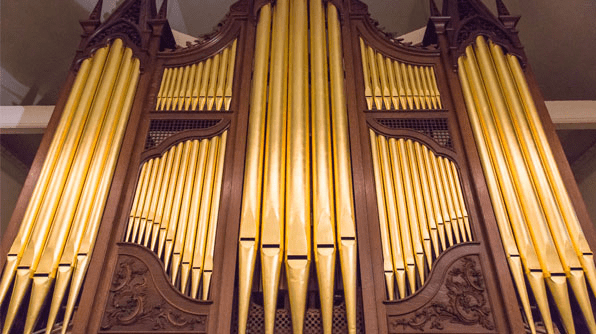
Andrew’s annual Early Music Day concerts usually include music by JS Bach, reflecting the fact that Early Music Day is on 21 March, the date of Bach’s birth under the current calendar. This year Andrew is giving two Early Music recitals, with the titles of BEFORE BACH and AFTER BACH. As well as focussing on music from England, Germany and France (John Stanley, CPE Bach and Michel Corrette) published in the years immediately following Bach’s death in 1750, the AFTER BACH recital also reflects the date of the 1760 George England organ and the rather unusual concert time of 7:45 in the evening.
AFTER BACH and AFTER DARK!
The 1760 George England organ was restored in 2009 by William Drake.
Organ details can be found here.
A link to the programme notes will eventually be posted here.
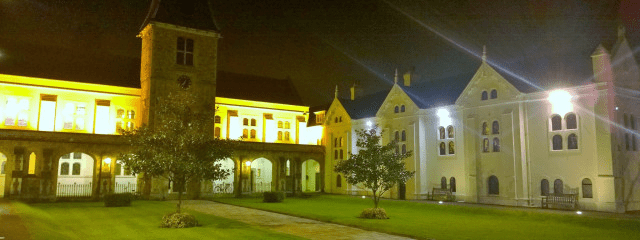
The Chapel of Christ and Alleyn’s College of God’s Gift adjoin the Dulwich Art Gallery.
Free street parking.
Admission is free, with a generous retiring collection.
Post-concert refreshments.
The first of the two linked Early Music Day recitals has the title BEFORE BACH and is on Tuesday 19 March at 1:10 in The Grosvenor Chapel.

Early Music Day recital, Grosvenor Chapel, 19 March 2024
Andrew Benson-Wilson, organ
Mayfair Organ Concerts
The Grosvenor Chapel
South Audley Street, Mayfair, London W1K 2PA
Tuesday 19 March 2024, 1:10

BEFORE BACH
Andrew’s annual Early Music Day recitals are usually focussed on the music of JS Bach, reflecting the fact that Early Music Day is on 21 March, the date of Bach’s birth under the current calendar. This year, Andrew is giving two Early Music recitals, with the titles of BEFORE BACH and AFTER BACH. This first recital traces the history of German organ music from the Buxheimer Orgelbuch c1460 to Johann Pachelbel, the teacher of Bach’s older brother, Johann Christoph Bach. It seems likely that the 9-year-old Bach met Pachelbel at his older brother’s 1694 wedding.
Other composers represent the south, centre and north of Germany, including Hans Buchner (1483-1538), Hieronymus Praetorius (1560-1629), Mathias Weckmann (1617-74) in his anniversary year, and Samuel Scheidt (1587-1654)) in the 400th anniversary of his Tabulatura nova (1624).
The recital focussed on music written for the Catholic and Lutheran service of Vespers, notably the Magnificat, one of the key musical moments of the service in both churches. We hear versions from five composers, concluding with Scheidt’s Modus Pleno Organo Pedaliter Benedicamus à 6 Voc, composed for the conclusion of a Vespers Service as well as being the final piece in the Tabulatura nova.
Conrad Paumann (c1410-1473) Incipit Fundamentum m.C.p.C;
Magnificat Octavi Toni.
(From the Buxheimer Orgelbuch, c1460)
Hans Buchner (1483-1538) Magnificat anima sexti Toni.
Hieronymus Praetorius (1560-1629) Magnificat Tertii Toni.
Mathias Weckmann (1617-74) Magnificat II. Toni.
Johann Pachelbel (1653-1706) Fantasia in G; Three Fugues from the Magnificat tertii Toni
Samuel Scheidt (1587-1654) Benedicamus à 6 Voc. 1624
Programme notes: Byrd’s World
Mayfair Organ Concerts
St George’s, Hanover Square, 1 August 2023
“Byrd’s World”
William Byrd’s 400th anniversary
Andrew Benson-Wilson

Antonio de Cabezón (1510–1566) Tiento del Primer Tono
Thomas Tallis (c1505-85) Ecce tempus idoneum
William Byrd (1540–1623) Praeludium to the Fancie BK12 – Fantasia BK13
Giovanni Gabrieli (1557–1612) Toccata (C237)
Hieronymus Praetorius (1560-1629) Magnificat Septimi Toni
Jan Pieterszoon Sweelinck (1562–1621) Fantasia à 3 SwWV 271
Jehan Titelouze (1562–1633) Conditor alme siderum (3v)
This is the second of two recitals celebrating the 400th anniversary of the death of William Byrd on 6 July 1623. The first was on the historic organ in Christ’s Chapel of God’s Gift in Dulwich and featured music by Byrd and Bull. This recital contrasts one of Byrd’s most imaginative and adventurous Fantasias with music by his contemporaries in Spain, England, Italy, Germany, The Netherlands, and France.
William Byrd. Dulwich: College of God’s Gift. 9 July 2023.
The Chapel of Christ of Alleyn’s College of God’s Gift
Gallery Road, Dulwich, SE21 7AD
Sunday 9 July 2023, 7.45
Andrew Benson-Wilson plays William Byrd (d 6 July 1623)
As part of the 400th anniversary of the death of William Byrd (“Father of British Music”), Andrew Benson-Wilson will give two commemoration organ recitals. The first is in the delightful venue of The Chapel of Christ of Alleyn’s College of God’s Gift in Dulwich Village on Sunday 9 July 2023 at 7.45. It will feature a range of Byrd’s own keyboard music and will finish with the elaborate Salve Regina Misere Cordi by John Bull, probably composed when he was organist of Antwerp Cathedral. The Dulwich recital is played on the 2009 William Drake restoration of the 1750 George England organ. Organ details can be found here.
The sixte pavian Kinbrugh Goodd – The galliarde to the same
Coranto
A Grounde
Wolsey’s Wylde
Fancy (Salve Regina?)
Clarifica me Pater in three & four parts
John Bull (1562-1628) Salve Regina Misere Cordi
Programme Notes: “A Farewell to Mr Handel’s organ”
The Handel Friends
St George’s Hanover Square
Tuesday 25 April 2023
“A Farewell to Mr Handel’s organ”
A Handel recital on the 1998 Goetze & Gwynn chamber organ
and the 2012 Richards Fowkes & Co organ
Andrew Benson-Wilson
Allemande – Courante – Air and Variations
(HWV 428, from Suite in D minor, Eight Great Suites, 1720)
A Voluntary on a Flight of Angels
(HWV 600, ‘Ten Tunes for Clay’s Musical Clock’, c1735)
Fugue in A minor
(HWV 609, ‘Six Fugues or Voluntarys for the Organ’, 1735)
Menuet
(HWV 350, ‘The Celebrated Water Musick Set for the Harpsicord’, 1743)
Organ Concerto VI in G minor
Largo e Affettuoso – A tempo Giusto – Musette – Allegro – Allegro
(HWV 300, Second Set of Six Concertos, c1740)
* * *
Voluntary III Slow – Cornet
Voluntary V Largo – Trumpet & Echo
(From Twelve Voluntaries, 1776)
Organ Concerto in G in Alexander’s Feast
Larghetto – Allegro – Adagio – Andante
(HWV 289, Opus 4/1, 1738)
Chaconne in G
(HWV 435, Eight Great Suites, 1720)
The Goetze & Gwynn chamber organ was commissioned by the Handel House Trust. It is based on a larger surviving 1749 organ that Thomas Parker built for Charles Jennens, the Messiah librettist, with a specification suggested by Handel. It was intended for the Handel House Museum but was too large for the space available at the time. It has since lived in St George’s Hanover Square. As part of the Hallelujah Project of what is now known as the Handel & Hendrix in London, the organ will move into Handel House in May. In the first half of this recital, we explore how Handel’s music might have been played at the time on a chamber organ, as revealed by 18th-century publications of his keyboard music.
A farewell to Mr Handel’s organ
The Handel Friends
“A farewell to Mr Handel’s organ“
A recital on the Handel chamber organ
before its move to The Handel House Museum
Andrew Benson-Wilson
St George’s, Hanover Square, Tuesday 25 April 2023, 7pm

The Handel chamber organ was made in 1998 by Goetze & Gwynn for the Handel House Trust. They opened the Handel House Museum in 2001 in Handel’s own house at 25 Brook Street, his home for the last 36 years of his life. As the Handel organ was too large for the limited space available at the time, it has lived in St George’s Hanover Square, Handel’s nearby parish church. As part of the Hallelujah Project, which will enlarge the space of the museum and add the flat next door where Jimi Hendrix lived in the 1960s, the chamber organ is being moved into Handel House in May. The organ is based on the chamber organs of Richard Bridge and Thomas Parker, who built the organ which belonged to Charles Jennens, the librettist of Messiah, which still exists close to its original condition.
Programme notes: Bõhm & Bach
Mayfair Organ Concerts
The Grosvenor Chapel, Mayfair
Tuesday 21 March 2023

Andrew Benson-Wilson
plays music by
Bõhm & Bach
Bõhm. Partita: Freu dich sehr, o meine Seele
Trio: Freu dich sehr, o meine Seele
Bach. Fantasia pro Organo a 5 Vocum BWV 562i
Bõhm. Vater unser Im Himmelreich
Bach. Praeludium con Fuga in c BWV 546
This special Early Music Day concert contrasts two of Bach’s most powerful organ works with the music of one of his earliest influences. When he was 15, Bach became a student at the Michaelisschule in Lüneburg. Georg Böhm (1661-1733) had recently been appointed organist of the nearby Johanniskirche, the principal town church with its 1553 Hendrik Niehoff organ. The young Bach certainly knew Bõhm, and may have been a pupil of his – one of the earliest Bach manuscripts is a copy of a piece by Reinken that Bõhm owned.
Early Music Day concert – Bach & Böhm
Andrew Benson-Wilson, organ
Mayfair Organ Concerts
The Grosvenor Chapel
South Audley Street, Mayfair, London W1K 2PA
Tuesday 21 March 2023, 1:10
Bõhm: Partita Freu dich sehr, o meine Seele
Trio Freu dich sehr, o meine Seele
Bach: Fantasia in c BWV 562i
Bõhm: Vater unser Im Himmelreich
Bach: Praeludium con Fuga in c BWV 546
This recital is a contribution to Early Music Day, the international celebration of early music that takes place annually on 21 March, the anniversary of Bach’s birth. The programme contrasts the music of one of Bach’s earliest influences with two of his mature organ works. When he was 15, Bach became a student at the Michaelisschule in Lüneburg. Georg Böhm was organist of the nearby Johanniskirche, the principal town church. The organ there was built in 1553 by Hendrik Niehoff, and is pictured below.
There is clear evidence that the young Bach knew Bõhm, and may have been a pupil of his. One of the earliest Bach manuscripts is a copy of a piece by Reinken owned by Bõhm. The two Bach pieces are powerful examples of his mature style, the first demonstrating the clear influence of French music, that he may have first experienced in Lüneburg and nearby Hamburg. The monumental Praeludium et Fuga in c shows the influence of Italian music, notably in the concerto-like Praeludium. Both Bach pieces were played as final voluntaries during the late Queen’s funeral and committal.
Andrew Benson-Wilson @ Christ Church Spitalfields
1360 to 1699
Organ music from the Gothic period to the late 17th century
Andrew Benson-Wilson
Christ Church Spitalfields
Commercial St, London E1 6LY
Monday 24 October 2022, 7.30

The magnificent 1735 Richard Bridge organ in the sumptuously restored Nichola Hawksmoor Christ Church Spitalfields is the most important historical restoration of any 18th-century English organ. For around a century, it was the largest organ in the UK. After many decades of silence, William Drake completed his restoration in 2015, taking the specification and technical details back to that of 1735, with the addition of three pedal stops.
Although obviously ideally suited to English music of the period, this recital will explore the wider potential of the English 18th-century organ to interpret music from other eras and countries. It starts with one of the earliest known pieces of organ music (dedicated, appropriately, to “those playing music”), dating from the mid-14th century, and the first known ‘prelude’ from 1448. The famous pioneers of early organ music follow (Francesco Landini, Conrad Paumann and Paul Hofhaimer), before a fascinating anonymous piece from a manuscript in the circle of Henry VIII, dating from around 1530.
Having explored the early development of organ music, the remaining pieces show the different regional styles that developed across Europe from the late Renaissance and early Baroque, ranging from Germany, England, Italy, Portugal, Spain and France. Composers represented are Hieronymus Praetorius, John Lugge, Girolamo Frescobaldi, Pedro de Araújo, Correa de Arauxo, Matthias Weckmann and Nicolas de Grigny. As well as representing different musical and organ-building styles (including one of the dramatic battle scenes from the Iberian peninsular), there are remarkable links between many of the composers and compositions.
Programme notes: Two Baroque Giants
Mayfair Organ Concerts. The Grosvenor Chapel. 9 August 2022
Andrew Benson-Wilson plays music by
Two Baroque Giants – Buxtehude & de Grigny
Dietrich Buxtehude (1637-1707)
Praeludium in d minor BuxWV 140
Ciacona in e minor BuxWV 160
Nicolas de Grigny (1672-1703).
Recit de Tierce pour le Benedictus
Dialogue de flûtes pour l,’Elevation
Dialogue (Agnus Dei II)
from Premier livre d’orgue (1699)
Buxtehude
Te deum laudamus BuxWV 218
Praeludium – Te deum laudamus – Pleni sunt coeli -Te martyrum – Tu devicto
Although Buxtehude and de Grigny were born 35 years apart, the music in this recital was composed at about the same time, around 1690/1700. They were composed for very different social, religious and musical settings, Buxtehude for Lutheran Lübeck in North Germany, and de Grigny for Catholic Reims in France. The organs they played were very different, but one of the joys of the English 18th-century-inspired Grosvenor Chapel organ is that it includes elements of both German and French instruments. Bach owned music by both composers and even added some of his own ideas to de Grigny’s Premier livre d’orgue. Bach’s youthful 200-mile walk to Lübeck to meet the ageing Buxtehude is well known.
Andrew Benson-Wilson – two Baroque giants
Two Baroque Giants – Buxtehude & de Grigny
Andrew Benson-Wilson, organ
The Grosvenor Chapel
South Audley Street, Mayfair, London W1K 2PA
Tuesday 9 August 2020, 1:10

Music by Dietrich Buxtehude (1637-1707) and Nicolas de Grigny (1672-1703).
Although Buxtehude and de Grigny were born 35 years apart, the music played in this recital was composed at about the same time, around 1690/1700. They were composed for very different social, religious and musical settings, Buxtehude for Lutheran Lübeck, North Germany, and de Grigny for Catholic Reims, France. The organs they played were also very different, but one of the joys of English 17th/18th organs is that they include elements of both the German and the French instruments.
The overriding figure in the music of these two is JS Bach. He knew their music and owned manuscripts of both composers, even adding some of his own ideas to de Grigny’s 1699 Premier livre d’orgue. Bach’s youthful walk to Lübeck to hear the ageing Buxtehude is well known.
Programme notes: Bach recital for Early Music Day
MUSIC-AT-HILL: MIDTOWN CONCERTS
St Giles-in-the-Fields
Friday 18 March 2022
Andrew Benson-Wilson organ
Poppy Walshaw cello
Johann Sebastian Bach (1675-1750)
Pastorella per Organo (BWV 590)
[Alla Siciliana – Allemande – Aria – Alla Gigue]
Cello Suite No.3 in C. (BWV 1009)
Prelude – Allemande – Courante – Sarabande – Bourrée I/II – Gigue
Partite diverse sopra Il Chorale O Gott, du frommer Gott (BWV 767)
“Upon thes nots” recital: programme notes
“Upon thes nots“
Two 400th anniversaries – Thomas Tomkins & Michael Praetorius
St George’s, Hanover Square, 1 March 2022
Andrew Benson-Wilson, organ
A Bach recital for Early Music Day
A Bach recital for Early Music Day
Andrew Benson-Wilson, organ & Poppy Walshaw, cello
St Giles-in-the-Fields, London WC2H 8LG
Friday 18 March, 1:15
This is a special concert for international Early Music Day, an annual celebration of early music that takes place around the time of the 21st March birthday of JS Bach. This concert is part of the weekly Music-at-Hill series of lunchtime Midtown Concerts in the beautiful church of St Giles-in-the-Fields, home of one of the most important historic organs in the country.
Organ Recital: “Upon thes nots”
For those who came to this recital, despite the travel problems, the encore that I played was Thomas Tomkins: “Sad Paven for these distracted times”
It seemed appropriate
“Upon thes nots“
Two 450th anniversaries – Thomas Tomkins & Michael Praetorius
Andrew Benson-Wilson, organ
St George’s, Hanover Square, London W1S 1FX
1 March 2022, 1:10
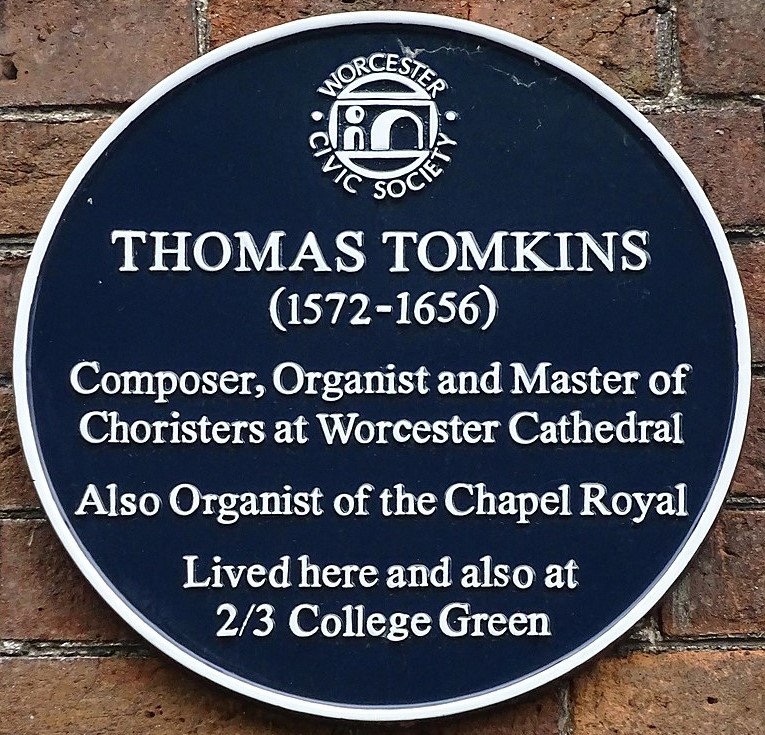
This recital contrasts the contrasting music of two composers born 600 miles apart, 450 years ago. It also reflects the way in which the two composers treat melodic lines, whether in the form of a powerful Lutheran hymn or the seven-note plainchant-based phrase upon which Tomkins based his monumental Offertory, noting in the opening bar that the piece was based “upon thes nots“.
Thomas Tomkins 1572–1656
“For Mr Arc[hdeacon] ThornBurgh”
“Mr Thomas Tomkins offertorye” [upon thes nots] (1637)
Michael Praetorius 1571-1621
O lux beata Trinitas (Hymnodia Sionia, 1611)
Chorale Fantasia: Ein’ feste Burg ist unser Gott (Musæ Sioniæ VII, 1609)
Thomas Tomkins was organist of Worcester Cathedral until its closure during the Civil War as well as the Chapel Royal in London. Michael Praetorius was organist and Kapellmeister in the courts of the Duke of Wolfenbüttel and the Elector of Saxony in Dresden.
The concert is given on the Richards, Fowkes & Co organ in Handel’s church of St George’s Hanover Square as part of the Mayfair Organ Concerts series. Admission is free, with a retiring collection.
The programme notes can be found here.
Andrew Benson-Wilson plays Sweelinck
Mayfair Organ Concerts
The Grosvenor Chapel
South Audley Street, Mayfair, London W1K 2PA
Tuesday 24 August 2020, 1:10
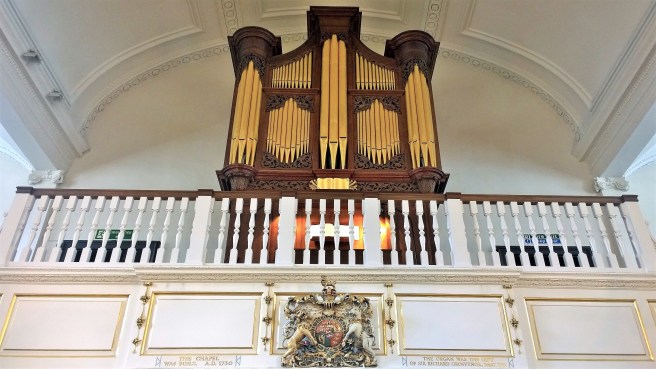
Andrew Benson-Wilson
plays music by
Jan Pieterszoon Sweelinck
Commemorating the 400th anniversary of the death of the famed ‘Orpheus of Amsterdam’, Jan Pieterszoon Sweelinck (1562-16 October 1621), Andrew Benson-Wilson gives an organ recital of pieces reflecting the different styles and genres of Sweelinck’s music. He was the most influential teacher of his day, attracting many students from German-speaking areas. Several of them went on to create the Hamburg school of organ composition which culminated in the music of Buxtehude and Bach.
Sweelinck: recital programme notes
Mayfair Organ Concerts
The Grosvenor Chapel, Mayfair
Tuesday 21 August 2021
Andrew Benson-Wilson
plays music by
Jan Pieterszoon Sweelinck
d. 16 October 1621
Early Music Day 2021
Early Music Day 2021
Andrew Benson-Wilson
21 March 2021

This time last year, I had planned to give four concerts for Early Music Day, with three Bach organ recitals (shared with baroque cellist Poppy Walshaw and flautist Annabel Knight) and a special evening concert combining Art Of Moog with the historic organ of St Giles-in-the-Fields. A year later, there is still no possibility of live events in the UK, so here is a far more modest contribution to Early Music Day 2021, with links to recordings of early organ music played on important European historic organs, either from my own recitals or more informal playing.
Early Music Day (at home): 7:30pm
Early Music Day
Stay at Home Edition

Happy Birthday, J S Bach!
Click the links below to take you to publically available videos of the pieces that we would have performed during the informal 45′ afternoon Bach organ and solo instrument recitals that would have taken place in London’s St Giles-in-the-Fields on Early Music Day at 4, 5 & 6pm. This is the programme for the final 7:30pm concert, given by
Art of Moog & Andrew Benson-Wilson (organ)
The poster for the series of events can be found here, as amended after the earlier pull out of Art of Moog because of the Coronavirus. Their 7:30pm evening concert with the historic St Giles-in-the-Fields organ is recreated with video links although sadly, none will have the combined Art of Moog and pipe organ. All the organ pieces below would have been combined with the Art of Moog instrumentalists.
An introduction to the Art of Moog
https://www.youtube.com/watch?v=AUJ8XSBHYnE
Art of Moog: Live at Kings Place – Selections
https://www.youtube.com/watch?v=U_B3Y1tXAhw
Art of Fugue Contrapunctus 1
https://www.youtube.com/watch?v=U5KjVEYzYAw
Benjamin Alard
l’église d’Arques-la-Bataille
Art of Fugue Contrapunctus 2
https://www.youtube.com/watch?v=M0HeE4MF01g&list=PL6cXnOI-FfSgtlLkIE5D1nXf660II0Pdd&index=8&t=0s
Glenn Gould
Adagio from The Easter Oratorio BWV 249
https://www.youtube.com/watch?v=CklCJk6kNFg
Art of Moog
Prelude in E minor
https://youtu.be/4_5efQbjybk
Art of Moog
Erbarm dich mein, o Herre Gott, BWV 721
https://www.youtube.com/watch?v=k3CNS2iK790
Ton Koopman
1643 Hans Heinrich Bader organ, St. Walburgiskerk, Zutphen
Wenn wir in höchsten Nöten sein
https://www.youtube.com/watch?v=GPMeBNU9fes
Wolfgang Zerer
Christ lag in Todesbanden
https://www.youtube.com/watch?v=rqwgeKOgezg
Wolfgang Zerer
Adagio from the viola da gamba sonata BWV 1029
https://youtu.be/3eAzorClu78
Art of Moog
Toccata D Moll BWV 565
https://www.youtube.com/watch?v=-xeqQo7bCvE
Jacques van Oortmerssen
1992 Glauco Ghilardi organ: S. Maria Assunta, Smarano
These concerts were to have been given in aid of the
Royal Society of Musicians.
If you are willing to support this important musical charity, you can donate directly via this link https://www.rsmgb.org/fundraising/. UK taxpayers can claim GiftAid. Please mention “Early Music Day” in the comments section of your donation.
#earlymusicday
 Andrew Benson-Wilson : Early Music Reviews +