The Mozartists: Jommelli – a celebration

Niccolò Jommelli – a celebration
The Mozartists, Ian Page
Fflur Wyn, Ambroisine Bré, Hugo Brady

Wigmore Hall, 18 September 2024

“Vidi il mar tutto in procella” from Ricimero, re de’ Goti (1740)
“Se il povero ruscello” from Ezio (1741)
“Io già sento nel mio petto” from Merope (1741)
“Crescon le fiamme” from Didone abbandonata (1763)
“De’ miei desiri ormai… Che farò?” from Il Vologeso (1766)
Duetto, “La destra ti chiedo” from Demofoonte (1764)
“ Ombre che tacite qui sede” from Fetonte (1768)
“Hereuse paix tranquille” from La critica (1766)
“Fra l’orror di notte oscura” from Armida abbandonata (1770)
“Prendi l’estremo addio” from Ifigenia in Tauride (1771)
“Sol del Tebro in su la sponda” from Il trionfo di Clelia (1774)
“Misera Armida … Odio, furor, dispetto” from Armida abbandonata (1770)

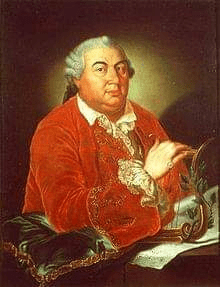
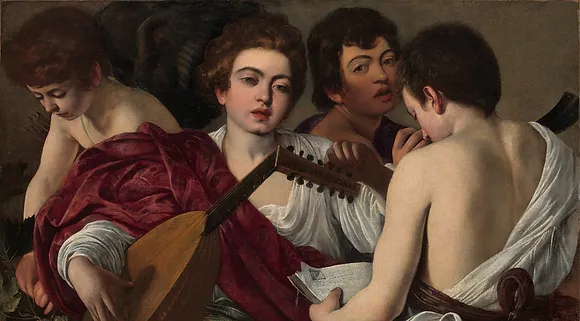
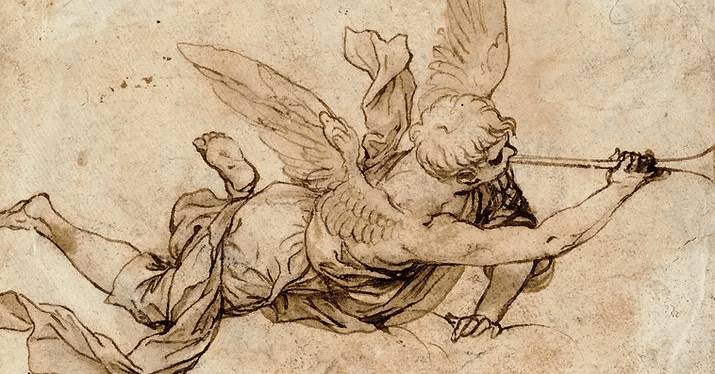
You would be forgiven for not having heard of Niccolò Jommelli (1714-1774), although he does have a Facebook profile, with the above profile picture – and now wants me to be his ‘Friend’. A prolific Neopolitan composer well-known in his day, he composed around 80 operas. He was described at the time as “the creator of a quite new taste, and certainly one of the foremost musical geniuses who have ever lived“. Selections from 11 of these were featured in this concert celebrating the 250th anniversary of his death, the first in The Mozartists’ 2024/25 season. Their exploration of Mozart and the composers around him in their MOZART 250 project has revealed many little-known delights, and Jommelli is certainly one of them. Of the five times I have reviewed music by Jommelli on this website, most have been courtesy of The Mozartists, including their 2016 concert performance of Jommelli’s opera Il Vologeso.

Continue reading

Laus Polyphoniae 2024, Antwerp

Laus Polyphoniae 2024
“VOX\VOCES, monophonic\polyphonic”
Antwerp, Flanders
23 August – 1 September 2024


Antwerp’s annual Laus Polyphoniae festival, as the name suggests, is devoted to music from the late Middle Ages and Renaissance, a period when polyphony was paramount. This year’s festival had the banner of VOX\VOCES, monophonic\polyphonic reflecting an investigation of links between monophonic and polyphonic music during the period. As usual, it was organised by AMUZ (Flanders Festival Antwerp) from its base centred around the baroque St. Augustine Church in the centre of Antwerp. An introductory essay to the festival and clickable details of all the events can be found here. The festival lasted for 11 days, but I was only able to review the first four days. which included the International Young Artist’s Presentation (IYAP) on the first Saturday, reviewed here.

Continue reading

International Young Artist’s Presentation 2024

International Young Artist’s Presentation
Laus Polyphoniae 2024
AMUZ, Antwerp. 24 August 2024

The International Young Artist’s Presentation (IYAP) is an annual coaching and presentation scheme promoted by AMUZ (Flanders Festival Antwerp) and the Musica Impulscentrum to help promising young musicians “grow into tomorrow’s stars”. Six young early music ensembles are invited to three days of coaching by international early music specialists before performing short programmes during public concerts on the first Saturday of the Laus Polyphoniae festival (reviewed here). Unlike most similar young artist events, it is not a competition but an informal opportunity for young musicians to develop their performing style. An invited Feedback Committee of concert promoters and others comment privately on their public performances. Scarily for me, and possibly them, these reviews are far from private, but I hope will be equally helpful.

Continue reading

Prom 40: St John Passion

BBC Proms: Bach’s St John Passion
Bach Collegium Japan, Masaaki Suzuki
Royal Albert Hall, 19 August 2024


Bach’s Passio secundum Joannem, the St John Passion, was first performed on 7 April 1724 during the Good Friday Vespers at the Nicholaskirche in Leipzig, a last-minute change from the originally planned Thomaskirche. It was less than a year since he took up the post of Thomaskantor, a post that, infamously, had been first offered to both Telemann and Graupner who both turned the offers down. The 300th anniversary of the first performance was one of several anniversaries celebrated during this year’s BBC Proms at the Royal Albert Hall. It was first performed complete at the Proms in 1967, although extracts had been incorporated into the popular ‘Bach Wednesdays’ since 1924.

Continue reading

Proms: Purcell’s The Fairy Queen

BBC Proms: Purcell’s The Fairy Queen
Les Arts Florissants, Le Jardin des Voix, Compagnie KÄFIG
Paul Agnew, conductor, Mourad Merzouki, choreographer/stage director
Royal Albert Hall, 6 August 2024


There are many ways to perform Purcell’s The Fairy Queen, but this must rank as one of the most inventive and entertaining. I have seen many versions of this musical extravaganza, including a bottom-numbingly-long version that attempted to recreate the original 1692 production when Purcell’s five masques were interspersed between sections of the spoken play, which was an appallingly turgid adaptation of Shakespeare’s Midsummer Night’s Dream. Composed to celebrate the anniversary of William and Mary’s wedding, Purcell’s five masques bear a marginal and rather metaphysical and academic relationship (explained here) to Shakespeare’s play, the revised version concentrating on the dream-like world of the fairies. The five masques are all introduced by Titania or Oberon, who may well have been played by eight or nine-year-old children, seemingly joined by a wider cast of young children.

Continue reading

2024 York Early Music International Young Artists Competition

York Early Music International Young Artists Competition 2024
National Centre for Early Music
York, 13 July 2024


Founded in 1985, the biennial York Early Music International Young Artists Competition takes place in the National Centre for Early Music (NCEM) in the former church of St Margaret’s, Walmgate in York. As usual, it formed the conclusion of the annual York Early Music Festival. The competition is open to ensembles with at least three members aged 36 years or under with an average age of 32 or less. The repertory must be from the Middle Ages to the nineteenth century, and performers must use historically informed playing techniques, instruments and stylistic conventions.

This year, nine ensembles were selected by the Festival’s Artistic Advisors based on audio recordings but one, the Swiss-based ensemble BREZZA had to withdraw before the final. As usual, the two days before the final featured informal recitals under the guidance of conductor and keyboard player Steven Devine. These informal recitals allow finalists to adapt to the performance space and get to know the audience before the competition final. The Competition final takes place before an international jury (on this occasion Bart Demuyt, Philip Hobbs, Elizabeth Kenny, Lionel Meunier and Emily Worthington) with an audience that includes representatives of the broadcasting, recording, festival and music promotion worlds. It is a key opportunity to identify new and promising young talent.

The final was broadcast live on the NCEM YouTube channel, and can be viewed here – there is also a link to the detailed programme for the final. The final was also recorded by BBC Radio 3, and highlights will be broadcast on the Early Music Show on 3 November and will be available afterwards on BBC Sounds.

Continue reading

The Renaissance Singers at 80

Sing Joyfully
The Renaissance Singers at 80
Renaissance Singers, The San Trovaso Consort, David Allinson
St. George’s Bloomsbury. 29 June 2024

Robert Fayrfax: Magnificat ‘Regale’ a5
Giovanni Pierluigi da Palestrina: Super flumina Babylonis a4
Jacobus Clemens: Ego flos campi a7
Orlando Lassus: Missa Puisque j’ay perdu a4, Kyrie and Agnus Dei
Heinrich Isaac: Virgo Prudentissima a6

Thomas Luis de Victoria: Four Mairan Antiphons
Alma redemptoris mater a8; Ave regina caelorum a8; Salve regina a8; Ave Maria a8
Mikolaj Zielenski: Magnificat a12

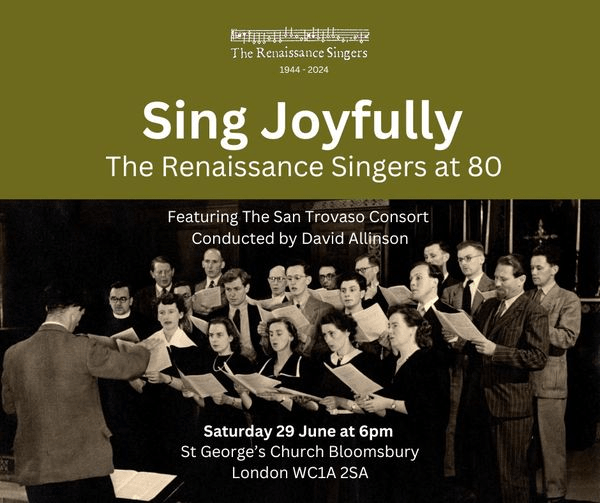
In July 1944, a newly formed choir gave its first concert as V2 bombs fell on London. Founded by Michael Howard, The Renaissance Singers was seen as the performing wing of the Renaissance Society and were motivated by a love of Renaissance vocal music. They aimed to recover lost masterpieces and share them with new audiences. At the time, the repertoire was unfamiliar, and there were few if any performing additions. Early audience members included Ralph Vaughan William, who became their second President. Under its current Musical Director David Allinson it is now one of the UK’s leading amateur chamber choirs specialising in early music, pioneering neglected composers, bringing original programmes to new audiences, and collaborating with top-flight musicians in a year-round programme of concerts and workshops.

Continue reading

Forma Antiqva: “Farándula Castiza”

Farándula Castiza: Madrid, the melting pot
Forma Antiqva
London Festival of Baroque Music
St John’s, Smith Square. 15 May 2024


For around 40 years, and through several incarnations, the London Festival of Baroque Music was one of the highlights of London’s early music scene. Formally known as the Lufthansa Festival, their lengthy sponsorship by a major German airline helped bring a wealth of non-UK musicians to London. But things have changed for most such events in these hardened times, and the latest version of the festival is a shadow of its former self. The 2024 version managed just seven concerts, only one of which was not from the UK despite their promise to showcase “the world’s finest Baroque talent, delve into a captivating programme of chamber, choral, and solo works. Under the theme of “Overtures,” this year’s festival heralds the dawn of new musical beginnings. Explore the origins of Baroque forms and experience their evolving influence, style, and instrumentation”. An imaginative but largely inaccurate description of their actual programme which included rather a lot of Clare and Robert Schumann Mendelssohn, Handel, and Bach – not exactly the “origins of Baroque forms”!

The only non-UK import was the multi-format Spanish group Forma Antiqva, here five-strong with two violins, cello, theorbo and guitar. Their programme was Farándula Castiza: Madrid, the melting pot, a fascinating peek into the musical world of 18th-century Madrid, reflecting the musical influences from different countries and genres.

Continue reading

Renaissance Moderns: Britten Sinfonia, Marian Consort

Renaissance Moderns
Britten Sinfonia, Marian Consort, Lisa Illea
Milton Court, London. 11 May 2024

Binchois (arr. for strings by Lisa Illean): Two chansons
Dunstable: Regina Caeli
Thomas Adès: Darknesse visible
Lisa Illean: Arcing, stilling, bending, gathering (UK premiere)
Lusitano: Heu me Domine; Allor che ignuda
Gesualdo: Moro lasso; Hei mihi Domine; Sparge la more
Brett Dean: Carlo

This cleverly designed concert from the Britten Sinfonia and The Marian Consort was built around the music of Gesualdo and his influence on present-day composers, notably the Australian composer Lisa Illean whose compositions were a feature of the evening, including the European premiere of her Arcing, stilling, bending, gathering, a co-commission of the Britten Sinfonia.

There aren’t many concerts where the programme has a content warning “contains references to violence, murder and rape”. This one did, in reference to the pre-concert showing of Werner Herzog’s 1995 German television film “Gesualdo: Death for Five Voices“. It was a rather curiously stylised and imaginative depiction of the life of Gesualdo (1566-1613), shot in the locations in which his life unfolded including the Palazzo San Severo in Naples, where the famous double murder of his wife, Donna Maria d’Avalos, and her lover took place (shortly before he succeeded as Prince of Venosa), and one of the family estates, the Castello di Gesualdo, where he spent most of the rest of his life in a state of declining mental health, employing a servant to apply daily flogings.

Continue reading

The Mozartists

Mozart in 1774
The Mozartists
Ian Page, Samantha Clarke, Jane Gower
Wigmore Hall. 2 May 2024


Mozart: Symphony No. 28 in C, K.200
Paisiello: Povera prence… Deh, non varcar (from Andromeda)
Mozart: Bassoon Concerto, K.191
Epistle Sonata in D major, K.144
Crudeli, fermate… Ah, dal pianto (from La finta giardiniera)
Symphony No. 30 in D, K.202

Following the opening concert on the 10th anniversary of their monumental MOZART 250 project, which gave a retrospective view of the wider context of music in 1774 (reviewed here), Ian Page’s The Mozartists focussed on Mozart himself in a concert that could be said to reflect the first true masterpieces of the still very young composer. The relatively little-known Mozart pieces were composed in Salzburg at a time when a new archbishop restricted the pan-European travels that his predecessor had allowed Mozart and his father. Only for the last three weeks of the year was he able to travel to Munich for the premiere of his opera La finta giardiniera, commissioned by the Elector Maximillian III for the Munich carnival.

Continue reading

Baroquestock Festival: Lully & Blow

Lully & Blow – La naissance de Vènus & Venus and Adonis
Istante Collective, The Queenes Chappell
Baroquestock Festival 2024 @ Heath Street Baptist Church. 3 May 2024


Jean-Baptiste Lully – Le Ballet royal de la naissance de Vénus (LWV 27)
John Blow – Venus and Adonis


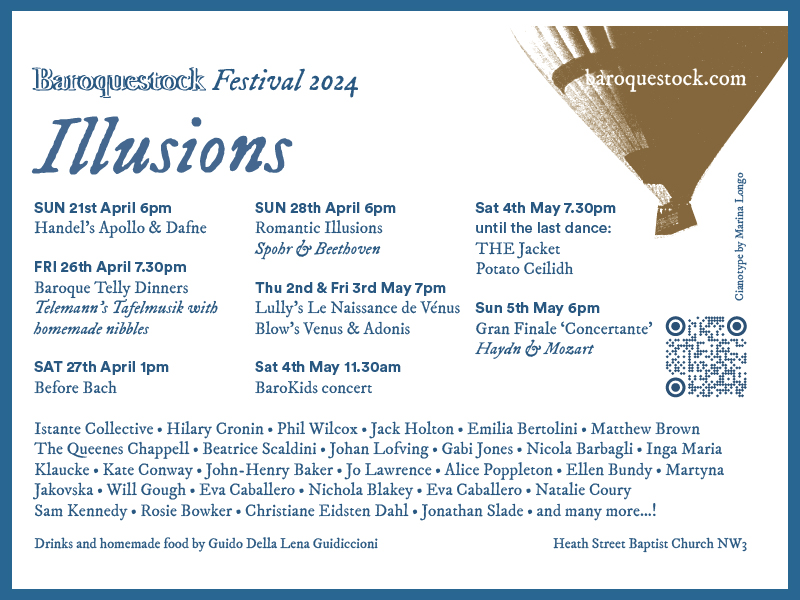
Under the title of Illusions, the ever-enterprising Baroquestock presented their Baroquestock Festival 2024 at their accommodating home base of Heath Street Baptist Church in Hampstead. The festival included 8 events spread over two weeks, one of the highlights being two semi-staged performances of Lully’s and Blow’s takes on the story of Venus. A fascinating pairing that covered the birth of Venus and Blow’s French-inspired version of the later story of Venus and Adonis.

Continue reading

HGO: Purcell – The Fairy Queen

Purcell, The Fairy Queen
HGO, HGOAntiqua Orchestra, Seb Gillot, Eloise Lally

Jacksons Lane Arts Centre, Highgate, 27 April 2024


Purcell’s ‘semi-opera’ is a complicated piece to perform and/or stage. Originally composed for a version of Shakespeare’s MIdsummer’s Nights Dream it includes incidental instrumental pieces (First and Second Music as the audience gathered, Act Tunes between acts, short symphonies at the start of each act and various dances) together with five staged masques at the end of each act. The whole thing lasts about 5 hours. I watched the bemused audience at Glyndebourne in 2009 as they sat through around 45 minutes of spoken text before the first masque. The music and text of the masques only bear a metaphorical relationship to the Shakespear tale. This impressive production by HGO (formally known as Hampstead Garden Opera) added an additional layer of interpretation by setting the whole thing as “a variety of incarnations by a magical tale-spinner, a photographer studying love through her camera lens”.  They promised to take us “through the gamut of human emotions … as we are taken into the photographer’s dream space where anything is possible. In a brief spoken introduction, we were told that “mischiefs are at play”. Indeed they were.

Continue reading

The Dragon of Wantley

Frederick Lampe: The Dragon of Wantley
New Sussex Opera, Bellot Ensemble, Toby Purser
Theatre Royal, Winchester. 28 April 2024


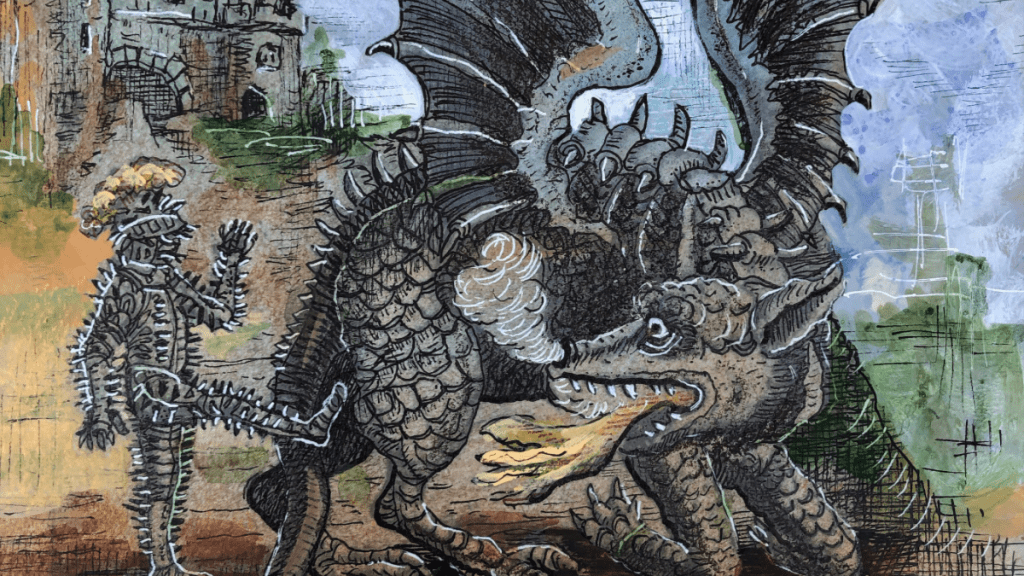
As part of a short tour of south-east England, the New Sussex Opera brought their production of Frederick Lampe’s 1737 opera The Dragon of Wantley (1737) to the splendid surroundings of the Theatre Royal, Winchester. It is a fascinating piece, full of political and musical allusions that would probably have been obvious to the London audience of the time but may evade the average 21st-century audience. It is based on a dragon-slaying legend at Wharncliffe Crags (aka Wantley), north-west of Sheffield. It was the subject of a 1685 broadside ballad and Lampe’s 1737 popular opera to a text by Henry Carey. The dragon causes havoc to the local community until the local squire, Moore of Moore Hall is persuaded to deal with it,. He demands a night (and more) from the 16-year-old Margery. The jealousy of his mistress Mauxalinda provides much of the plot. Eventually, a fatal kick to the dragon’s most vulnerable spot (pictured above) solves the dragon problem, if not the girlfriend issue.

Continue reading

Haydn: The Creation (with dance)

Haydn: The Creation (with dance)
Scherzo Ensemble, Orpheus Sinfonia
Matthew O’Keeffe, conductor

Winchester College New Hall, 6th April 2024


Under their artistic director and conductor Matthew O’Keeffe and producer and general manager Stephanie Waldron, the Scherzo Ensemble (a charity since 2021) and their associated Longhope Opera provide training and development opportunities for emerging singers, including (commendably, paid) performances. One such was this imaginative realisation of Haydn’s oratorio, The Creation, in Winchester College’s New Hall (repeated the following day in St John’s, Smith Square). It was promoted as “a unique classical experience . . . where music seamlessly intertwines with dance, costume, and lighting, breathing new life into this timeless masterpiece . . . engaging the singers and instrumentalists in a captivating synergy of movement and sound alongside the dancers”. The performance showcased the emerging artists as soloists, choir, and dancers, together with the Orpheus Sinfonia chamber orchestra.

Continue reading

Academy of Ancient Music. St Matthew Passion

St Matthew Passion
Academy of Ancient Music, Laurence Cummings
The Barbican, 29 March 2024


The Academy of Ancient Music (an Associate Ensemble at the Barbican Centre) is celebrating the 50th anniversary of its foundation by Christopher Hogwood. At a time when practically everybody else was concentrating on the St John Passion, in its anniversary year, they promoted a special performance of the Matthew Passion in the Barbican Hall, directed by their Music Director, Laurence Cummings. What was special about it was that they took the music back to its Leipzig roots, with a small orchestra (or, to be exact, two small orchestras) and a choir of just 8 (4+4) singers, all of whom contributed solos (of various importance), including, in Choir 1, the key roles of the Evangelist and Christus and the multi-character bass in Choir 2.

Continue reading

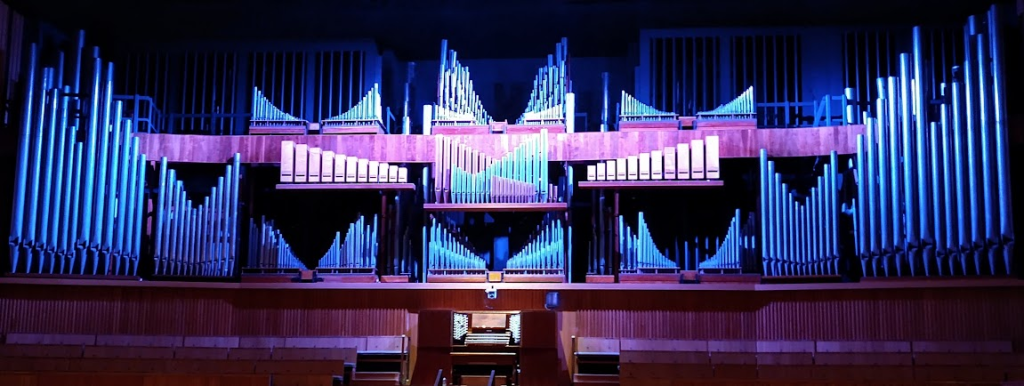
Royal Festival Hall organ @ 70

The Royal Festival Hall organ @ 70
Saturday 23 March 2024


I have played organs dating back to the fifteenth and sixteenth centuries, so the 70th birthday of an organ might not appear to be that big a deal. But the organ in London’s Royal Festival Hall made an important, if controversial, contribution to the post-war British organ world. Designed by Ralph Downes, it was based on the Organ Reform Movement (Orgelbewegung) which started in Germany in the 1920s (with the enthusiastic support of Albert Schweitzer) and sought to reflect the style and construction techniques of pre-19th century organs, notably, in the early days, with a focus on the more historically informed performance of Bach. A detailed history of the RFH organ can be found here. Below is a photo of Ralph Downes inside the RFH organ with one of the tuners from the organ builders Harrison & Harrison of Durham, from his book Baroque Tricks.

Continue reading

Renaissance Singers: Voices from the Shadows

Voices from the Shadows: Lux Aeterna
A Requiem from Puebla Cathedral
Lamentations and motets from Spain and the New World

The Renaissance Singers, David Allinson
St Pancras New Church. 10 February 2024

I have reviewed The Rensaissance Singers many times over the years, and they always impress. But this concert was really something special. Not only was the performance outstanding, but the choice of music, much of it being heard for the first time in the UK, was a brilliant choice by their inspirational musical director and conductor David Allinson. Their programme was based on the music of Spain and the New World in the build-up to Easter and the traditional Day of the Dead celebrations, with a musical focus on two principal churches, the Cathedral of the Immaculate Conception in Pueblo de los Angeles.

Continue reading

The Telling: Into the Melting Pot

Into the Melting Pot
The Telling
Anvil Arts – The
Haymarket, Basingstoke. 6 February 2024

Into the Melting Pot is described as a “concert-play”. It involved an actor (Clara Perez) presenting the story (written by Clare Norburn) of a Jewish woman (Blanca) living in Spain in 1492 on the eve of the expulsion of the Jews. Bianca’s story is interspersed with music, performed by The Telling, which combined traditional Sephardic, Andalusian and Arabic songs with music from manuscripts from a couple of centuries earlier. It made for a fascinating evening combining history and music.

Continue reading

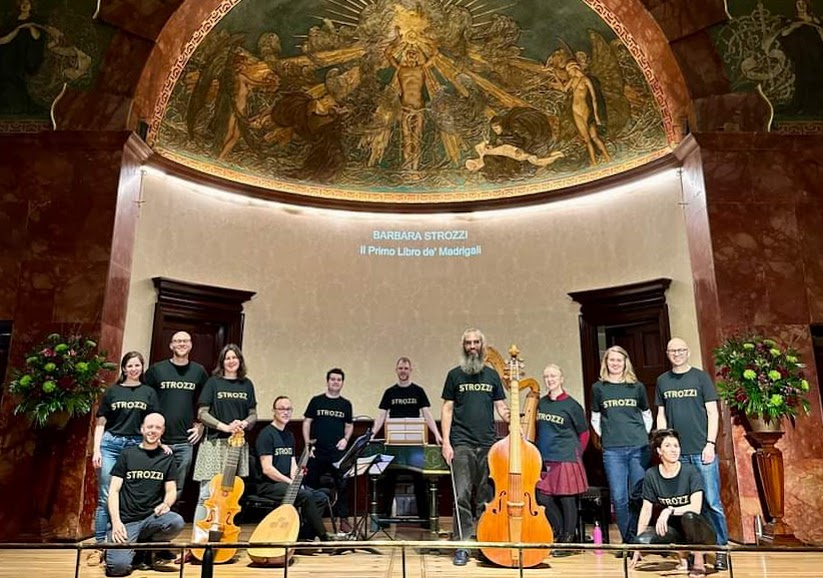
Strozzi: Il primo libro de madrigali 1644

Songs from a Beautiful Mouth
Barbara Strozzi: Il primo libro de madrigali (1644)
Solomon’s Knot
Wigmore Hall, 4 Fenruary 2024

Solomon’s Knot has built an impressive reputation for its innovative approach to performing early music. Singing from memory, they incorporate subtle and very personal theatrical elements into their performances, whether bringing to life the individual characters in a Bach Passion or, as in this performance, stringing together a sequence of 17th-century madrigals into a believable storyline. The focus of this concert was the 1664 Il primo libro de madrigali the first publication by the extraordinary Barbara Strozzi (1619-1677), a Venetian composer who had been a teenage pupil of Cavalli. The madrigals, in a variety of styles, set texts by her father, the poet Giulio Strozzi. He had nurtured her musical career from an early age, helped by the elevated social and cultural circles in which her family moved.

Continue reading

The Mozartists. 1774 – A Retrospective

MOZART 250
1774 – A Retrospective
The Mozartists, Ian Page
18 January 2014

Zimmermann: Symphony in E minor
Gluck: “Par un père cruel” and “Jupiter, lance la foudre” from Iphigénie en Aulide
Anfossi: “Care pupile belle” from La finta giardiniera (UK première)
Salieri: “Sperar il caro porto” from La calamita de’ cuori (UK première)
Mozart: “Ergo interest… Quaere superna” K. 143
Mysliveček: “Pace e calma in questo segno” from Artaserse (UK première)
Mozart: Symphony No. 29 in A, K. 201
Gluck: Scene from Act 3 of Orphée et Euridice

The Mozartists‘ monumental MOZART 250 project has now reached its 10th year with an exploration of the year 1774 and the opening programme of their 2014 season. Continuing the pioneering work of Ian Page’s Classical Opera (which I first reviewed in 1998), the renamed Mozartists started MOZART 250 in 2015, the 250th anniversary of Mozart’s childhood visit to London. The project will follow his musical journey up to the year 2041, the 250th anniversary of his death.

As usual, the opening programme of the annual series places Mozart’s music in its wider musical context. Their programme “1774 – A Retrospective” gives an overview of the musical world 250 years ago when Mozart turned 18. Alongside two pieces by the young Mozart (“Ergo interest… Quaere superna” K143 and Symphony No. 29 in A, K201) were an extended scene from the Paris version of Gluck’s setting of the Orpheus legend and three UK premieres. The inclusion of premier performances is a subplot of the MOZART 250 series. Ian Page plans to include at least 100 such compositions during the project and after the first ten years, is already approaching 50.

Continue reading

Bath Festival Orchestra

Louise Farrenc, Berlioz, Poulenc
Bath Festival Orchestra
Peter Manning conductor, Dana Zemtsov viola

Queen Elizabeth Hall, 14 January 2024

Louise Farrenc: Overture No.1 in E minor
Berlioz: Harold en Italie
Poulenc: Sinfonietta

My usual reviewing is in early music, so it was a surprise to be invited to review a concert of Louise Ferrenc, Berlioz and Poulenc by the Bath Festival Orchestra. The orchestra and some of the music were not familiar to me, so it was a chance to broaden my knowledge of the repertoire and our regional orchestras. And I’m glad I did. It was a well-planned and performed all-French programme contrasting two compositions from the same year of 1834 with a later contribution from 1947.

Continue reading

Laus Polyphoniae 2023, Antwerp

Laus Polyphoniae 2023
Antwerp. Townscape – Soundscape

Antwerp
18 – 22 August 2023

As the name implies, Antwerp’s annual Laus Polyphoniae festival is devoted to the music of the late Middle Ages and the Renaissance, a time when polyphony was paramount. Under the title of Antwerp: Townscape – Soundscape this year’s festival asked the question: “What did Antwerp sound like in the 15th and 16th centuries”? Alongside the shouting in the streets and markets and the dockland sounds, what music sounded in the churches and city palaces during Antwerp’s heyday?

Antwerp experienced an unprecedented economic and cultural boom in the late 15th and 16th centuries. The city was an international metropolis. Goods from all over the world were traded by merchant families who amassed large fortunes. Music was played in many places in the bustling city, from grand churches to private homes. The best singing masters were recruited to compose music for the liturgy. Publishers printed music for those who made music at home. Antwerp was also a centre of printing. Printers such as Phalesius and Plantin were renowned for the high quality of their music publications and surviving prints mean that music can still be performed. Several concerts during the festival were dedicated to these Antwerp music prints. 

Continue reading

Laus Polyphoniae: International Young Artists Presentation, Antwerp

International Young Artists Presentation
Laus Polyphoniae 2023
AMUZ Antwerp, 19 August 2023

The International Young Artists Presentation (IYAP) is an annual coaching programme run by the Musica Impulscentrum (Musica Impulse Centre) and AMUZ (Flanders Festival Antwerp), during the Laus Polyphoniae festival (reviewed here). On the first Saturday of Laus Polyphoniae, after three days of coaching by Peter Van Heyghen and Raquel Andueza, six selected young vocal and instrumental early music ensembles present themselves to a public audience in the AMUZ concert hall, which includes potentially useful members of the wider music industry, including concert promoters – and reviewers. The focus of the coaching is on presentation, the story the ensembles want to tell, the structure of their programme and their interaction with the audience. The six ensembles chosen this year were Vestigium Ensemble, Contre le Temps, Liane Sadler & Elias Conrad, Duo Yamane, Rubens Rosa, and Apollo’s Cabinet.

Continue reading

AAM: ‘Tis Nature’s Voice

‘Tis Nature’s Voice
Academy of Ancient Music
Bojan Čičić, Laurence Cummings
Barbican Hall, 30 June 2023


Mendelssohn: Hebrides Overture Op.26;
Violin Concerto in E minor, Op. 64
Beethoven: Symphony No. 6 ‘Pastoral’

The Academy of Ancient Music concluded its 2022/3 season, ‘Tis Nature’s Voice, with a venture into the early Romantic era, a suitable continuation of the theme of their opening concert, Hadyn’s The Seasons. They promised “thunderstorms, sea spray, nightingales and country dances and other beauties of nature as interpreted romantic style”. For those not used to music of the romantic era played on period instruments, this must have been a revelation. Indeed, it might also have been a revelation for some in the AAM as most of their repertoire stops before Mendelssohn and Beethoven.

Continue reading

Tallis Scholars: Spem in alium

“Spem in alium”
The Tallis Scholars, Peter Phillips
Cadogan Hall, 20 June 2023

Sheppard: Media vita
White: Regina caeli; Domine quis habitabit III
Byrd: Ad Dominum cum tribularer
Taverner: Magnificat a 6
Tallis: Spem in alium

The last time I reviewed The Tallis Scholars at the Cadogan Hall was in June 2022 when they presented a programme with the title of Spem in alium. They have now returned to Cadogan Hall for a two-night sell-out concert with the title of … er … Spem in alium! In contrast to last year’s all-Tallis programme, this time said Spem in alium concluded a concert of large-scale English vocal pieces from Tallis’s time by Sheppard, White, Tavener and Byrd, whose 400th anniversary is this year.

Continue reading

OAE: Mozart in Basingstoke

Mozart in Basingstoke
Orchestra of the Age of Enlightenment
Kati Debretzeni, Luise Buchberger
The Anvil, Basingstoke. 20 May 2023


CPE Bach Symphony in F
Mozart Symphony no 34
JC Bach Sinfonia concertante for violin and cello
CPE Bach Symphony in B minor
Mozart Music from Don Giovanni
Gluck Dance of the Furies

A short tour of related programmes saw the Orchestra of the Age of Enlightenment visit Birmingham Town Hall, London’s Queen Elizabeth Hall, and Basingstoke’s Anvil. Alongside the Mozart Symphony No 34, the CPE Bach Symphony in F, and the JC Bach Sinfonia concertante for violin and cello, common to all three, the Basingstoke concert added CPE Bach’s Symphony in B minor, extracts from Mozart’s Don Giovanni and Gluck’s Dance of the Furies. Travel was the key to the choice of composers – they all left their hometowns to develop their own musical language. They also contributed in various ways to the musical developments during the extended transition into the classical era.

Continue reading

La Grande Chapelle

London Festival of Baroque Music
Music for the Planet King’
La Grande Chapelle

St John’s, Smith Square, 12 May 2023


The London Festival of Baroque Music has been an annual fixture at St John’s, Smith Square for several decades, including its earlier time as the Lufthansa Festival. It is good that it has survived the Covid years and the changes at that venue, not least the takeover by the Southbank Sinfonia. Rather than the independent management team that has been behind the festival in the past, it now seems as though it is being run by the new team at St John’s, Smith Square itself. Perhaps inevitably, given the changes and the current situation in UK arts, there was a reduction in the events on offer for this year’s offering, but the programme did include some of the international contributions that have been a feature of the festival over the years.

Continue reading

Academy of Ancient Music: Il Trionfo del Tempo

’Tis Nature’s Voice
Handel: Il Trionfo del Tempo e del Disinganno (HWV46a)
Academy of Ancient Music, Laurence Cummings 
Milton Court, 11 May 2023


Il Trionfo del Tempo e del Disinganno was Handel’s first oratorio. It was composed a year after his 1707 arrival in Italy after three years in Hamburg where he exchanged his early career as a cathedral organist (in Halle) to that of a fledgling opera composer. He quickly fell in with an influential group of patrons in Rome, including Cardinal Pamphili who provided the libretto for Il Trionfo del Tempo e del Disinganno. Usually translated as The Triumph of Time and Disillusion, the alternative option of Time and Enlightenment was used for this excellent performance from the Academy of Ancient Music.

Continue reading

The Chevalier

The Chevalier
The life and music of Joseph Bologne, Chevalier de Saint-Georges
London Philharmonic Orchestra, Concert Threatre Works

St Martin-in-the-Fields. 21 March 2023


The composer Joseph Bologne, Chevalier de Saint-Georges (1745-1799) has been having a well-deserved resurgence in recent years with several performances of his music, generally from period instrument orchestras. This “unique piece of concert theatre” from Bill Barclay’s Concert Theatre Works at St Martin-in-the-Fields contrasted episodes from Bologne’s eventful life with extracts from his music from the London Philharmonic Orchestra, directed by Matthew Kofi Waldren, with Braimah Kanneh-Mason as the violin soloist. The very sparse programme note was nothing more than an advertising flyer (view here) and gave precious little information. It did bill it as a “concert version”, although it looked pretty well staged to me. I gather it was a reduced version of a show that was commissioned by the Boston Symphony Orchestra, premiered and toured in the USA and was first performed in the UK at the Snape Maltings on 19 March.

Continue reading

OAE: Bach B Minor Mass

Bach in Excelsis
Bach B Minor Mass
Orchestra of the Age of Enlightenment, Václav Luks
Royal Festival Hall, 19 March 2023


Making his debut with the Orchestra of the Age of Enlightenment and the Royal Festival Hall, Czech harpsichordist Vaclav Luks presented what was advertised as a “chamber interpretation” of Bach’s Mass in B Minor, “based on his study of the performance practices of recent decades”. Vaclav Luks is best known for his orchestra and vocal consort Collegium 1704 and his championing of the Czech composer Zelenka. I have only heard him conduct his orchestra once before, in Leipzig in 2015 when Collegium 1704 was the orchestra in residence (whole festival review here). His excitement at this RFH booking was evident, not least bringing his own score onto the podium several minutes before the start (a ritual usually undertaken by an underling), peeping out from the stage entrance and snapping a mobile phone photo of the audience. Of course, a conductor only sees the audience as he walks on and at the end, so I can fully understand his wanting a preliminary peep.

Continue reading