Mozart’s World: The Last Symphonies (1788)
Orchestra of the Age of Enlightenment, Robin Ticciati
The Anvil, Basingstoke. 25 February 2026
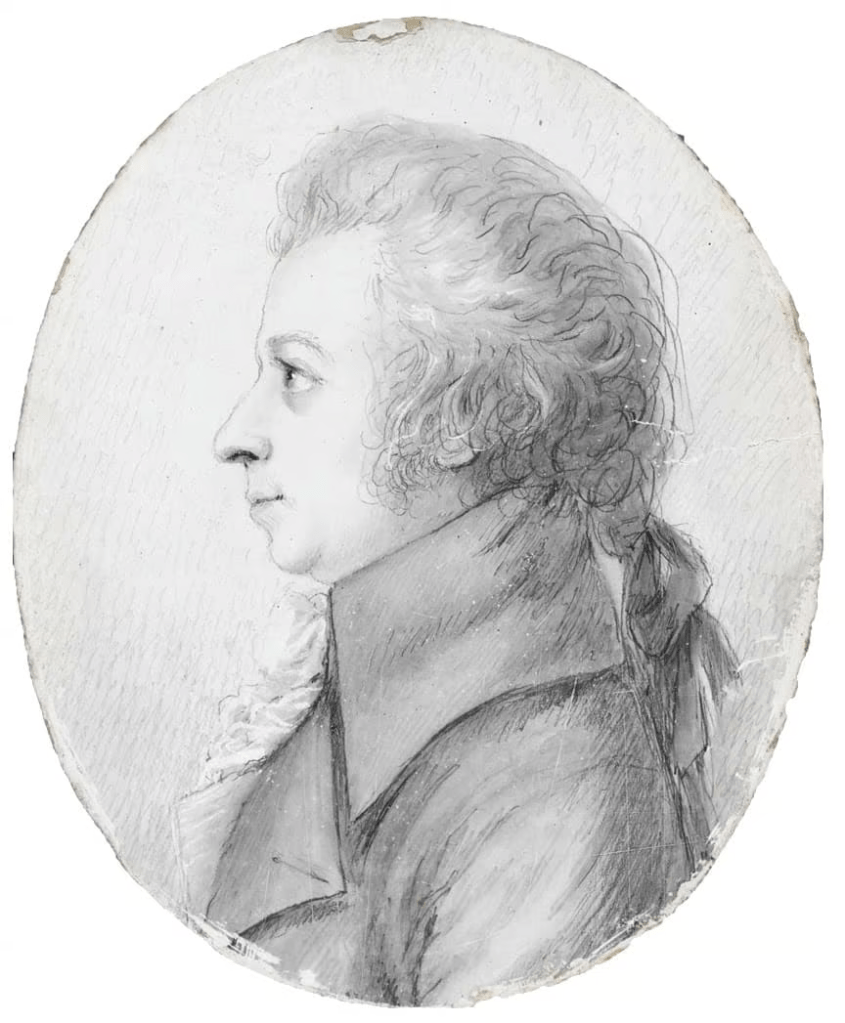
The final few years of a composer’s life can often be a time of reflection, a re-evaluing of a lifetime’s work and, often, a burst of new compositions or revision of earlier works. However, with Mozart, it appears that his final years were not as well-planned. Did he realise that the 1788 Symphonies 39, 40 and 41 would be his last? How would we view them if they turned out to be the culmination of what might be called Mozart’s “middle period”? Would they have achieved the status they now have?
After four years of piano composing and playing ended in 1785, Mozart turned back to opera, with Le nozze di Figaro in 1786 and Don Giovanni in 1787, with Così fan tutte composed in late 1789. Late in 1787, he was also appointed Chamber Composer to Emperor Joseph II. But things in Vienna were not going well. War with the Ottoman Turks had reduced aristocratic music support. Mozart had moved to larger premises out of the centre of Vienna and gave the first performance of Don Giovanni in Vienna. He was planning several musical ventures, but was also seeking loans. His father had just died, and his marital situation was not the best. However, the summer of 1788 saw a burst of activity from Mozart, including what became his last three symphonies.
It is not altogether clear why they were composed, although they could have been intended for a German tour. Their scale was ambitious, putting Mozart alongside Haydn as a master of symphonic form and setting the scene for Beethoven, who unsuccessfully tried to meet Mozart in 1788. Apart from the proximity of composition, there is no evidence that they were intended as a set. That said, most commentators, perhaps for more romantic that musicologial reasons, see connections between the three. There is an arguable key structure of E flat major, G minor and C major, and a sequence of stylistic development from the stately Haydnesque mood of No 39, to the darker sturm und drang ambience of No 40, to the technical mastery and musical confidence of No 40.
Hearing all three in a single concert is unusual, but a very worthwhile venture from the Orchestra of the Age of Enlightenment and Robin Ticciati. Symphony 39 was noted for its elegance and Mozart’s use of small motifs, six notes in the Andante and nine in the Finale. The first symphonies were played with such a minimal break between that some members of the audience might have thought they had applauded between movements. Symphony 40 featured a more extended melodic structure and introduced the extended transitional passages that Beethoven was to use in his symphonies. Ticciati luxuriated in these contrasting atmospheric passages and, as before, made much of the little pauses, holding on to them for as long as comfortable. Symphony 40 came after the interval, very clearly a step-change from its two predecessors in musical style and power. I would agree with Woody Allen’s rather dubious character in the film Manhattan when he answered his own question: “Why is life worth living? It’s a very good question. There are certain things I guess that make it worthwhile … and the second movement of the Jupiter Symphony.“
Ticciati’s conducting style is exuberant and expansive, with a dance-like mime-artist approach to gesture and an almost romantic approach to interpretation. Of course, the instrumentalists of the OAE excelled, their excellent intonation and response to the details of the score bringing a wonderful clarity to the music, which the excellent acoustics of The Anvil reinforced magnificently. One aspect of their choice of instruments was the inclusion of a continuo harpsichord. There has been much debate on this over many decades, the general conclusion, as I understand it, being that a keyboard was unlikely in Mozart’s later symphonies but, if one was used, it was more likely to have been a fortepiano than a harpsichord. However, the OAE are known for their scholarly approach to performance, so I assume they knew more than me on the subject. The harpsichord was positioned in the middle of the orchestra, between the winds and the cellos, and I wouldn’t be surprised if they were the only ones who heard it – I certainly didn’t.
 Andrew Benson-Wilson : Early Music Reviews +