Solomon’s Knot
George Jeffreys & the Birth of the English Baroque
Jonathan Sells, William Whitehead, Federay Holmes
Wigmore Hall, 24 February 2026
George Jeffreys: Lost Majesty – Sacred Songs & Anthems
Prospero Classical. PROSP0086. 2CDs, 46’53 & 39’08
George Jeffreys (c1610-1685) was, in 1643, very briefly organist to Charles I during his time at Oxford during England’s Civil War, presumably based in Christ Church where Charles was living. That, as far as the public record of this mysterious composer is concerned, would seem to be the pinnacle of his musical career. Other records of his life only refer to his time as steward to the Hattons of Kirby, with responsibility for running the Kirby Hall estate while Christopher Hatton (Lord Hatton) was busy acting as comptroller of the royal household to Charles I before moving to France during the Commonwealth and, after the Restoration, becoming a rather unsuccesfull governor of Guernsey, as was his son, Viscount Hatton. In the meantime, George Jeffreys combined his estate management duties at Kirby with absorbing and copying what was then the largest collection of Italian music in the country, helpfully housed in Hatton’s library at Kirby.
Although he presumably met some of the leading (Royalist) musicians of the time during his short period in Oxford, it wasn’t until he returned to Kirby that he began composing sacred music. His style was inspired by the historic English polyphonic roots and the new declamatory style of the Italian composers. We have no idea who might have performed his music, although it seems probable that there was a musical establishment at Kirby Hall, despite Lord Hatton’s frequent absence. Judging by his complex and demanding music, with its increasing sense of almost operatic theatricality, the Kirby musicians must have been particularly skilled.
Solomon’s Knot’s Wigmore Hall concert featured seven of Jeffrey’s choral pieces, together with William Byrd’s poignant Bow thine ears, published 21 years before Jeffrey was born, but presumably intended to represent the school of English polyphony of the later Renaissance era, and perhaps, if my interpretation of the text is correct, a nod towards living in a time of religious persecution, although in Byrd’s case is was a different one to that experienced by Jeffrey. Similarly, Purcell’s Sonata in Three Parts No 1 (Z790), published in 1683, two years before Jeffrey’s death, I took to represent the Italian-inspired. One near-contemporary composer featured was William Lawes, although his death 40 years before Jeffrey’s may have put him in a different musical era. There was no information in the programme notes about individual pieces, so I am not sure what the reason was for the choice of music to set against Jeffrey. As instrumental pieces by Jeffery are available, I did wonder if he would have been better served by including those, rather than contrasting him with the two greatest English composers of the period.
The music was set within the context of a series of acted scenes, written and directed by Federay Holmes, and acted by James Garnon as Jeffreys, and Helen Schlesinger, generally appearing as Lady Hatton. The powerful acting, particularly from James Garnon, made for some compelling moments, but for me, there were issues, one being that the Wigmore Hall has excellent acoustics for music with a corresponding poor acoustic for the spoken word. I was sitting just over halfway down the hall, but it is often difficult to make out the spoken words – not the fault of the actors, but of the understandable acoustic properties of the space. Although Federay Holmes must be congratulated on gathering most of Jeffrey’s life and the complex historical and political ramifications of this turbulent period, much based on surviving letters between Jeffrey and Lady Hutton, she included far too much of peripheral interest or relevance to the main story.
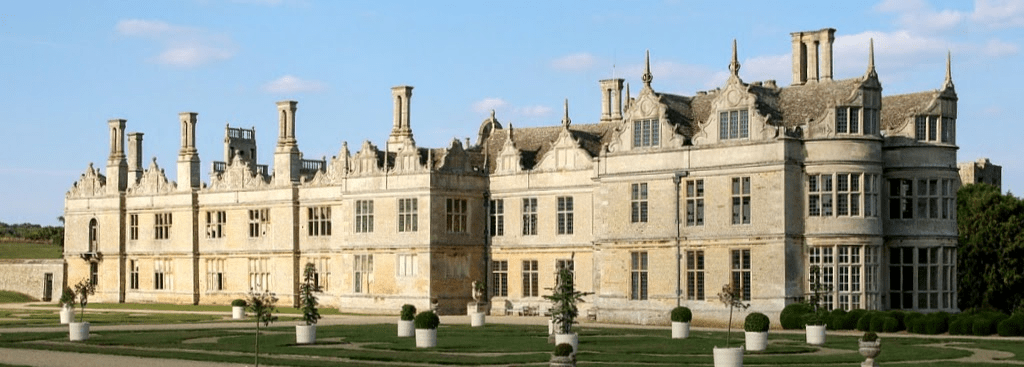
Kirby Hall
The singers of Solomon’s Knot excelled in delivering Jeffery’s far from straightforward music, particularly sopranos Zoë Brookshaw and Clare Lloyd-Griffiths, tenors Thomas Herford and James Robinson (replacing Thomas Herford) and bass Jonathan Sells.Most of the vocal pieces were accompanied by William Whitehead, organ, Francesco Zoccali, theorbo, and Jan Zahourek, violone (or ‘great dooble bass’ as the programme had it). Other instrumental contributions came from Magdalena Loth-Hill, violin, Emilia Benjamin, treble viol and violin, and Kate Conway and Gavin Kibble, viols.
William Whitehead was the key protagonist behind this project, having been a fan of Jeffreys for many years before persuading Solomon’s Knot to prepare the CD reviewed below and this concert. Other key people in the resurgance on interest in George Jeffrey’s music were Peter Aston and Jonathan Wainwright from York University, editor of Jeffreys’s works for Musica Britannica.
The Jeffrey’s pieces were How wretched is the state, Felice pastorella, A Music Strange, O quam jucundum, Whisper it easily, The Lord in thy adversity, and Look up, all eyes.
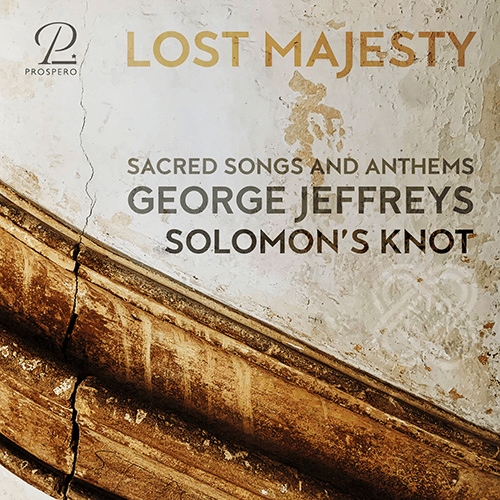
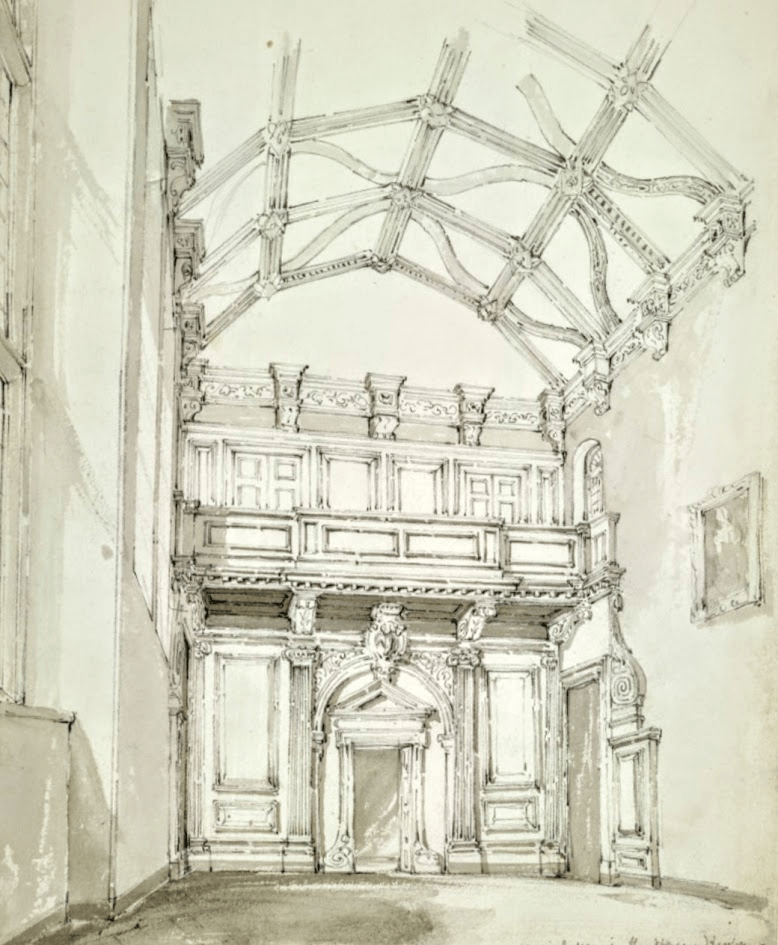
Although it passed me by when it was first released in early 2024, Solomon’s Knot’s recording of Sacred Songs & Anthems by George Jeffery (available here) gives a far more comprehensive account of Jeffery’s musical genius. This rather short double CD (it only just exceeds the time limit for a single CD) features George Jeffreys’ complete English vocal works for 4 and 5 voices, with continuo organ played by William Whitehead. Courtesy of English Heritage, this was recorded in the Great Hall of Kirby Hall, one of the few parts of the complex with a roof.
Jeffery’s music demonstrates a masterful use of harmonies to reflect key textural moments, an inventive variety of vocal forces
In connection with that recording, there are several related things to be found on the internet, including this contribution from Solomon’s Kot, this English Heritage discussion, and this commentary and video of part of the CD recording in Kirby Great Hall, pictured below as it was in the early 19th century.
 Andrew Benson-Wilson : Early Music Reviews +