Bach Christmas Oratorio
The Hanover Band and Chorus, Andrew Arthur
Philippa Hyde, Tim Morgan, Bradley Smith, Edward Grint
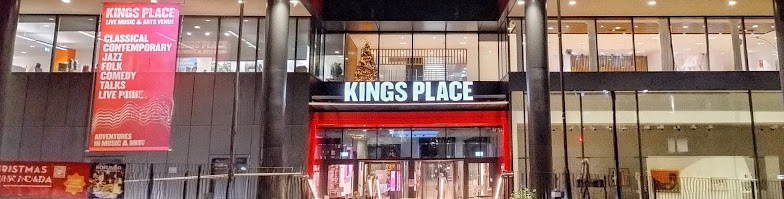
Kings Place, 22 December 2025
Bach’s Christmas Oratorio (Weihnachtsoratorium, BWV 248) is a collection of six cantatas performed in Leipzig on six separate occasions over the 1734 Christmas period. Each cantata was performed twice, in the Thomaskirche and the Nikolaikirche. They were performed on December 25th, 26th, and 27th, New Year’s Day, the first Sunday in the New Year, and finally Epiphany (6 January), covering the complete Lutheran Christmas season. Despite the separate nature of the performance schedule, it seems clear from the autograph title page that Bach saw the six cantatas as a unified whole. There is a logical sequence of keys, moving from D major, G, D, F, A and back to D, and the first and last cantatas are connected by Bach reuse of the chorale melody of Part I’s Wie soll ich dich empfangen for the last chorus of Part VI, Nun seid ihr wohl gerochen. That choral melody is the same as the Passion Choral in the St Matthew Passion. The different instrumentation would have made it difficult for Bach to have performed them all as a continuous whole, as is usually done nowadays in concert performances. On this occasion, as is usually the case, the 4th cantata, for New Year’s Day (the circumcision and naming of Jesus), was omitted.
Bach chose to ignore the usual convention of basing his cantatas on the Gospel text of the day. That would have depicted the Holy Family fleeing into Egypt before the Magi arrived! He also changed the theme of Cantata III from St John’s Gospel to a second look at the Shepherds. The theme of each cantata is I. The Birth, II, Annunciation to the Shepherds, III, Adoration of the Shepherds, IV, Circumcision and Naming of Jesus, V, Journey of the Magi, and finally VI, Adoration of the Magi. The format follows the conventional cantata style with a mixture of choruses, chorales, recitatives, arias and ariosas, some of which are in the form of duets or trios.
Three of the cantatas, covering some of the most important aspects of Christian life, are based on previous entirely secular pieces (making them ‘parody’ cantatas). They were originally intended for various ceremonial aspects of the ruling Elector of Saxony. I find it interesting that Bach, generally considered to be one of the most devout of composers, would be so relaxed about changing the words of entirely secular pieces to convert the music to represent one of the most sacred moment in Christianity.
This fine performance by The Hanover Band and Chorus, directed by Andrew Arthur, included vocal soloists Philippa Hyde, soprano, Tim Morgan, counter-tenor, Bradley Smith, tenor (Evangelist), and Edward Price, bass, who deserves special mention for being a last-minute substitute for the indisposed Edward Grint. The singing from the soloists and the 17-strong choir was excellent, with impressively clear diction and tone from all. Key amongst the instrumentalists was the continuo group of Poppy Walshaw, cello, aided in various combinations by Alistair Ross, organ, Kate Brooke, bass, Reecca Hammond, bassoon, with Andrew Arthur directing from the harpsichord. Theresa Caudle, violin, Aimee Taylor, flute, Geoff Coates, oboe, Jane Downer, oboe da caccia, and Will Thomas, trumpet, also made excellent solo contributions.
The pacing of the movements was well judged, avoiding excessive speeds but keeping up a sense of momentum between the sections. The Kings Place stage is rather small for forces like this, so the choir was singing from a gallery above the stage and, when not singing, the four soloists were sitting to one side at audience level, negotiating with varying degrees of success the stairs up onto the stage. Andrew Arther doesn’t so much conduct as unobtrusively and gently coax the music from his fellow musicians – a nice style that respects what is, for me at least, the correct balance between director, composer and performer.
 Andrew Benson-Wilson : Early Music Reviews +