Purcell: The Fairy Queen
Gabrieli Consort & Players, Paul McCreesh
St Martin-in-the-Fields. 7 November 2025
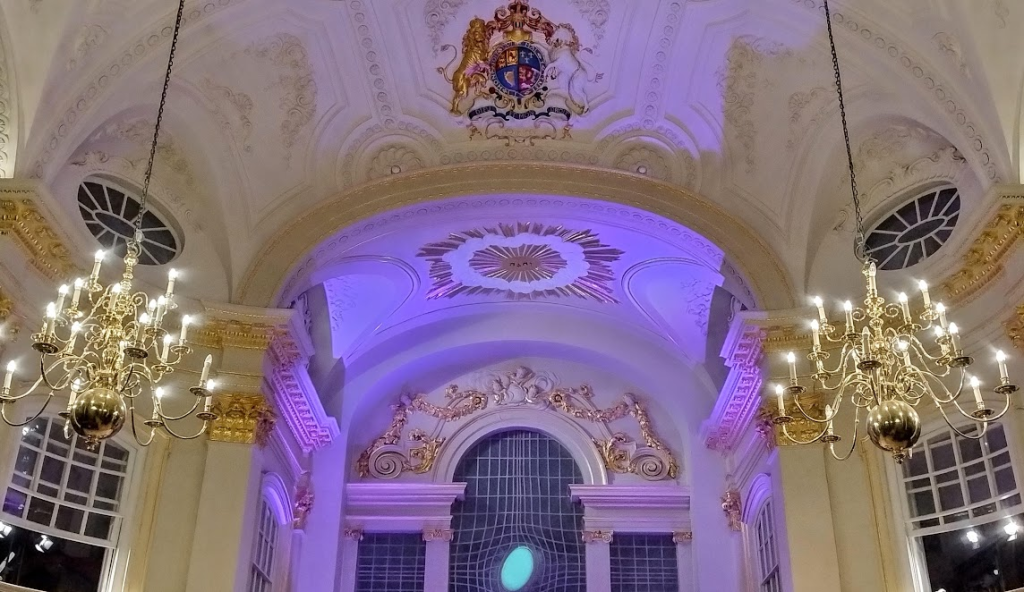
The Fairy Queen is one of Gabrieli’s calling cards, with many performances over the years. I last reviewed them in 2018 at St John’s, Smith Square, shortly before they recorded it (SIGCD615). Several of the singers and players from that recording remain for their latest London performance in St Martin-in-the-Fields.
Purcell’s Fairy Queen is best described as a “semi-opera”. It is in the form of a series of incidental masques at the end of the five Acts of a version of Shakespeare’s A Midsummer Night’s Dream, first performed at London’s Dorset Garden Theatre in 1692 to a libretto by Thomas Betterton, the theatre manager. Omitting all the spoken text of the original play, we heard the sequence of masques, together with the various instrumental preludes and dances. This performance was, as is usual, based on the 1693 revival with its addition of the Scene of the Drunken Poet and the famous Plaint. The libretto of Purcell’s music is not from Shakespeare, and the theme of the five masques is only peripherally related to the action of the play. Instead, they act as a series of musical interludes reflecting on the action of the play and, more specifically, although not always obviously, on the reason for the original production, the celebration of the fifteenth wedding anniversary of William and Mary, which also coincided with William’s birthday.
There are several references to the royal couple in the masques, not least in the Act IV masque celebrating “the birthday of King Oberon”. In the context of the play, Oberon is the king of the fairies and the spouse of Titania, Queen of the Fairies. All the masques are introduced by Titania or Oberon, who were apparently originally played by 9-year-old children, and generally take place in the world of the fairies. The Chinese scene in the final masque is a reference to Queen Mary’s collection of china vases. The surviving stage directions for the end of the work envisage moving china vases containing orange trees (a reference to the King, William of Orange) to the front of the stage to add to the royal symbolism.
In sharp contrast to last year’s all-singing and dancing Proms performance by Les Arts Florissants, Le Jardin des Voix, and the dance company Compagnie KÄFIG (reviewed here), this was a relatively ‘straight’ concert performance. The only, and inevitably, fully acted moments were the Dunken Poet and the Coridon and Mopsa episode, both featuring the indefatigable bass Matthew Brook. Other, far more subtle acting moments brought life to many of the musical numbers from the excellent cast of singers: Charlotte Bowden, Zoe Brookshaw, Anna Dennis, Rowan Pierce, sopranos; Jeremy Budd, Hugo Hymas, Archie Inns, Christophe Fitzgerald-Lombard, tenors; Marcus Farnsworth, and Matthew Brook, baritone/bass. Key instrumentalists were the Gabrieli leader, Catherine Martin, violin, Christopher Suckling, bass violin, Alexandra Bellamy and Sarah Humphrys, recorders and oboe, and the continuo group of Paula Chateauneuf and Eligio Quinteiro, theorbo and guitar and Jan Waterfield, harpsichord.
The well-chosen range of instrumental accompaniments was spot on, as was Paul McCreesh’s sensitive and musically insightful direction. The evening was dedicated to the memory of long-standing Gabrieli continuo lute and theorbo player Fred Jacobs. He dedicated The Plaint to Fred’s memory, an appropriate lament with its touching lines: “He’s gone, my loss deplore / And I shall never see him more“.
There was an impressive level of academic research inherent in the performance, as in the earlier recording. This included using the low ‘French’ pitch of 392Hz (avoiding the need for countertenors), violinists using French bow holds, and trumpets lacking the comparative safety of the finger-holes that are often seen on so-called ‘period’ instruments.
Incidentally, the brief St Martin-in-the-Fields programme booklet badly miscalculated the duration of the concert, suggesting that it would last about 2 hours, including a 20-minute interval. After a 7pm start, we left the church as the clock struck 10!

 Andrew Benson-Wilson : Early Music Reviews +