Mullova plays Mozart
Mozart 250: 1775
The Mozartists
Viktoria Mullova, Ian Page
Cadogan Hall. 4 November 2025
Haydn: Symphony No. 68 in B flat major
Mozart: Violin Concerto No.3 in G major, K.216
CPE Bach: Symphony in D major, Wq.183/1
Mozart: Violin Concerto No.4 in D major, K.218
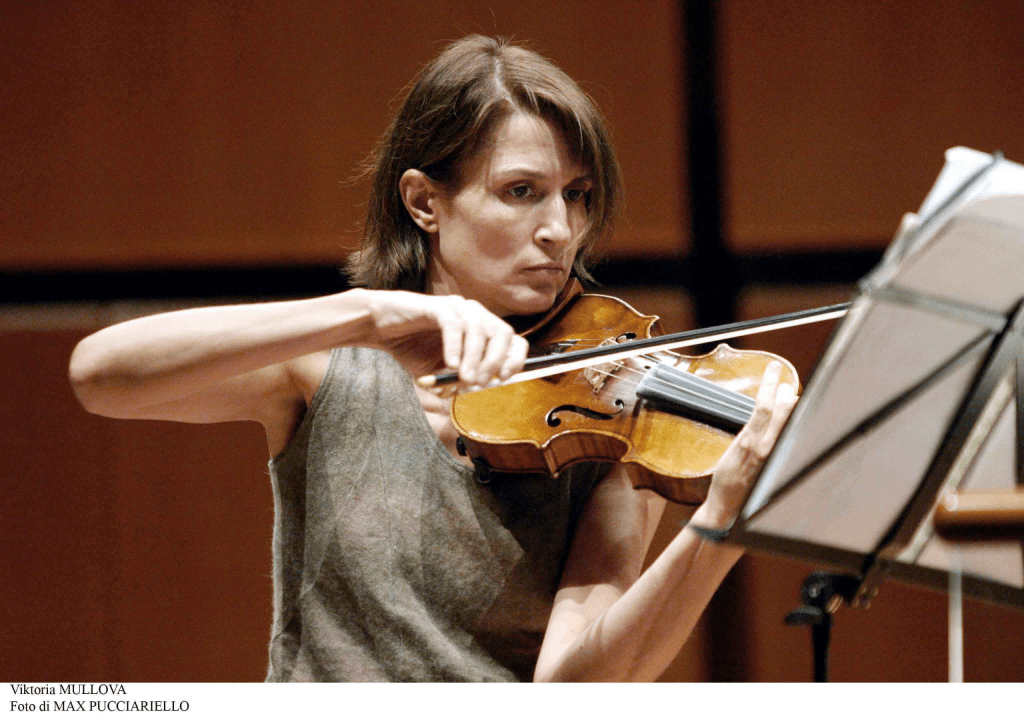
The Mozartists‘ enterprising MOZART 250 project has reached its 10th anniversary, with concerts this season focusing on the year 1775, when Mozart turned 19. The project started in 2015 on the 250th anniversary of Mozart’s childhood visit to London and follows Mozart’s musical life and that of his contemporaries year by year until the 250th anniversary of his death in 2041. It has been described as a “journey of a lifetime”, and will probably outlive many members of current classical music concert audiences. Following their Wigmore Hall concert in June (reviewed here), when Rachel Podger played two (2 & 5) of Mozart’s five violin concertos, this concert in the larger Cadogan Hall featured the other two concertos composed during 1775 (3 & 4) performed by Viktoria Mullova, making her debut with The Mozartists.
One of the many fascinating aspects of this MOZART 250 series of concerts, based on music first performed in a specific year, is the contrast of the music depending on the age of the various composers at the time, and the musical environment in which they prospered. In this concert, we heard CPE Bach, in his early sixties, Haydn, 43 and Mozart, aged just 19. Haydn was represented by his Symphony 68, one of five composed in 1775. In comparison with his other symphonies, these are often overlooked or criticised as something of a low point in quality, perhaps because they are different from his recent and dramatic Sturm und Drang style. This contrast seems related to changes in musical taste at the Esterházy court, with a move towards Italian comic opera, but it also reveals a more strictly Classical genre, underlain by Haydn’s inevitable sense of humour. The little tick-tock motive in the third bar of the opening reappears, initially upside down, as the insistent rhythmic foundation of the extended Adagio cantabile, as does the idea of sudden loud interruptions. The Finale could have been a comic opera overture, the bassoons having a particularly lighthearted moment.
The first of the two Mozart violin concertos was the third. The orchestra is given a particularly prominent role, with a plethora of musical ideas tossed around before the soloist even joins in. A long, languid melody is the focus of the Adagio, soaring over the muted high strings and a plucked bass. It leads to a jolly Rondo finale, with a curiously inserted tiny section towards the end that seems to have been dropped in from a completely different piece. It is followed by a rather bucolic folk melody, before the final return to the rondo theme.
The concert ended with the fourth violin concerto. This also starts with an extended orchestral introduction, full of ideas, before the soloist enters. It also features an extended slow movement that reveals an emotional depth perhaps missing from the outer movements. And, as before, it concluded with a rondo, again with an inserted element, this time an even more rustic intrusion.
I reviewed Viktoria Mullova several times in the early 2000s, when she started venturing into period performance and early music, but I have not heard her live for some years. Far removed from her Russian background and early training, it was a considerable risk for a violinist who had made her name in the more romantic repertoire. With the encouragement of groups like the Orchestra of the Age of Enlightenment, she quickly became an acknowledged expert, notably in the early days, in the music of Bach. The rather unkind epitaph of the “Ice Maiden” reflected a visible dedication to the music and its interpretation, rather than any obvious attempts to win over the audience – a contrast made very apparent with the two soloists chosen for these two Mozartists concerts. She showed a wonderful attention to the detail of Mozart’s music, not least in the delicacy of her tone in the gentler moments in the two slow movements.
CPE Bach’s effervescent D major Symphony was the prelude to the violin concerto, the 60-year-old composer channelling a riot of Rococo exuberance in a style that Ian Page in his pre-concert talk described as “totally mad”. The weird opening, with the anarchic repetition of a high D, was something of a Hitchcock moment that set the maverick mood of instability and suspense. It was followed by a similar striking moment in the Largo, when the theme is played by flutes and viola two octaves apart. The three interlinked movements end with a rollicking Presto that appears to end when Bach runs out of paper.
I have followed The Mozartists since their formation as Classical Opera, and have always been impressed not just by their performances, but the preparation that goes into each performance, something that their enterprising MOZART 250 project exemplifies. Director Ian Page brings a real sense of personal involvement to every concert. His impressive conducting seems totally dedicated to the music, rather than any personal grandeur or self-promotion, a style that on this occasion he shared commendably with Viktoria Mullover.
 Andrew Benson-Wilson : Early Music Reviews +