Niccolò Jommelli – a celebration
The Mozartists, Ian Page
Fflur Wyn, Ambroisine Bré, Hugo Brady
Wigmore Hall, 18 September 2024
“Vidi il mar tutto in procella” from Ricimero, re de’ Goti (1740)
“Se il povero ruscello” from Ezio (1741)
“Io già sento nel mio petto” from Merope (1741)
“Crescon le fiamme” from Didone abbandonata (1763)
“De’ miei desiri ormai… Che farò?” from Il Vologeso (1766)
Duetto, “La destra ti chiedo” from Demofoonte (1764)
“ Ombre che tacite qui sede” from Fetonte (1768)
“Hereuse paix tranquille” from La critica (1766)
“Fra l’orror di notte oscura” from Armida abbandonata (1770)
“Prendi l’estremo addio” from Ifigenia in Tauride (1771)
“Sol del Tebro in su la sponda” from Il trionfo di Clelia (1774)
“Misera Armida … Odio, furor, dispetto” from Armida abbandonata (1770)
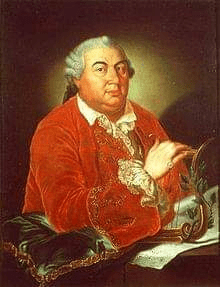
You would be forgiven for not having heard of Niccolò Jommelli (1714-1774), although he does have a Facebook profile, with the above profile picture – and now wants me to be his ‘Friend’. A prolific Neopolitan composer well-known in his day, he composed around 80 operas. He was described at the time as “the creator of a quite new taste, and certainly one of the foremost musical geniuses who have ever lived“. Selections from 11 of these were featured in this concert celebrating the 250th anniversary of his death, the first in The Mozartists’ 2024/25 season. Their exploration of Mozart and the composers around him in their MOZART 250 project has revealed many little-known delights, and Jommelli is certainly one of them. Of the five times I have reviewed music by Jommelli on this website, most have been courtesy of The Mozartists, including their 2016 concert performance of Jommelli’s opera Il Vologeso.
In his introduction to the programme notes, Ian Page wrote “I don’t think I have ever encountered a wider disparity between a composer’s quality and fame. What particularly intrigues me is that in an era where most music sounded relatively similar to the style of Mozart, Haydn or J. C. Bach, Jommelli had such a quirky and original voice, often sounding far ahead of his time. His musical language was significantly richer and more progressive than that of Gluck, the composer most commonly credited with operatic reform during the 1760s and 1770s, and it is particularly noteworthy for its harmonic boldness, its aching and other-worldly beauty and its commitment to evoking and enhancing each dramatic situation”. That perfectly sums up the music we heard during this evening of Jommelli opera extracts. An article by Ian Page on the Continuo Connect website is worth reading for more background – it can be accessed here. A contemporary of Gluck, he was key in the development of orchestrally accompanied recitatives rather than the secco recitatives for voice and continuo of Baroque opera.
His innovative use of orchestral textures and colours was apparent from the start with the turbulent nautical opening of Vidi il mar tutto in procella from the early 1740 opera Ricimero, re de’ Goti, his use of arpeggios and rapid scales a feature that reappeared in later opera extracts. Other distinctive orchestral features included the prominent and independent voice given to the second violins, for example with their musical depiction of water in Se il povero ruscello (Ezio, 1741), the repeated three-note motif in Hereuse paix tranquille from the 1766 La critica and a similar repeated motif in De’ miei desiri ormai… Che farò? from Il Vologeso (1766).
The opera extracts were presented in more-or-less chronological order, something I thoroughly approve of. It was also good to have the evening devoted to just one composer. So often lesser-known composers are put into direct competition with their better-known competitors, usually to the detriment of the former.
Pre-performance problems meant that two of the three original singers had to be replaced with tenor Hugo Brady standing in for Stuart Jackson and soprano Emily Pogorelc replaced by Fflur Wyn at very short notice. Hugh Brady and Ambroisine Bré, the one surviving cast member, were both making their debut with The Mozartists and, judging by the applause, were both instant hits with the Wigmore Hall audience. They certainly both impressed me with the quality of their voices, their ability to hold a consistent vocal line without overpowering vibrato and their intimate involvement with the text, something that Fflur Wyn, quite understandably, had little chance to demonstrate.
A double encore started with Ambroisine Bré singing a delicate sleep aria (with a lovely rocking motif from the second violins) which segued into a Requiem aeternam, I think from the 1756 Missa pro defunctis.
The concert was recorded so will hopefully find its way into the public domain before too long.
 Andrew Benson-Wilson : Early Music Reviews +