Mozart in 1774
The Mozartists
Ian Page, Samantha Clarke, Jane Gower
Wigmore Hall. 2 May 2024
Mozart: Symphony No. 28 in C, K.200
Paisiello: Povera prence… Deh, non varcar (from Andromeda)
Mozart: Bassoon Concerto, K.191
Epistle Sonata in D major, K.144
Crudeli, fermate… Ah, dal pianto (from La finta giardiniera)
Symphony No. 30 in D, K.202
Following the opening concert on the 10th anniversary of their monumental MOZART 250 project, which gave a retrospective view of the wider context of music in 1774 (reviewed here), Ian Page’s The Mozartists focussed on Mozart himself in a concert that could be said to reflect the first true masterpieces of the still very young composer. The relatively little-known Mozart pieces were composed in Salzburg at a time when a new archbishop restricted the pan-European travels that his predecessor had allowed Mozart and his father. Only for the last three weeks of the year was he able to travel to Munich for the premiere of his opera La finta giardiniera, commissioned by the Elector Maximillian III for the Munich carnival.
Symphonies 28 and 30 were compared with the January performance of Symphony 29, completing a set of nine symphonies composed between March 1773 and the end of 1774 (adding to a total of 16 symphonies between 1772 and 1774). It was followed by a gap of four years before another composition in this genre. A complicated sequence of attempts at dating these symphonies (the original dates had been deliberately obscured in the manuscripts) seems to have concluded with the theory that Symphony 30 was the last of the series, rather than 28 as previously assumed. This concert opened with Symphony 28, like 30, composed in the four-movement form of the Viennese symphonic form rather than the three-movement Italian form that, as Ian Page explained in his pre-concert talk stemmed from opera overtures. The opening displayed elements of sturm und drang with its sharp contrasts of volume and texture, the opening fanfare immediately interrupted by a flurry of tiny trills. The Andante demonstrate Mozart’s skill at weaving an elaborate musical texture from the simplest of melodies.
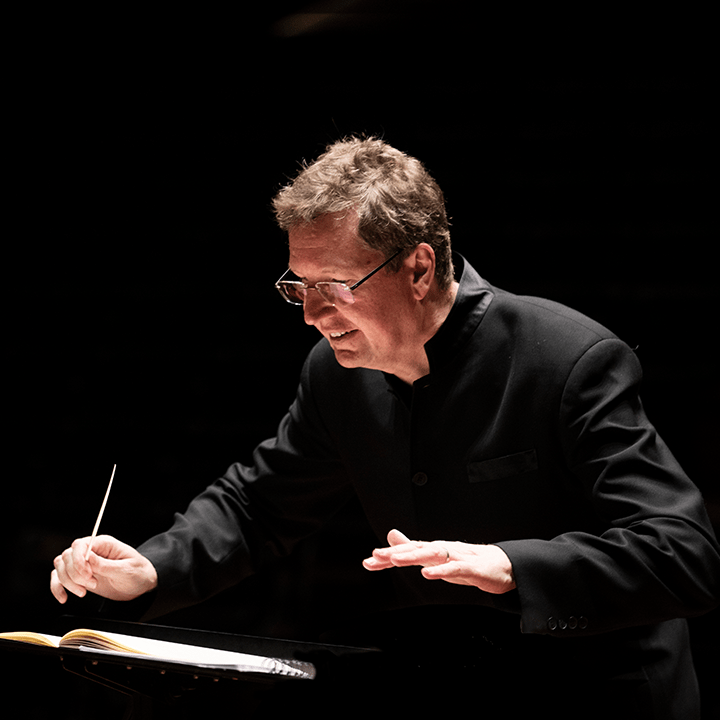
Ian Page (pictured) has set himself the target of including at least one modern-day première in each Mozart 250 programme. On this occasion, it was Povera prence… Deh, non varcar from Giovanni Paisiello‘s Andromeda, with a dramatic text that Mozart later set as a concert aria. Reflecting the anger, and later resignation, of Andromeda to the assumed death of Perseus, soprano Samantha Clarke (pictured below) demonstrated a superbly stable voice with beautifully clear enunciation and an engaging stage manner that reflected the changing moods of the text. Considering the nature of the text, Paisiello’s music was surprisingly tuneful.

The first half ended with Mozart’s only surviving Bassoon Concerto (K.191) played magnificently by Jane Gower (pictured below) stepping out from the orchestra. An expert in this piece, she contributed to the Baerenreiter edition with performance comments and cadenzas. Bassoonists usually hide away towards the back of an orchestra, so perhaps a little visual stage hesitancy can be understood, but the look of relief on her face as the well-deserved applause rose was a sight to behold. Despite his age, Mozart demonstrates a real understanding of writing for the bassoon, with the issues of the baritone pitch, and the balance with other instruments.

The second half opened with a rare performance of one of Mozart’s 17 miniature Epistle Sonatas, composed for Salzburg Cathedral to cover the move of the celebrant from the south side, where the Epistle was read, to the north side, for the reading of the Gospel. Sounding very secular, this jovial little piece would have been performed using one of the four small organs in galleries surrounding the central dome area, as they still do. It may have been composed for the same service as the Missa Brevis in August 1774. Understandably, given the rest of the programme, a harpsichord was used for the continuo rather than specified organ (which changed the texture of the piece) but was more-or-less inaudible from where I was sitting.
Samantha Clarke returned for Mozart’s Crudeli, fermate… Ah, dal pianto, from La finta giardiniera, composed for Munich in 1774 but not performed until early in January of the following year. Again, an outstanding performance.
The evening ended with Symphony 30, an exuberant piece full of youthful vigour and brimming over with musical ideas. Samantha Clarke then returned for an encore whose title I didn’t catch but did rather bring the mood down after the rousing symphony.
Ian Page and The Mozartists are outstanding in their interpretations of Mozart and his ilk, with their beautifully meticulous phrasing and excellent control of tempos and orchestral balance. If you haven’t already caught one of their Mozart 250 performances in the past ten years, you have several more years to catch them.
 Andrew Benson-Wilson : Early Music Reviews +