Alexander’s Feast 

Handel: Alexander’s Feast 
London Handel Orchestra & Singers, Laurence Cummings 
London Handel Festival
St George’s, Hanover Square. 23 February 2023


Handel’s birthday seemed a particularly appropriate day to open the 2023 London Handel Festival and to hear his ode for St Cecilia’s Day Alexander’s Feast. The libretto is based on John Dryden’s 1697 Alexander’s Feast, or the Power of Music, written to for Saint Cecilia’s Day. It recounts the story of a banquet held by Alexander the Great and his mistress, Thaïs, in the captured Persian city of Persepolis, during which the musician Timotheus sings and plays his lyre, arousing various moods in Alexander. The power of music takes a turn for the worse when Alexander is incited to destroy Persepolis in revenge for his dead Greek soldiers.   

Continue reading

Alamire: Anne Boleyn’s Songbook

Anne Boleyn’s Songbook
Alamire, David Skinner
St Martin-in-the-Fields, 17 February 2023


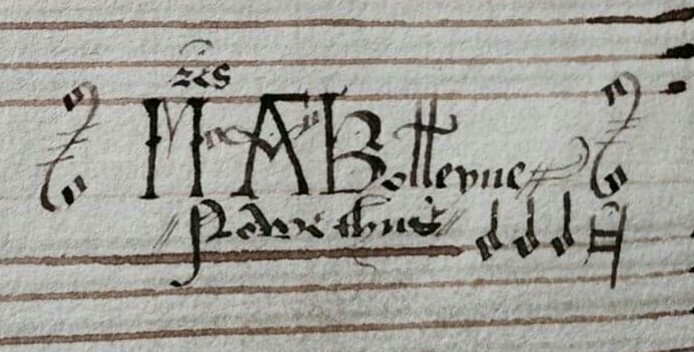
This was a welcome return of Alamire’s ‘Anne Boleyn’s Songbook’, following their 2015 recording and Wannamaker Playhouse performance. The songbook is a manuscript in the Royal College of Music that seems to have belonged to Anne Boleyn. It includes the inscription ‘Mistres ABolleyne nowe this’ the ‘Mistres’ suggesting that the songbook was started before she became Queen in 1533. ‘Nowe thus’ is her father’s motto.

_20150916_154853


This programme combines pieces from the Songbook with readings from what I assume were the published love letters between Anne and Henry VIII which somehow or other ended up in the Vatican Library.

Continue reading

La Serenissima: Vivaldi Double Concertos

Vivaldi Double Concertos
La Serenissima,
Adrian Chandler 
St Martin-in-the-Fields. 11 February 2023


In what was described as “a carnival of double concertos from 18th century Venice – music of fantasy, flamboyance and virtuosity to the power of two”, La Serenissima and its “charismatic founder” Adrian Chandler bought its “no-holds-barred flamboyance” to St Martin-in-the-Fields. It was a reminder of St Martin’s endless ‘Vivaldi by Candlelight’ tourist concerts, although their concert promotions are rather more elevated these days. As the publicity blurb enthused: “Baroque Venice was a city of doubles – of shimmering reflections and masked revellers. And since nothing succeeds like excess, when Vivaldi wrote concertos for two soloists, the results were spectacular: a carnival of colour, illusion and sparkling sonic conversation”.

Continue reading

Handel Around the World

Handel Around the World
Orchestra of the Age of Enlightenment
Steven Devine, director, Ian Bostridge, tenor
Queen Elizabeth Hall. 1 February 2023


Handel Around the World was originally intended to be the title of an Orchestra of the Age of Enlightenment concert tour that extended into Asia but political and other issues meant that was cancelled. This concert, now part of the OAE’s Songs of Travel series, is a compilation of some of the pieces that were to have been performed during that tour. Compiled by Ian Bostridge and OAE colleagues, the selection of arias from Handel operas and oratorios covered quite a bit of the world including Lombardy, Turkey, Sicily, Armenia, Egypt, Scotland, an unidentified island – and Edgware, where the first performance of Acis and Galatea took place, at Cannons House.

Continue reading

Secret Byrd: An Immersive Staged Mass

Secret Byrd
An Immersive Staged Mass on the 400th anniversary of William Byrd

The Gesualdo Six with Fretwork
Bill Barclay, Concert Theatre Works
St Martin-in-the-Fields crypt, 27 January 2023


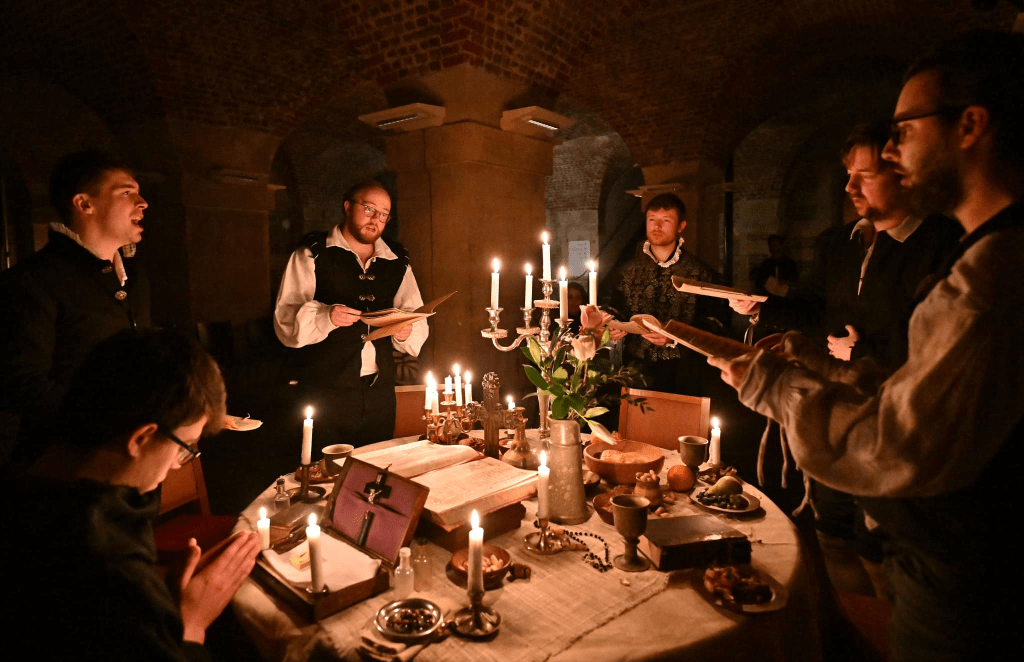
In celebration of the 400th anniversary of William Byrd, The Gesualdo Six combined with the viol consort Fretwork for a theatrical recreation of a secret Catholic Mass with Byrd’s Mass for 5 Voices performed, as he intended, for a secret act of private domestic worship. It was directed by Bill Barclay, produced by Concert Theatre Works, and supported by The Continuo Foundation. The premiere performances were held in the splendidly restored crypt of London’s St Martin in the Fields.

Continue reading

OAE: Saint-Saëns

Saint-Saëns: Sounds for the End of a Century
Orchestra of the Age of Enlightenment
Maxim Emelyanychev, conductor 
Steven Isserlis, cello, James McVinnie, organ 
Royal Festival Hall, 26 January 2023

Phaéton symphonic poem, Op.39
Cello Concerto No.1 in A minor, Op.33
Danse macabre

Symphony No.3 in C minor (‘Organ Symphony’)

The first stop on the Orchestra of the Age of Enlightenment’s 2023 ‘grand tour’ from London to Mongolia was the Paris of organist and composer Camille Saint-Saëns (1835–1921). Towards the end of the 19th century, French music looked to create its own style, breaking away from the German musical influence of the time. Saint-Saëns, although retaining the influence of Franz Liszt, was part of this but he also looked back into the past, notably the music of Rameau (1683–1764) as well as acknowledging the music of the much younger Ravel. This concert of compositions from the early 1870s to the mid-1880s paired the well-known Danse macabre and the 3rd (Organ) Symphony following the lesser-known (to me, at least) Cello Concerto and the symphonic poem Phaéton.

Continue reading

Biber: Rosary Sonatas

Biber: Rosary Sonatas
Daniel Pioro, violin, James McVinnie, organ, harpsichord
Queen Elizabeth Hall foyer & Purcell Room
Sunday 22 January 2023

Described as “a day-long deep dive into the world of Biber’s virtuosic Rosary Sonatas, with performances and talks stretching from sunrise to sunset”, this event divided the three sections of Biber’s Rosary (or Mystery) Sonatas into separate concerts, the first starting at 8 in the morning, one at midday, and then at 4 in the afternoon. The three concerts were interspersed with two pairs of “Deep Dive” talks – “deep dive” being the phrase of the moment as far as the Southbank is concerned, with more references in the January programme booklet, although it is a new one to me. This event seems to be part of the Southbank’s process of post-Covid rethinking, trying to rebuild audiences and attract younger people.

Continue reading

Mandolin on Stage

Mandolin on Stage
The Greatest Mandolin Concertos
Raffaele La Ragione

Il Pomo d’Oro, Francesco Corti
Outhere/Arcana A524. 66’56


Antonio Vivaldi (1678-1741): Mandolin Concerto in C Major RV 425
Baldassarre Galuppi (1706-1785): Sinfonia: from Il mondo alla roversa,
Giovanni Paisiello (1740-1816): Mandolin Concerto in E-Flat Major; Sinfonia in B flat
Francesco Lecce (1750-1806): Mandolin Concerto in G Major
Franz Joseph Haydn (1732-1809): Sinfonia in D Major Hob.I:106
Johann Nepomuk Hummel (1778-1837): Mandolin Concerto in G Major

The Vivaldi Mandolin Concerto that opens this disk from Raffaele La Ragione and Il Pomo d’Oro will be well known to many people, but the other three lesser-known concertos are well worth getting to know. Using three different mandolins appropriate to each period, this recreation of the evocative sound world of this comparatively rare instrument covers the period from Vivaldi around 1700 to Hummel in 1799 via the Neapolitan composers Giovanni Paisiello and Francesco Lecce. The four concertos are interspersed with brief opera Sinfonias by Galuppi, Haydn, and Paisiello.

Continue reading

Goldberg Variations

Bach: Goldberg Variations
Nathaniel Mander, harpsichord
ICSM / Chronos ICSM018. 42’28

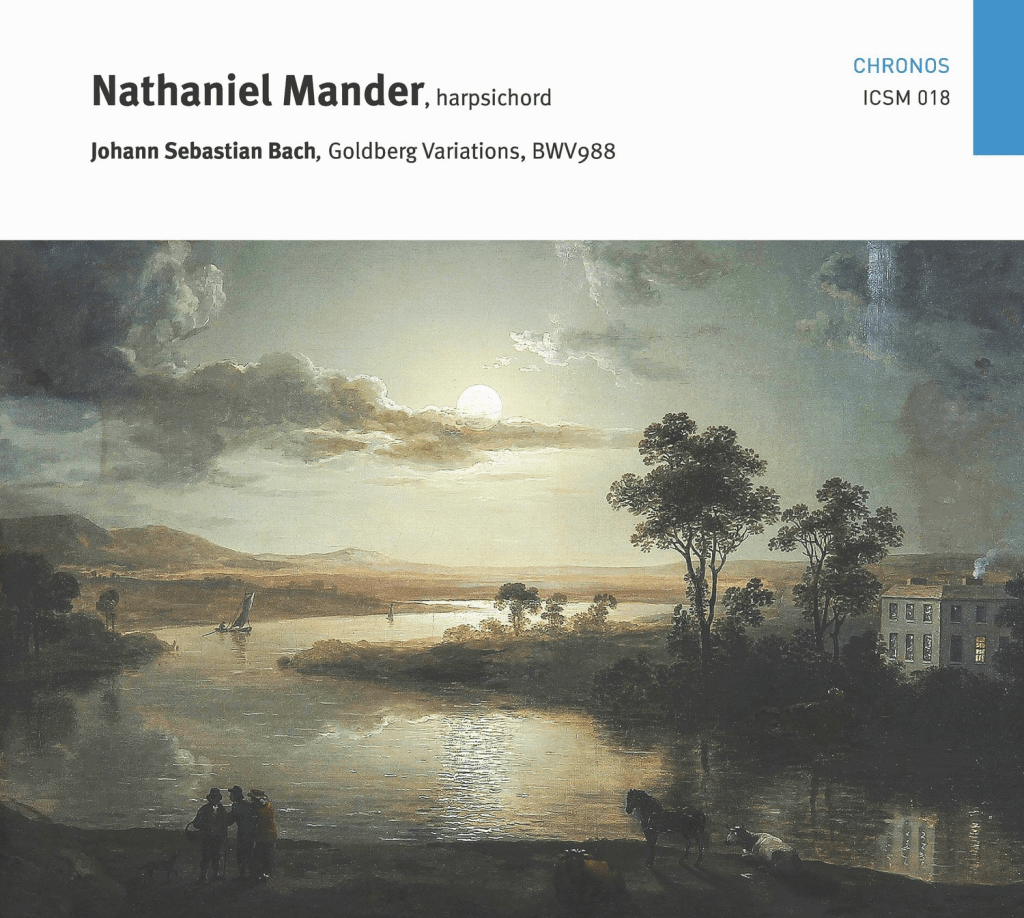
The Goldberg Variations is one of the most complex of all Bach’s keyboard works to understand and perform, so it is a brave move for anybody to make it their debut recording. However, Nathaniel Mander does have at least one distinguished predecessor in Glen Gould’s 1955 debut recording. It was published in 1741 under the (publisher’s) title of Clavierubung IV, following the earlier Clavierubung I, II, and III. The title implies that it is ‘Keyboard practice’, but it certainly is far more than that. Bach (who called it Aria with diverse variations for a harpsichord with two manuals) notes that it was “composed for connoisseurs, for the refreshment of their spirits”, which gives a far more appropriate impression of its status. The legend that Bach wrote the variations for Johann Gottlieb Goldberg is almost certainly not true, not least because Goldberg was just 13 at the time. But he was clearly a gifted player, and was a student of Bach’s son, Wilhelm Friedemann in Dresden, and also took lessons with J.S. Bach in Leipzig.

Continue reading

Early Music Day concert – Bach & Böhm

Andrew Benson-Wilson, organ
Mayfair Organ Concerts
The Grosvenor Chapel
South Audley Street, Mayfair, London W1K 2PA
Tuesday 21 March 2023, 1:10


Bõhm: Partita Freu dich sehr, o meine Seele
Trio Freu dich sehr, o meine Seele
Bach: Fantasia in c BWV 562i
Bõhm: Vater unser Im Himmelreich
Bach: Praeludium con Fuga in c BWV 546

This recital is a contribution to Early Music Day, the international celebration of early music that takes place annually on 21 March, the anniversary of Bach’s birth. The programme contrasts the music of one of Bach’s earliest influences with two of his mature organ works. When he was 15, Bach became a student at the Michaelisschule in Lüneburg. Georg Böhm was organist of the nearby Johanniskirche, the principal town church. The organ there was built in 1553 by Hendrik Niehoff, and is pictured below.

There is clear evidence that the young Bach knew Bõhm, and may have been a pupil of his. One of the earliest Bach manuscripts is a copy of a piece by Reinken owned by Bõhm. The two Bach pieces are powerful examples of his mature style, the first demonstrating the clear influence of French music, that he may have first experienced in Lüneburg and nearby Hamburg. The monumental Praeludium et Fuga in c shows the influence of Italian music, notably in the concerto-like Praeludium. Both Bach pieces were played as final voluntaries during the late Queen’s funeral and committal.

Continue reading