
Johann Sebastiani & Agostino Steffani. Music for the Passion
Vox Luminis, Lionel Meunier
Jacob Lawrence, Sönke Tams Freier, Tessa Roos
Wigmore Hall, 1 April 2026
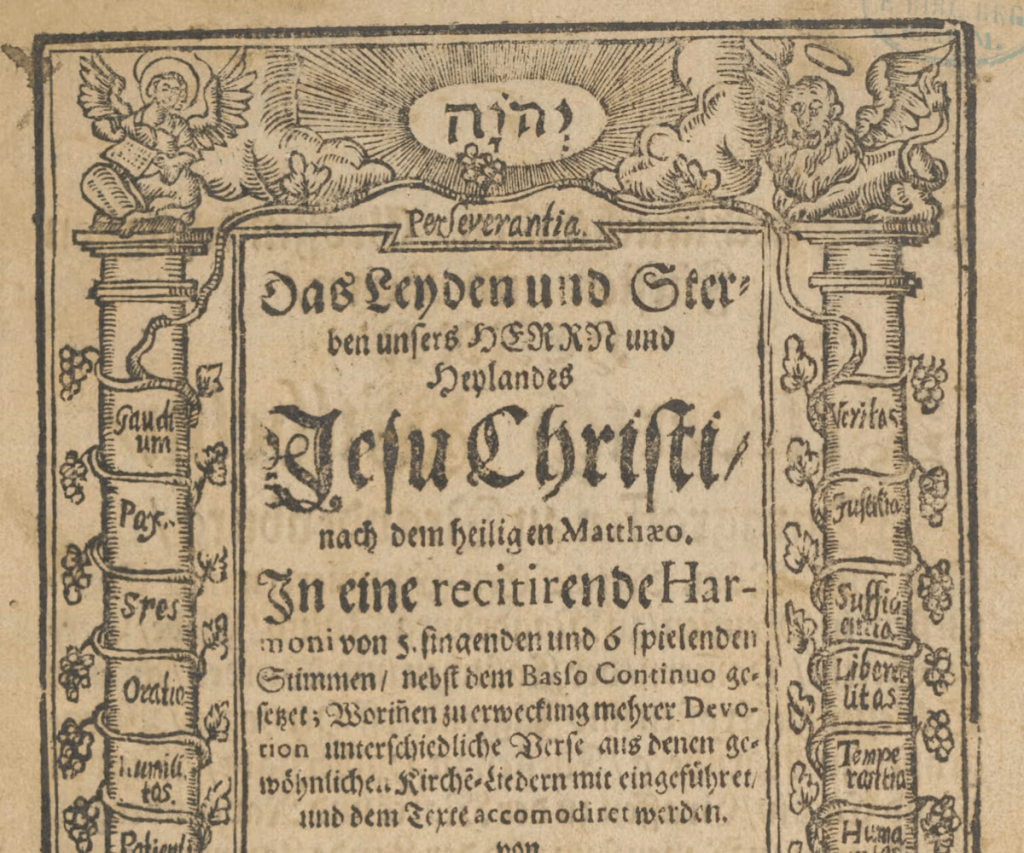
Johann Sebastiani (1622-1683): Das Leyden und Sterben unsers Herrn und Heylandes Jesu Christi nach dem heiligen Matthaeo
Agostino Steffani (1654-1728): Stabat mater
The adventurous Belgian early music ensemble, Vox Luminis, directed by Lionel Meunier, brought their enchanting programme of music for Holy Week to the Wigmore Hall, focusing on music for Passiontide by two little-known composers active in Germany in the mid-17th and early 18th centuries, one Calvanist, the other Catholic. The key work was Johann Sebastiani’s Das Leyden und Sterben unsers Herrn und Heylandes Jesu Christi nach dem heiligen Matthaeo a Matthew Passion in all but name. Sebastiani was born in Weimar and may well have studied in Italy. In 1661 he became Kantor at Königsberg (now Kaliningrad) Cathedral and later Court Kapellmeister to the Elector of Brandenburg. Königsberg was part of the Hohenzollern’s Duchy of Prussia. When Sebastiani arrived, Frederick William (the “Great Elector” of Brandenburg) had just taken full control over the duchy, bringing with him the Calvinism that presumably dates back to his early years in the Netherlands during the Thirty Years’ War.
Sebastiani’s Matthew Passion was known in manuscript form from 1663, but was not published until 1672. It stands midway in the progression of the German passions from the late medieval all-chanted gospel story via Heinrich Schütz to the culmination of the Bach Passions. It is what would later be referred to as a “through composed” piece, with sections merging into each other with only occasional pauses in the flow of the recitatives (very well judged in this case by Lionel Meunier) and by several Lutheran chorales, the first such Passion setting to include such chorales. These chorales and their melodies are well-known from the Bach Passions, and provided moments of repose in the textural flow. They were presented most impressively, with soprano soloist Tessa Roos (a singer whose voice I have admired for some years) standing front stage and either singing the chorales solo or directing three other soprano voices behind her. The purity and clarity of her voice, and that of her fellow sopranos (Sophie Faltas, Erika Tandiono, and Zsuzsi Tóth), beautifully reflected the boy treble voices that would have presumably featured in the original performances. A particular highlight of the performance was Tessa Roos’s exquisite solo singing of all eight verses of the final chorale “O Traurigkeit! O Herzeleid!” (O sorrow, O heartache). Curiously, she wasn’t listed in the Wigmore Hall programme as one of the principal singers. The programme also bizarrely failed to mention anything at all about Vox Luminis, despite having two completely blank pages.
Jacob Lawrence was an impressive Evangelist, bringing a moving interpretation of the text. Christus was rather underpowered; his voice never quite managing to make itself heard above the instrumental accompaniment. That consisted of four viols, two violins, a theorbo, and an important organ continuo, the latter played very effectively by Anthony Romaniuk. Before moving on to Steffani’s Stabat mater, I can’t resist passing on a comment I overheard during the interval – that the Sebastiani had “no tunes you could hang your hat on”!
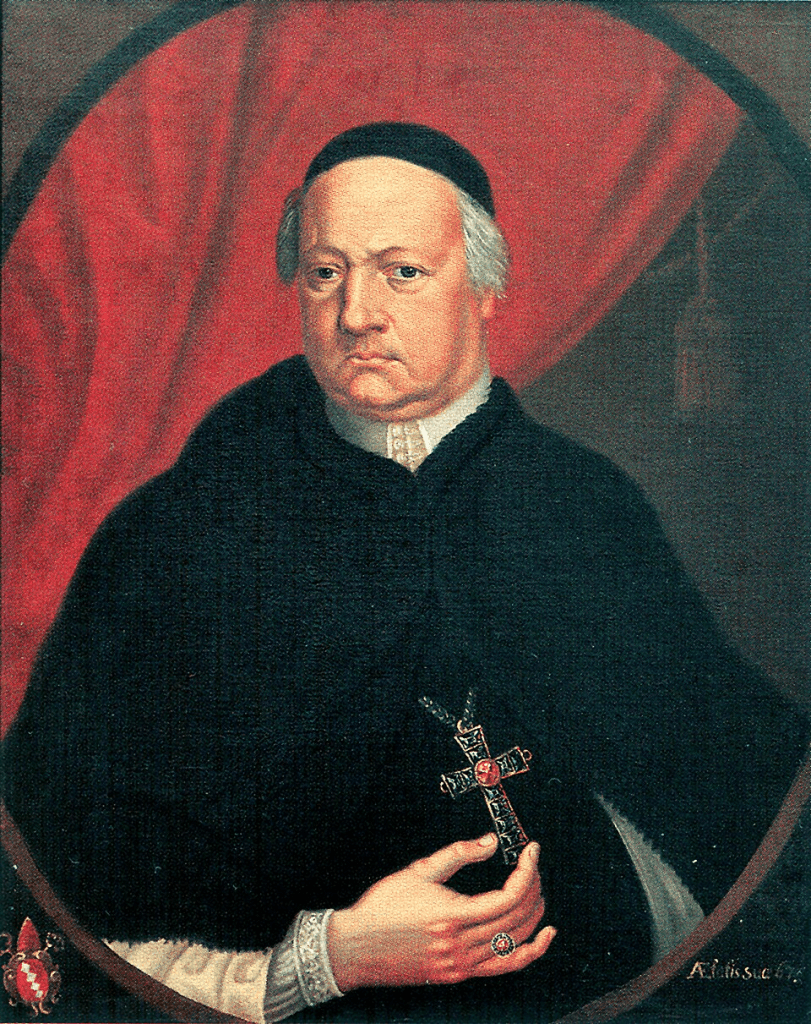
Agostino Steffani by Gerhard Kappers c1714
The same instrumentation was, understandably, also applied to the Stabat mater by Agostino Steffani (1654-1728), although I wonder if the four viols would have been used by Steffani – they were considered pretty ancient by his time. Steffani was part of a very different world from Sebastiani. Born in Castelfranco Veneto near Venice, he was a leading boy chorister at St Mark’s, Venice, and soon began singing in opera, aged about 11. At 13, he was spotted by the Elector of Bavaria who moved him to Munich and completed his education, appointing him as an Electoral Chamber and Court Musician. During this period, he studied with Johann Kaspar Kerll. After a period in Rome, he returned to Munich as Court Organist. His career really took off in the 1680s when he started composing operas and began an extraordinary sequence of appointments in Germany, starting with his appointment as Kapellmeister to the protestant court of Hanover. There he continued his opera career, encouraged a youthful Handel, became a papal diplomat, a bishop, the Vicar Apostolic of Saxony, a residency at the Court of the Elector Palatine in Düsseldorf, and an ambassador. Although he didn’t follow the Elector of Hanover when he became George 1 of England, several of his compositions arrived in England, several of which remain in the care of Buckingham Palace and the British Library, including the Stabat Mater performed in this concert.
Steffani’s Stabat Mater officially dates from 1728, the last year of his life, but may well have started life (the Stabat Mater, that is) around 1679. Lacking the overtly operatic elements of Pergolesi, it adopts a baroque style in its ever-changing kaleidoscope of textures and sounds. characterful word-painting, all featuring an enormous range of voices in varied formations (which caused in some complex movement of singers around the tiny stage) and a harmonically rich accompaniment. It provided a wonderful foil to the Sebastiani’s Passion in this brilliantly conceived and performed by Vox Luminis and Lionel Meunier.
 Andrew Benson-Wilson : Early Music Reviews +