
Sebastián de Vivanco – Missa pro defunctis, Motets
The Renaissance Singers, David Allinson
Toccata Classics, TOCC0770. 66’01
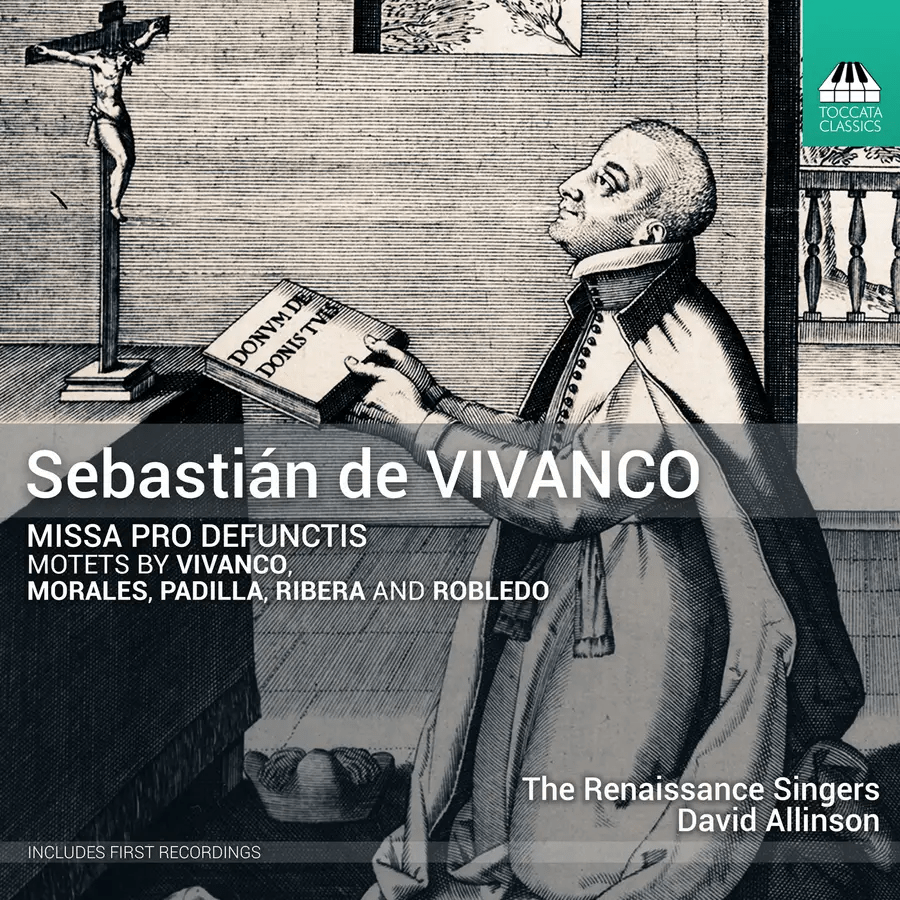
Sebastián de Vivanco’s Missa pro defunctis, a setting of the Office for the Dead, was not published and survives only in two incomplete and differing manuscript versions found in two Spanish cities many decades after Vivanco’s death in 1622. These have now been reconstructed in a critical edition by Jorge Martín. The Renaissance Singers, directed by David Allinson, are the first choir to record this magnificent work, alongside related motets by Vicanco and Cristóbal de Morales, Bernardino de Ribera, Juan Gutiérrez de Padilla, and Melchor Robledo. They formally launch the CD on March 28th 2026, during the Masters of Ávila: Vivanco, Victoria, Ribera concert in St Mary’s, Bourne Street, London. Shortly after that concert, the Renaissance Singers will sing in Ávila Cathedral, where Vivanco had his musical training and where one of the two manscripts survive. They will perform the Missa pro defunctis along with music by Tomás Luis de Victoria, Vivanco’s near-contemporary, and music by Bernardino de Ribera, the teacher of both composers when they were choirboys at Ávila Cathedral.
This important recording sets Vivanco’s Missa pro defunctis in the context of six of his motets, composed in a more expansive and forward-looking style that heralds the forthcoming Baroque era. The Missa pro defunctis itself is in a more traditional prima pratica polyphonic style, as suits the genre. It opens with the Introit, in alternatim style, with the (female) treble voices singing alternate lines in chant, while the other voices join for the polyphonic intervening lines. The mood is appropriately reserved and melancholic, the slow-moving harmonic pulse and gentle unfolding of contrapuntal lines giving an otherworldly feel. The Kyrie is given in two versions, reflecting the difference between the two manuscript sources, which had been adapted to suit local requirements. The same pairing applies to the Santus/Benedictus. Other, less prominent, textural differences in the manuscript texts have been merged in the new edition. The setting of the Offertory: Domine Jesu Christe uses male voices for the chanted sections. The first version of the Santus reveals some striking harmonies in the opening homophonic three-part acclamation. It is followed by a more powerful, but restrained Pleni Sunt section, opening with a distinctive floating chant, as does the Benedictus. The two Hosanna lines are a continuation of the mood and style of the preceding lines. The two-part Agnus Dei continues the mood of mourning and lamentation of the rest of the Missa, with a magical slow intonation of the concluding word: semptiternam. Due to the distinctive style of the music, I recommend listening to the eight tracks of the Missa pro defunctis first, before listening to the whole CD in order.
- I. Introit. Requiem æternam (5:27)
- II. Kyrie eleison (Guadalupe version) (1:33)
- IIb. Kyrie eleison (Salamanca version) (1:45)
- III. Tract. Absolve, Domine (2:53)
- IV. Offertory. Domine Jesu Christe (3:59)
- V. Sanctus – Benedictus (Guadalupe version) (3:58)
- Vb. Sanctus (Salamanca version) (2:17)
- Agnus Dei (2:47)
The motets by four of Vivanco’s predecessors and successors, spanning almost a century of Spanish music, that top and tail the recording make for fascinating insights into the Iberian tradition of focusing on the more sombre aspects of Christian theology and life – or, in this case, mostly death. Robledo’s concluding Salve Regina offers a slight relief from the mourning mood, albeit with its own “groaning and weeping”, and expands the vocal lines to six.
The Renaissance Singers is an amateur auditioned choir, founded in 1944. I have followed them for several decades and have always admired their musical skills and the invention of their programmes. The detailed programme notes were written by Tony Demar, a member of the choir. The 24 singers on this recording produce a beautifully cohesive sound, a credit to their individual vocal skills and the gentle persuasion of their inspiring director, David Allinson. A feature on the background to this recording with David Allinson and the recording’s producer, Stephen Rice, can be found here. This is an essential CD for any music lovers. It can be purchased via this website.
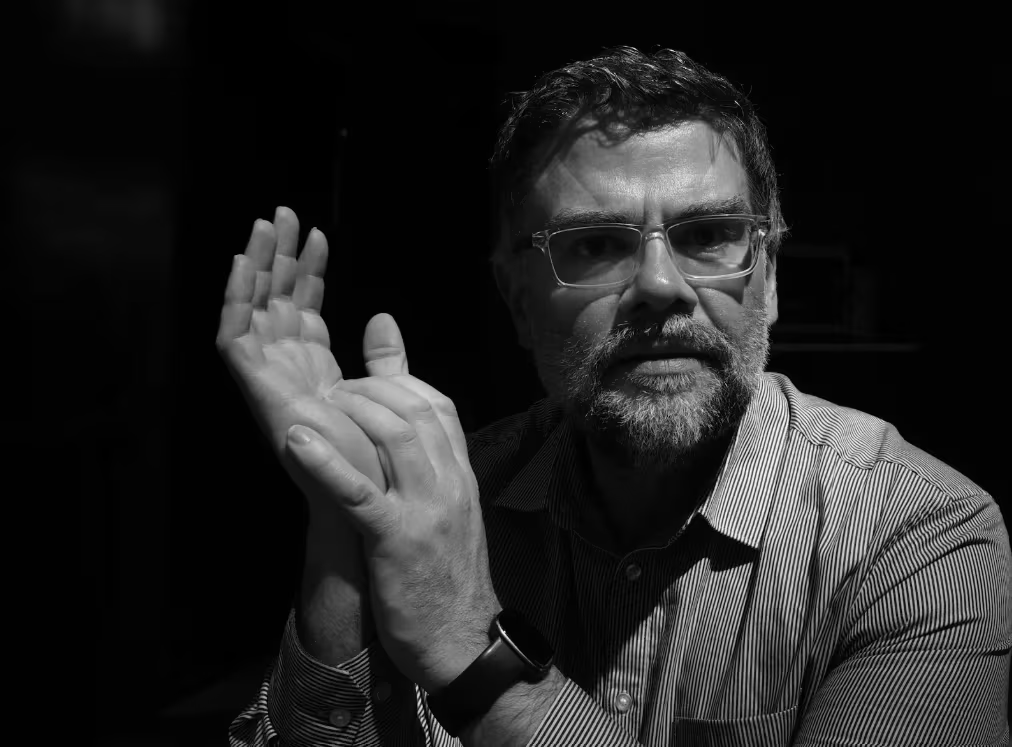
David Allinson (photo: Jan Kosecki)
 Andrew Benson-Wilson : Early Music Reviews +